 Vietnamnet.vn

 Podcast



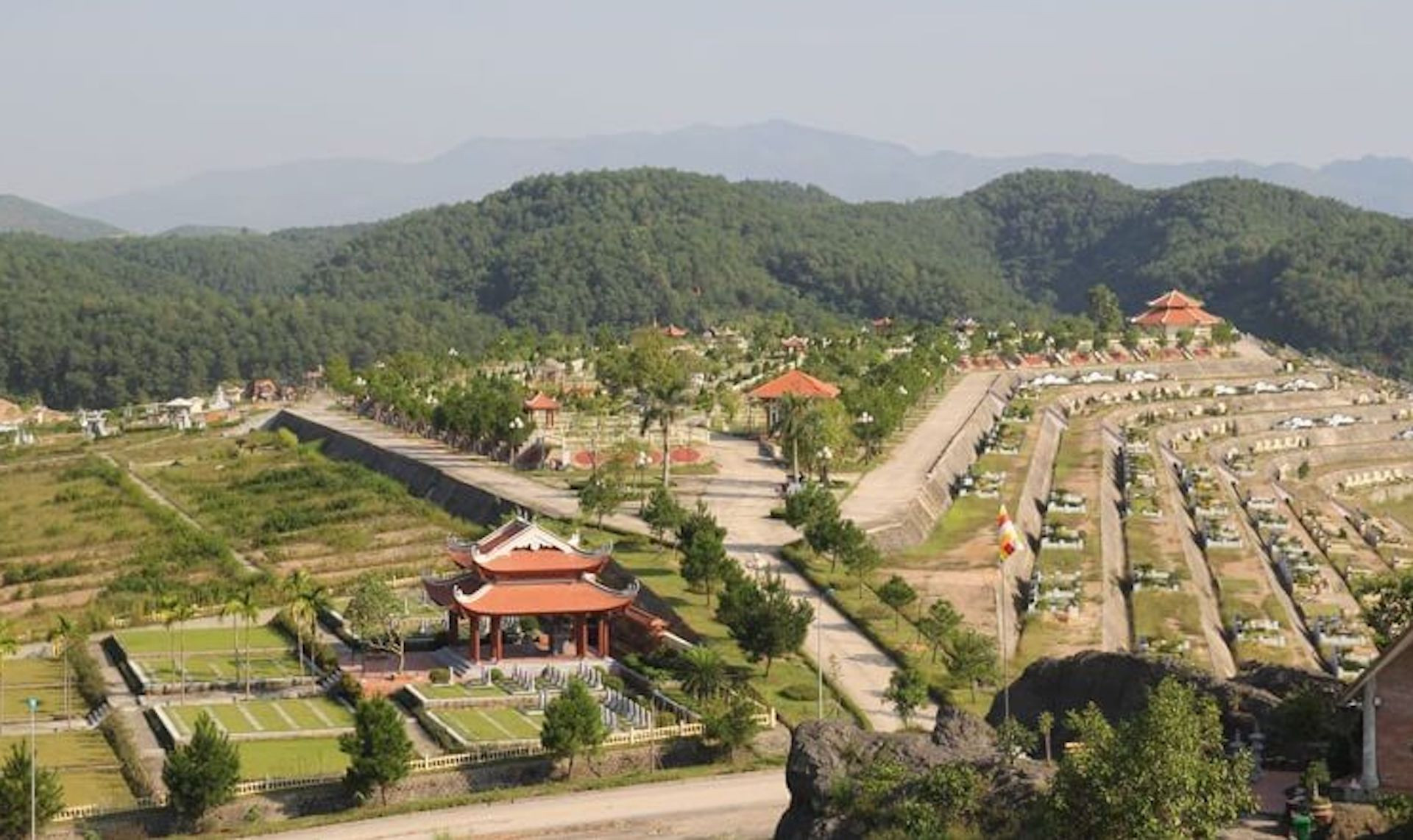
Surveys show that new models have emerged, although development remains uneven and concentrated in certain localities.
In northern Vietnam, several cemetery park projects in Tuyen Quang and Phu Tho cover areas ranging from dozens to hundreds of hectares. A single burial plot costs around VND45-75 million ($1,700-$2,850), while family burial sites can range from VND800 million to VND3 billion ($30,400-$114,000).
In the south, many large cemetery park developments are concentrated in Dong Nai. A single burial plot costs around VND98-180 million ($3,700-$6,800), while family burial sites covering 100-300 square meters are priced at around VND1.3-5 billion ($49,400-$190,000).
A cemetery property broker operating around Hanoi said the market is shifting toward professionally planned cemetery park projects. In Phu Tho, Hoa Binh and Vinh Phuc, plots are being offered at around VND25-35 million ($950-$1,330) per square meter. The developments are designed like “miniature urban areas,” with single graves, double graves, family burial sites and facilities for storing ashes.
Northern Vietnam is considered a relatively active market. Several large projects, including Lac Hong Vien and Thien Duc Vinh Hang, have recorded take-up rates of more than 70%. Demand is heavily influenced by customs, beliefs and family traditions, particularly the desire to gather family graves and bury relatives within the same grounds. Burial sites measuring 24-30 square meters are popular, while projects are placing increasing emphasis on landscaping, coordinated planning and services.
In the south, Dong Nai has developed more toward high-end cemetery parks, with prices ranging from around VND8-46 million ($300-$1,750) per square meter, although occupancy rates remain lower than at some projects in the north.
According to Mien, the market’s appeal stems first and foremost from genuine demand. Vietnam’s large population means the need for final resting places is ever-present and difficult to postpone. This is also why more businesses have begun showing interest in and investing in the segment.
Land, infrastructure and services need to be clearly separated
Mien said spiritual real estate also operates according to market forces. As demand rises, those who see opportunities for profit will enter the market.
However, she said a distinction must be made between investment and speculation or price manipulation. Buying a product for use or holding it as an asset is different from accumulating large quantities to create artificial scarcity, spreading information to influence the market or driving prices abnormally high for profit.
Investment cannot be prohibited, Mien said, but speculation can be curbed through clear regulations, transparent product information and tighter controls over transfers.
Projects need to disclose their planning, legal status, product categories, buyers’ rights and developers’ responsibilities. Sale prices, management and maintenance fees, additional costs and transfer conditions must also be clearly stated.
Hoang Ngoc, head of Nhiet Tam and Associates Law Office, said that as land becomes increasingly scarce, burial sites costing tens of millions of dong per square meter will become more attractive to investors.
“There is investment, and there is also speculation. The market therefore needs to be guided toward civilized development that conserves resources while preserving cultural and spiritual values,” he said.
Ngoc proposed greater transparency over prices, service fees, management and maintenance costs to prevent situations in which relatively low land acquisition and infrastructure costs translate into excessively high prices for consumers. In the short term, while there is no mechanism for issuing separate land-use certificates for individual burial plots, contracts should be standardized and clearly specify prices as well as the rights and obligations of each party.
Vu Sy Kien, deputy director of the Land Management Department under the Ministry of Agriculture and Environment, said the first step in curbing speculation is to clearly define the product itself.
Spiritual real estate is not simply land. It also includes infrastructure, management, operations and maintenance services. Each component should therefore be clearly itemized in contracts.
“The contract must clearly state how much is for the land, how much is for infrastructure and how much is for services. Greater transparency will reduce opportunities for speculation and make the market easier for regulators to oversee,” Kien said.
He added that planning should also proactively anticipate future demand. When infrastructure projects require cemeteries to be relocated, local authorities should prepare land reserves in advance, preventing fears of burial-space shortages from triggering a rush to buy plots.
In the longer term, Kien said product chains could emerge combining spiritual real estate with tourism, ecological development, resorts and related services. Professional operators would also be needed to manage, operate and maintain these developments over the long term.
Kien placed particular emphasis on long-term management and operations. The state should establish a legal framework that allows professional entities to take responsibility for management, maintenance and service provision, similar to operating models in the rental housing sector.
For businesses, he said mechanisms for creating land reserves should continue to be improved, while pricing needs to be standardized and made transparent. When products are sold, buyers should be clearly informed which portion of the price represents land value, infrastructure costs and service charges.
Hong Khanh
.svg)
