 Vietnamnet.vn

 Podcast



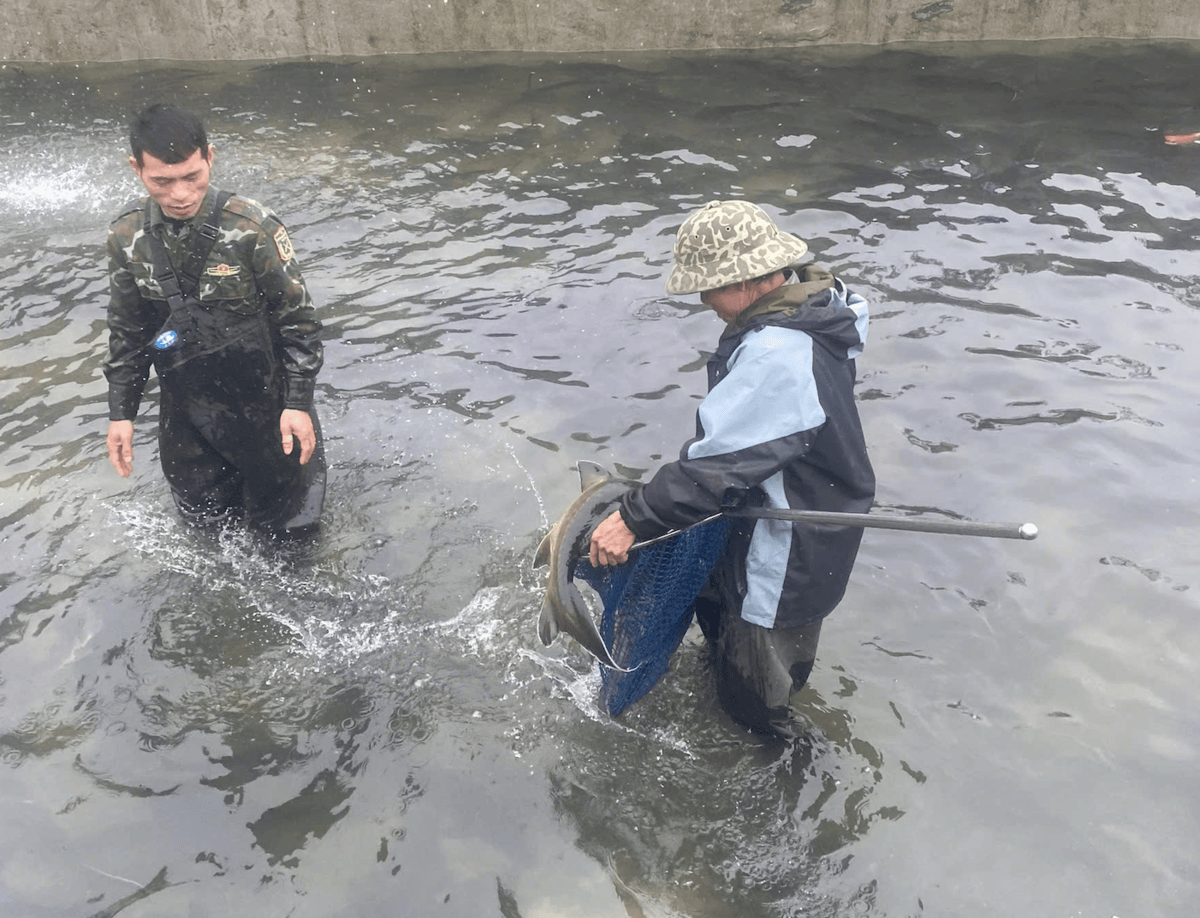
Heavy losses and difficulty in selling fish
On the afternoon of August 19, Tran Duc Sy, who owns 27 cold-water fish ponds in Ngu Chi Son commune, Lao Cai, told VietNamNet with dismay: “It takes three years and billions of dong to raise sturgeon. Yet, for the past month, I’ve called traders everywhere and still can’t sell.”
Having invested in sturgeon farming for a decade, Sy has never faced such challenges. His 27 ponds produce 50–60 tons of fish annually. In previous years, traders from across the country flocked to buy his sturgeon at VND190,000–200,000 per kg.
But things are different now. Sturgeon prices have dropped sharply since July to VND100,000 per kg, resulting in a loss of about VND30,000 per kg sold. Even at these prices, selling remains difficult.
“Our fish take three years to mature, while Chinese sturgeon are harvested in just 13–15 months. Traders say Chinese sturgeon is cheap, selling at VND100,000 per kg only in Hanoi, so they’ve stopped buying from Lao Cai farmers,” Sy explained.
To build his current large-scale sturgeon farm, Sy invested over VND10 billion in infrastructure alone. Raising 10,000 sturgeon costs about VND2 billion, and his farm maintains around 50,000 fish, requiring roughly VND10 billion in capital.
“Over ten tons of sturgeon remain unsold. The longer we keep them, the more we lose, as we can’t stop feeding them,” he said. Fish ready for sale grow slowly if kept longer, but starving them isn’t an option. Sy has reduced feeding by half, hoping to sell the stock eventually.
In Ngu Chi Son commune, about 100 households and businesses farming sturgeon face similar difficulties due to the drastic price drop.
“I still owe the bank VND5 billion,” Sy said. If the situation persists, he may have to sell at a steep loss to avoid further debt.
Pham Thi Mai, owner of Thuc Mai cold-water fish supplier in Ngu Chi Son, said farmers are losing VND20,000-30,000 per kg when selling.
In 2020, Mai and her husband founded the Sa Pa Thuc Mai Cooperative for cold-water fish farming and processing, with seven members aiming to build a collective brand for clean, high-quality products. But some farmers have withdrawn from the cooperative and selling their farms due to unsustainable losses.
According to Mai, Chinese sturgeon is imported in large quantities and sold as “Sa Pa sturgeon” or “Vietnamese sturgeon” in markets. Restaurants in Hanoi and other major cities prefer cheaper Chinese imports, making it hard for local sturgeon to compete and causing prices to plummet.
Sy urged authorities to implement stricter regulations to ensure transparent origin labeling, helping consumers distinguish between Chinese and Vietnamese sturgeon.
Sturgeon industry faces risk of collapse
The Lao Cai Cold-Water Fish Association has submitted a petition to relevant ministries, highlighting how cheap, mass-imported Chinese sturgeon is pushing farmers into losses and risking bankruptcy.
The association emphasized that large volumes of sturgeon, mainly imported through northern border gates, are sold fresh at low prices, directly competing with local products and causing rapid price drops. These low prices fail to cover production costs, forcing many farms to scale down or cease operations, risking the collapse of the domestic cold-water fish industry.
Moreover, imported sturgeon is often mislabeled as “Lao Cai sturgeon,” creating market instability and eroding consumer trust in local products.
The association urged the Ministry of Industry and Trade (MOIT), the Ministry of Agriculture and Environment (MAE), the General Department of Customs, and the Lao Cai People’s Committee to tightly control imports, require clear origin certification, and establish a minimum import price to prevent dumping.
According to the Directorate of Fisheries and Fisheries Surveillance, after 20 years of development, cold-water fish (mainly sturgeon) have become a key farming sector in northern mountainous and Central Highlands provinces. From 2007 to 2023, cold-water fish production grew at an average rate of 49.13 percent per year, placing Vietnam among the top six countries globally for sturgeon production.
Cold-water fish farming has opened new avenues for aquaculture, leveraging cold-water resources, developing infrastructure, creating jobs, increasing income, and improving livelihoods.
The agency recommended that local fisheries authorities closely monitor and inspect organizations and individuals licensed to import sturgeon under Circular 25, strictly penalize non-compliance, and publicize violations if any. Farmers should reorganize production toward collaboration, improve processes to enhance quality and reduce costs, and build a Vietnamese sturgeon brand with traceable origins to boost competitiveness.
Tam An
.svg)
