 Vietnamnet.vn

 Podcast



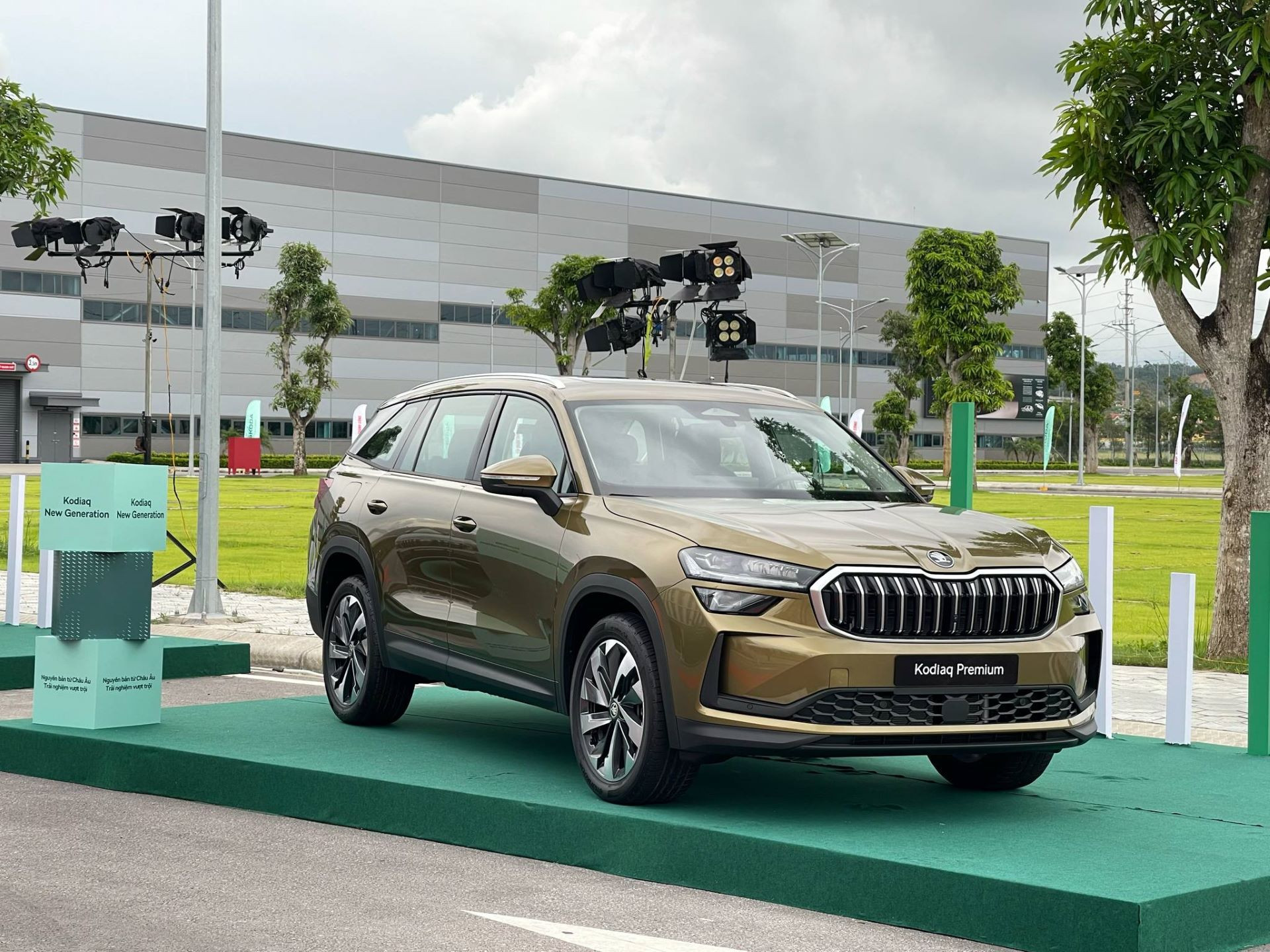
Vietnamese consumers have long associated European cars with being expensive, luxurious, and out of reach, considering such low prices as unthinkable. But some analysts have said the Skoda’s low price may create a takeover in the mass-market segment.
The Czech brand, belonging to Volkswagen Group, once tested the waters with two imported models, Kodiaq and Karoq – C- and D-segment SUVs, priced at VND1-1.5 billion.
However, lackluster sales, low visibility on the streets, and minimal marketing efforts indicated that this was not yet Skoda’s true “launch” in the market.
It was only when TC Group – the company behind Hyundai’s success in Vietnam – embarked on manufacturing Kushaq domestically, repositioning Skoda in a lower price segment with the “European car, Asian price” strategy, that the real game began.
The first advantage of the product is that European brands carry significant weight in the Vietnamese psyche.
European cars have long been positioned as premium in the minds of Vietnamese consumers. Brands like Mercedes-Benz, BMW, Audi, Volvo, and Porsche are synonymous with luxury, advanced technology, and superior driving experiences – but also with price tags starting at VND1-2 billion and up.
The introduction of a “European” car priced at just VND600 million fills a previously untapped gap – and the Kushaq is capitalizing on this opportunity.
Second, the vehicle’s performance quality stands out. Despite its low price, the Kushaq retains core European car strengths: a 1.0L TSI turbocharged engine delivering 115 horsepower and 178 Nm of torque, which is higher than that of most Japanese and Korean competitors like Mitsubishi Xforce, Toyota Yaris Cross, or Hyundai Creta.
Its 6-speed automatic transmission is rated higher than CVT gearboxes for driving feel, especially when driving on long roads or going uphill.
Third, after-sales support is a key factor. Vietnamese consumers often worry about new brands: where to service the car, whether spare parts are available, and whether maintenance costs are high.
In the case of Skoda, the presence of Hyundai TC Group provides strong assurance for after-sales, maintenance, and parts supply.
The existing infrastructure, professional distribution network, and proven market development experience with Hyundai are big plus points.
Barriers for new brands
However, challenges remain. Despite its “European” brand, Skoda remains relatively unfamiliar to most Vietnamese consumers. The absence of a robust branding and sales campaign, along with no “iconic product” in the local market, makes building initial trust difficult.
Competitors like Toyota, Honda, Hyundai, and Mazda have spent decades establishing trust in the mass-market segment.
Regarding overall quality and features, the Kushaq still needs time to prove itself in the market. While its engine is powerful, its safety and convenience features lag behind some Korean models like Kia Seltos or Hyundai Creta.
The interior design follows a minimalist approach, lacking the strong visual impact of Korean cars – a critical factor for Vietnamese buyers, especially first-time car buyers.
Additionally, the B-segment SUV market is already crowded and fiercely competitive. The urban B-segment SUV category is one of the most intense “battlegrounds” in Vietnam, with over 20 models from Japan, Korea, China, the US, and Europe.
The Kushaq’s arrival is undoubtedly a fresh breeze, but overcoming barriers like brand recognition, consumer habits, and established competitor marketing networks will be a tough journey.
Vietnam is one of the markets with lowest car ownership rates in ASEAN, yet it boasts high growth potential. As of 2024, the passenger car ownership rate in Vietnam is 64 cars per 1,000 people – far lower than Thailand or Malaysia.
This indicates significant market potential, particularly among first-time buyers. However, first-time buyers in Vietnam often prefer familiar brands with low risk, strong warranties, and good resale value.
Affordable European cars like the Kushaq will need to prove their long-term value, reliability, and ability to retain value after use to win over this customer group.
Skoda Kushaq is setting an intriguing precedent: breaking the stereotype that “European cars must be expensive.” With its low price, strong engine, reputable European brand, and robust backing from TC Group, it has potential to shake up the urban SUV segment.
However, challenges around brand building, customer experience, and consumer habits remain significant hurdles. Affordable European cars represent a “golden opportunity” – but turning that opportunity into success will require Skoda and TC Group to invest more consistently and strategically than in their initial “market entry” phase.
Hoang Hiep
.svg)
