 Vietnamnet.vn

 Podcast



Truong Ngoc Hai, who majored in Computer Engineering, and Luu Cong Toan, a Control Engineering and Automation major, are two of three valedictorians graduating with perfect 4.0 GPAs from Hanoi University of Science and Technology this year.
Both are also the first students in their respective programs to achieve the perfect score.
What makes their story unusual is that Hai and Toan grew up barely a kilometer apart in Hung Yen Province. They were classmates in high school before both earning places at the prestigious engineering university in Hanoi.
When Toan learned he would graduate as valedictorian, he was overwhelmed that four years of hard work had culminated in the highest possible result. For Hai, sharing the distinction with his close friend was something he had never imagined.
From rides home to university lecture halls

Hai and Toan first knew each other in middle school because they lived in the same village. They later became classmates at Tien Hung High School, then in the former Thai Binh Province. With their homes close together, Hai often got rides to school from his friend.
Both shared a passion for physics and joined their school’s team for gifted students in the subject. In a provincial competition during their final year of high school, Hai won first prize while Toan took third.
Toan recalled that Hai consistently ranked first in their entire year, while he himself remained among the top five. The pair regularly studied together and supported each other academically.
Despite their friendship, they initially had different ideas about university.
Hai decided early that Hanoi University of Science and Technology suited him because of his interest in engineering and the university’s longstanding reputation for technical education.
Toan, meanwhile, had once wanted to attend National Economics University, where his older sister studied.
“I thought studying at Hanoi University of Science and Technology would be exhausting and extremely difficult,” Toan recalled.
In his final year of high school, however, his family encouraged him to pursue automation, prompting him to change direction. With a score of 28 in the A00 admissions combination of mathematics, physics and chemistry, he secured his first-choice place in Control Engineering and Automation.
Hai was admitted to Computer Engineering with 29.4 points.
Neither had planned for them to end up at the same university.
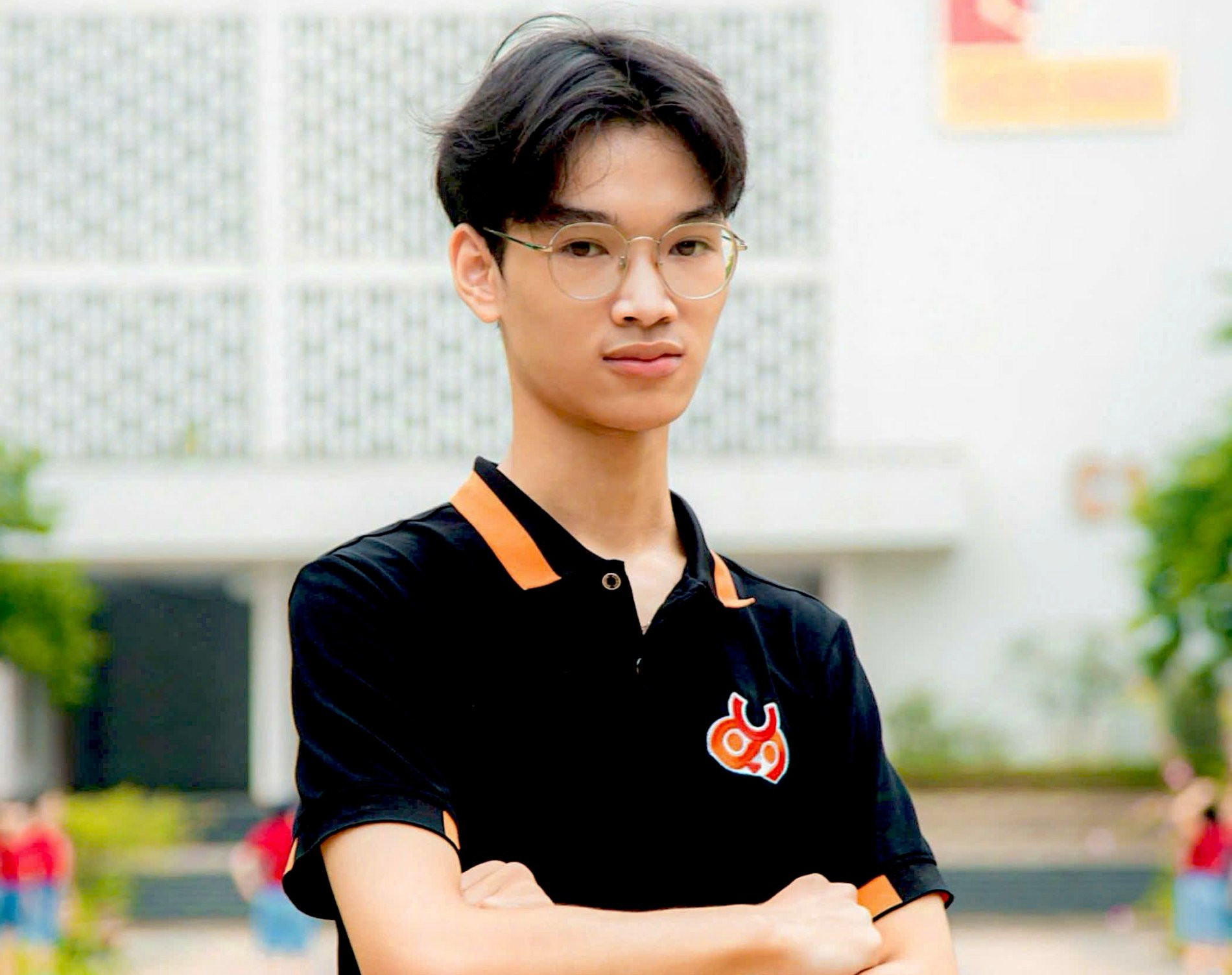
Once there, both had to adjust to a style of learning very different from high school.
Toan recalled his first calculus class as particularly daunting. Looking around a lecture hall of more than 100 students, many of whom had won national or international academic competitions or attended selective high schools, he felt “completely overwhelmed.”
Feeling that he did not have an exceptional starting advantage, Toan decided he simply had to work harder.
Over four years, he never missed a class and always tried to sit in the front row so he could follow lectures more closely. Beyond class, he sought additional materials, asked senior students for advice and prepared for courses in advance.
“At first, all I wanted was to make sure I didn’t fail any subjects,” Toan said.
Instead, he finished his first semester with a perfect 4.0 cumulative GPA.
The pressure increased in subsequent years as maintaining that score became a goal in itself. At particularly demanding times, Toan would study until 2 a.m., sleep for two hours and get up again at 4 a.m. After examinations, he would sometimes lose as much as two kilograms because of the stress.
Hai faced similar early difficulties with general courses, particularly algebra.
To improve, he went to the library to find textbooks and past exam papers to practice. For specialized subjects, he would study the material in advance, form study groups and discuss problems with classmates.
Toan was often the person Hai turned to when he encountered something particularly difficult. They reviewed theory together, worked through problems and explained concepts the other had not fully understood.
“By helping each other this way, we gradually built a solid understanding and achieved good results,” Hai said. “I feel lucky to have a friend like Toan alongside me. His outgoing personality and willingness to take on new challenges are also things I admire and that motivate me.”
Keeping their 4.0 pact
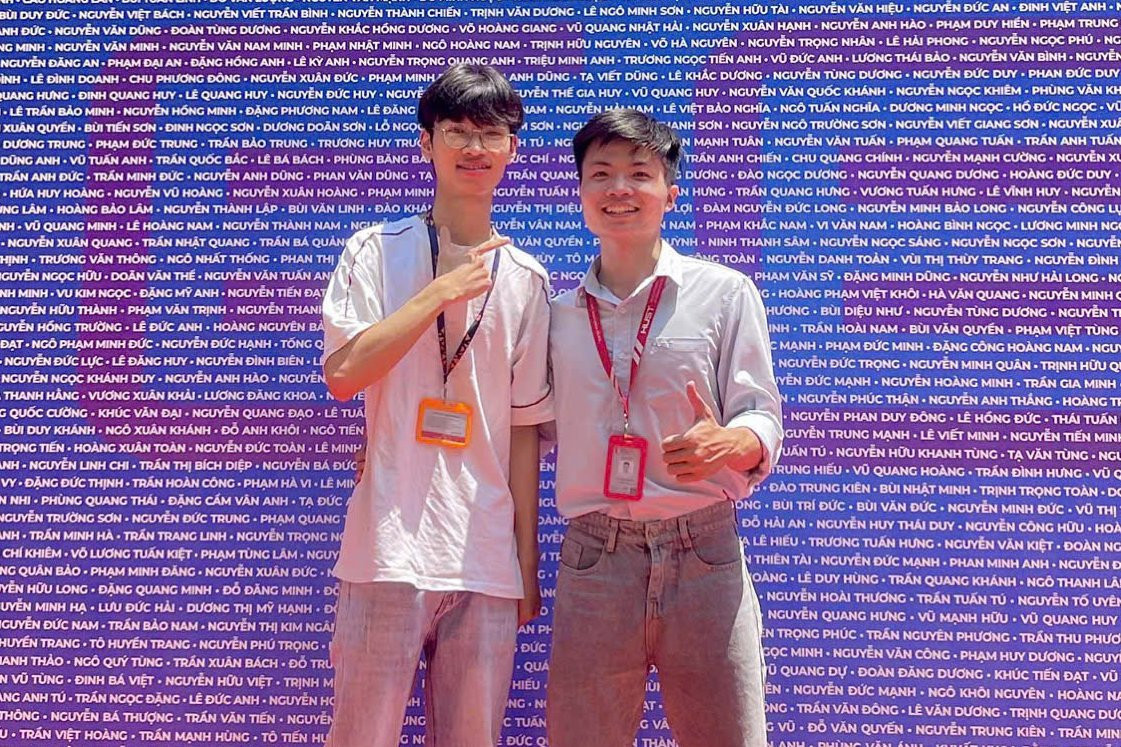
Hai and Toan did more than study together.
They both joined Hanoi University of Science and Technology’s academic support club and became involved in laboratory work early in their university years, gaining research experience and applying classroom knowledge to practical projects.
One of Toan’s research projects involved a wireless power transmission system for capsule endoscopy. The aim was to replace the battery inside the capsule, potentially reducing its size and avoiding health risks associated with an internal battery.
Before graduation, Toan had already started working as a software engineer at Viettel Aerospace Institute.
He began the job in August, before officially receiving his degree, after going through several rounds of interviews following his application in March.
Toan said his current work is closely related to the research direction he pursued in the laboratory.
Hai, meanwhile, continues to work as a research assistant in Associate Professor Le Thanh Huong’s Natural Language Processing Lab at the university’s International Research Center for Artificial Intelligence, known as BKAI.
He hopes to pursue a long-term research career and seek opportunities to study abroad.
Throughout university, the two friends also had a private wager: whoever failed to maintain a 4.0 GPA through graduation would have to treat the other to “a big meal.”
“In the end, we both kept our promise,” Hai said. “So after the graduation ceremony, we’ve decided to celebrate together with a meal marking what we achieved after four years side by side.”
Thuy Nga
.svg)
