 Vietnamnet.vn

 Podcast



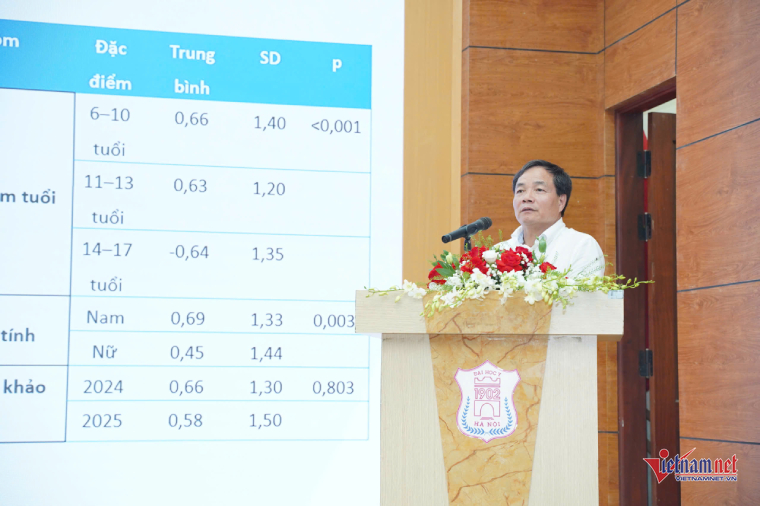
Notably, obese children in this age group often exhibited above-average height, indicating signs of early growth spurts.
The rate of overweight and obesity was most concentrated in the primary school age group (6-10 years), making up 73.2% of all surveyed children.
Boys represented a significant majority at 75.1%, far higher than the rate among girls.
This highlights primary school as a critical risk period, when children are highly susceptible to high-calorie diets and reduced physical activity.
However, the study also revealed a troubling trend: older obese children tend to experience a gradual decrease in height relative to their age, meaning early weight gain does not correspond to long-term height development during adolescence.
Dr. Luu Thi My Thuc, Head of the Nutrition Department at the National Children’s Hospital (Hanoi), explained that excess body fat negatively affects bone health and development.
During the pre-pubertal phase, when bone growth is rapid, obese children may be taller than their peers. However, once they reach puberty, their growth rate slows and stops earlier than non-obese children, resulting in shorter adult height.
Early intervention solutions
Childhood obesity, especially in primary school years, significantly increases the risk of metabolic disorders, type 2 diabetes, and cardiovascular conditions such as high blood pressure and dyslipidemia. It also causes psychological and social challenges.
To address this issue, experts emphasize the importance of early risk detection and comprehensive assessment of growth status to develop effective interventions.
Dr. Duong recommends that tackling childhood obesity requires coordinated action from both families and schools. Early intervention measures for children’s holistic development include:
Regular screening for overweight and obesity indicators at schools, along with nutrition education and physical activity guidance.
Public awareness campaigns promoting healthy lifestyles, with close coordination between families, schools, and community health services to ensure long-term impact.
Nutrition should focus on whole, nutrient-rich foods: leafy vegetables, low-sugar fruits, whole grains, legumes, lean protein (chicken breast, fish, eggs), and healthy fats (vegetable oils, avocado).
Processed foods, fast food, sugary snacks, soft drinks, candy, and refined starches should be limited. Micronutrient supplementation is crucial, particularly during the two “golden growth phases”: ages 1-5 and 11-14.
Children need 7-9 hours of sleep each night to maintain hormonal and metabolic balance. Regular exercise, limited screen time, and stress management are essential to support overall development.
Phuong Thuy
.svg)
