 Vietnamnet.vn

 Podcast



As Christmas draws near, a Christmas model-making workshop in Dong Nai is buzzing with activity. Workers are pulling overtime shifts, rushing to finish each piece in time for delivery.
With just 10 days left until Christmas, the workshop located in Ho Nai Ward, Dong Nai Province, is in full swing. Dozens of workers are clocking extra hours to complete the final touches before the products are delivered to customers in Dong Nai, Ho Chi Minh City, and other southern provinces.
Inside the spacious warehouse, which spans several hundred square meters, rows of Christmas-themed models - from Santa Claus to snowmen, reindeer, and Christmas trees - stand tightly packed. The pieces range from classic to whimsical. Workers move swiftly through the space - cutting foam, sanding surfaces, priming models, and refining each tiny detail - bringing the holiday spirit tangibly to life.
While working, one employee jokes, “This is the only season of the year I get to work with Santa Claus,” drawing laughter despite the busy atmosphere.
For the workers, this is the peak season. Each completed product soon appears at churches, shopping malls, cafés, or check-in hotspots, spreading festive cheer to the public.
Kiều Vy, who carefully paints details on a Santa Claus face, says this is the most important step - it’s when the product comes to life. According to her, building the frame, applying foam, or adding primer can be done by anyone. But painting the face requires precision and emotional connection.
“If the face is off even slightly, Santa won’t look jolly anymore. Sometimes I’m exhausted, but when I get to the eyes, I don’t dare rush. If the eyes aren’t symmetrical, I have to start all over,” Vy shares.
Most of the models here are handcrafted. Workers use knives to slice foam pieces and patiently carve every curve and fold - whether it’s Santa’s outfit or a reindeer’s antlers. The surface is then sanded repeatedly until it feels like real skin - smooth and free of any visible imperfections.
Perhaps the most fascinating feature of the workshop is the robotic arm, which sketches out the basic shape of each model based on a pre-programmed 3D design.
Tam, the worker responsible for quality control, sprays off the fine dust that settles on the models fresh from the robotic arm. He explains that this step, though seemingly simple, is critical. The robot handles the rough shape, but fine details still require a human touch.
“The robot is fast and accurate, but not every detail turns out beautiful. We have to carefully check, sand, and tweak each one to make them smooth and appealing. Ultimately, it’s the craftsman who breathes soul into the piece,” Tam says.
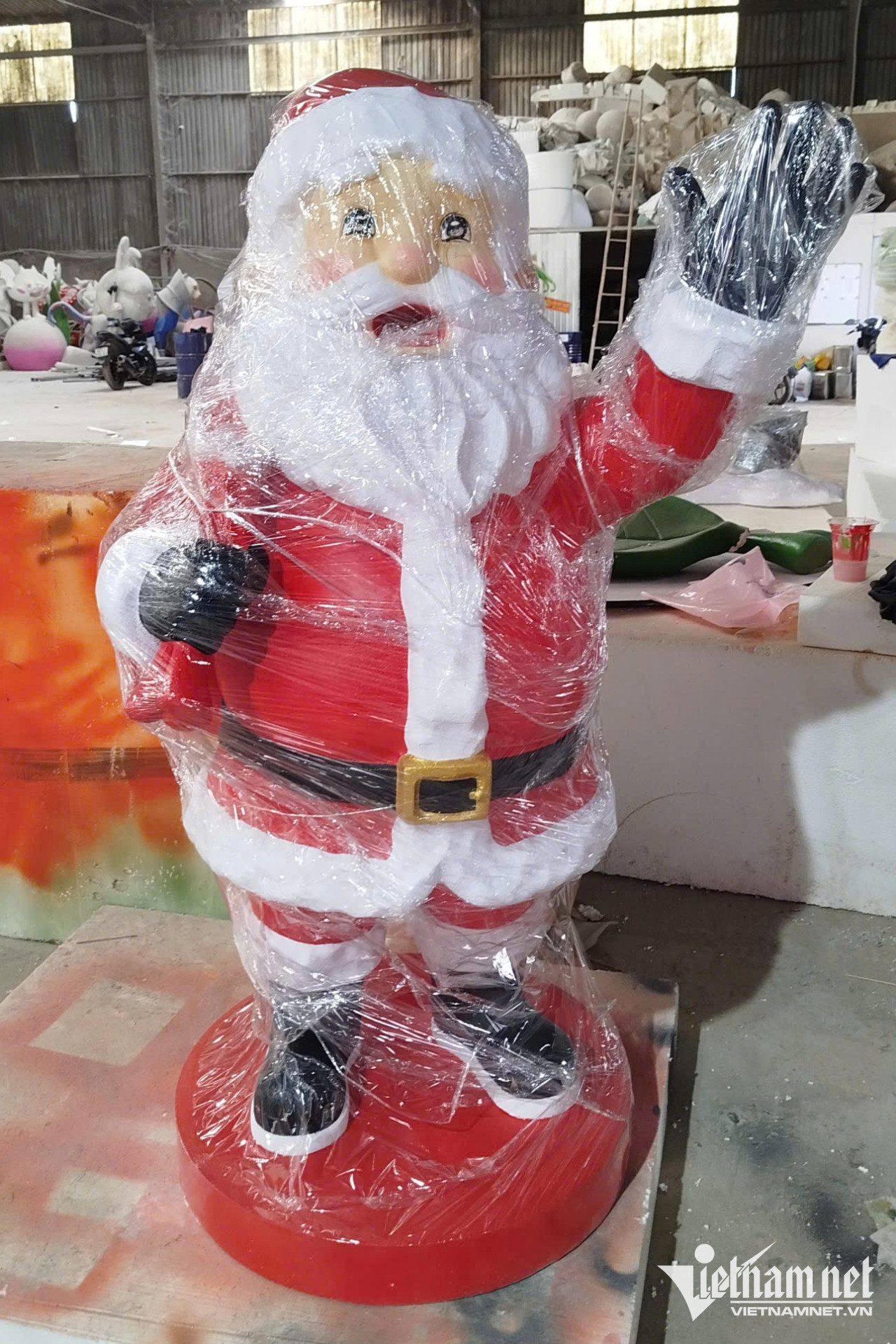
One finished order is now packed and ready to be shipped to a customer.
For these artisans, the sounds of Christmas music playing in the background signal more than just a holiday - it’s a joyful season. Despite the demanding workload, they feel fulfilled knowing their efforts help make the holidays warmer and more delightful for everyone.
According to the workshop manager, production for the Christmas season ramps up in November and continues until just before December 24. During this peak period, workers rarely get a day off. Many stay late into the night to meet deadlines and ensure that each decorative piece is delivered on time.


Inside a busy warehouse, Christmas figures from Santa to reindeer are lined up awaiting finishing touches.
Laughter echoes as a worker jokes about working “with Santa Claus” during the holiday rush.
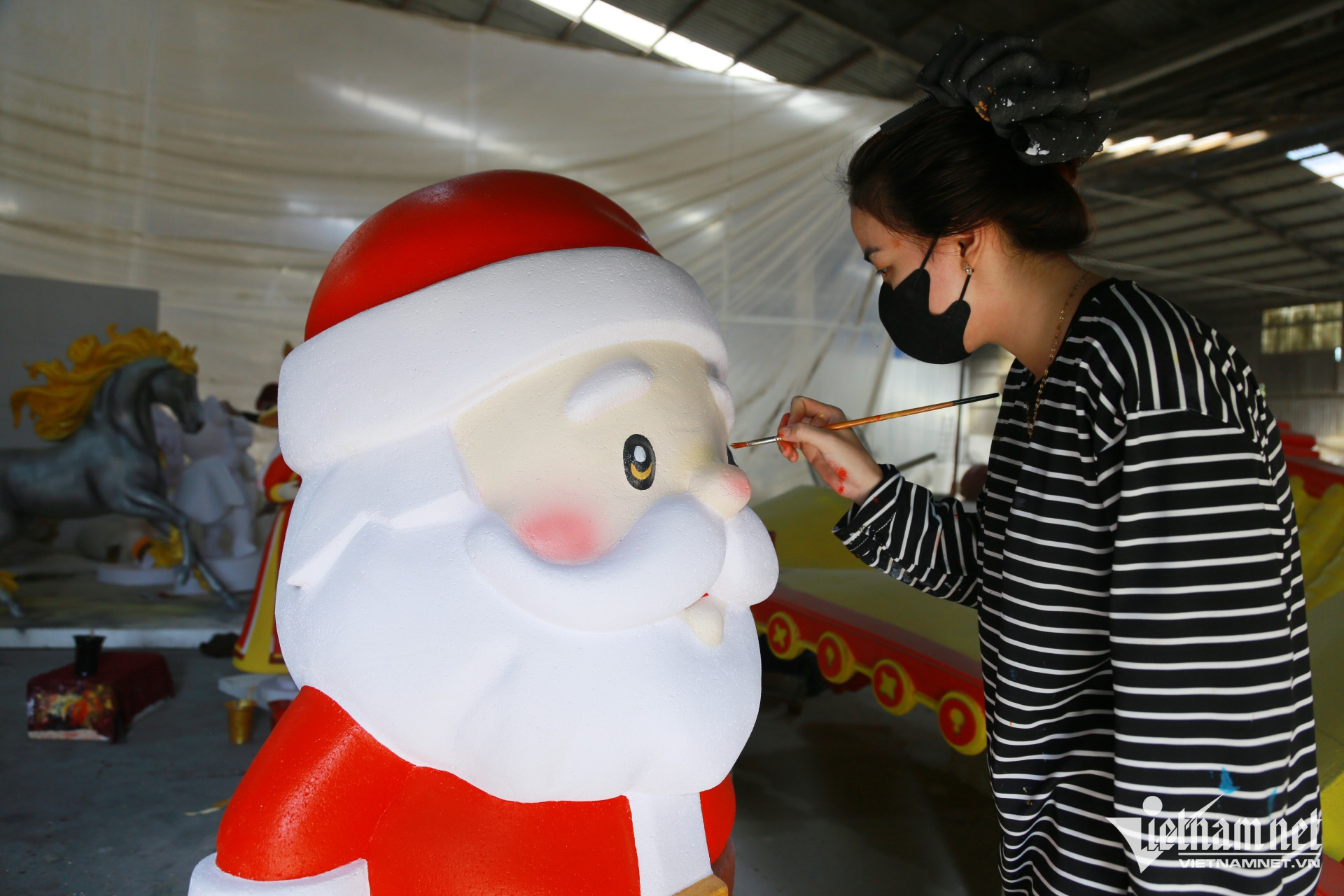
Kieu Vy adds delicate brush strokes to Santa’s face, the final and most expressive step.
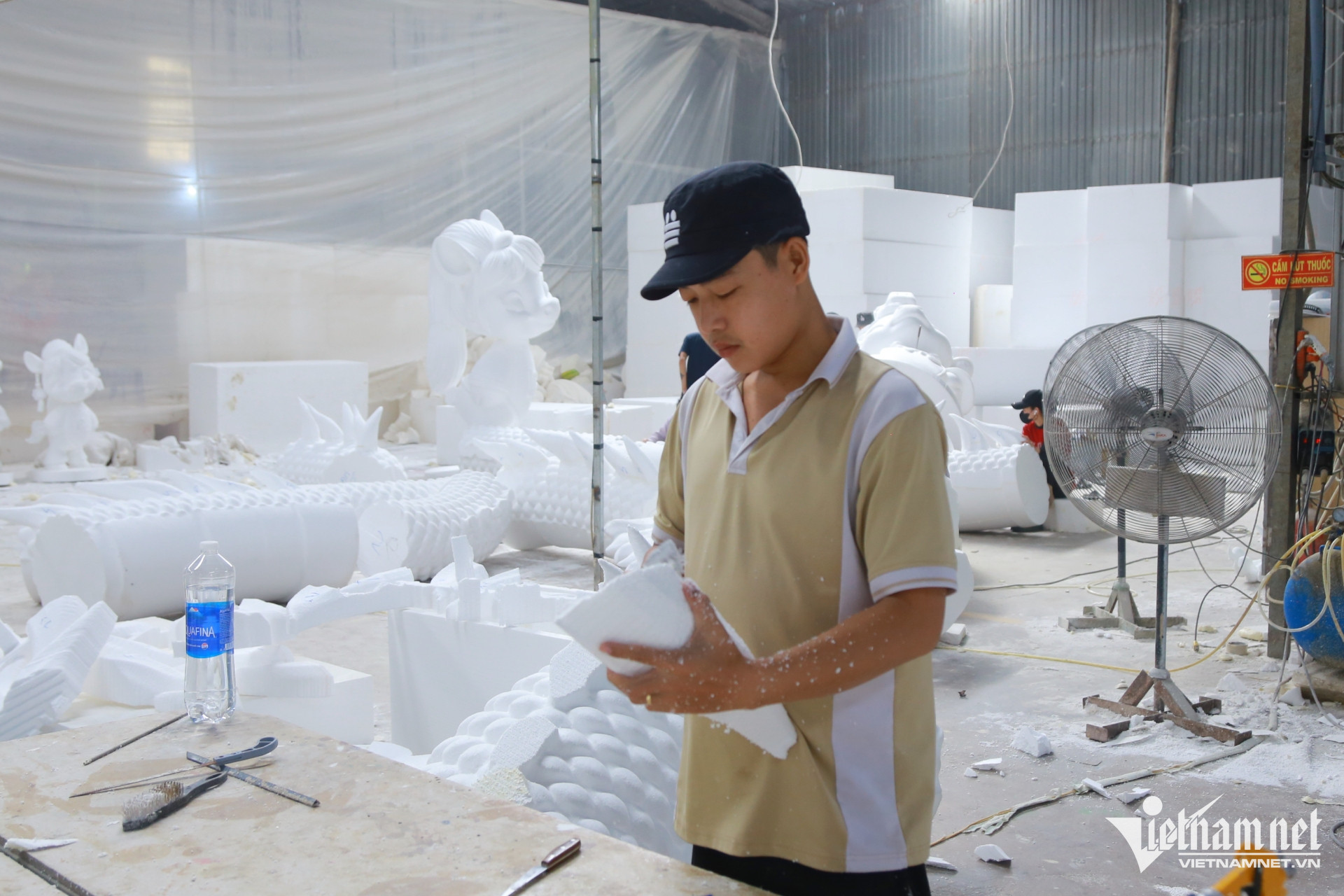
Each foam piece is hand-cut, sanded, and shaped with precision to achieve a lifelike texture.
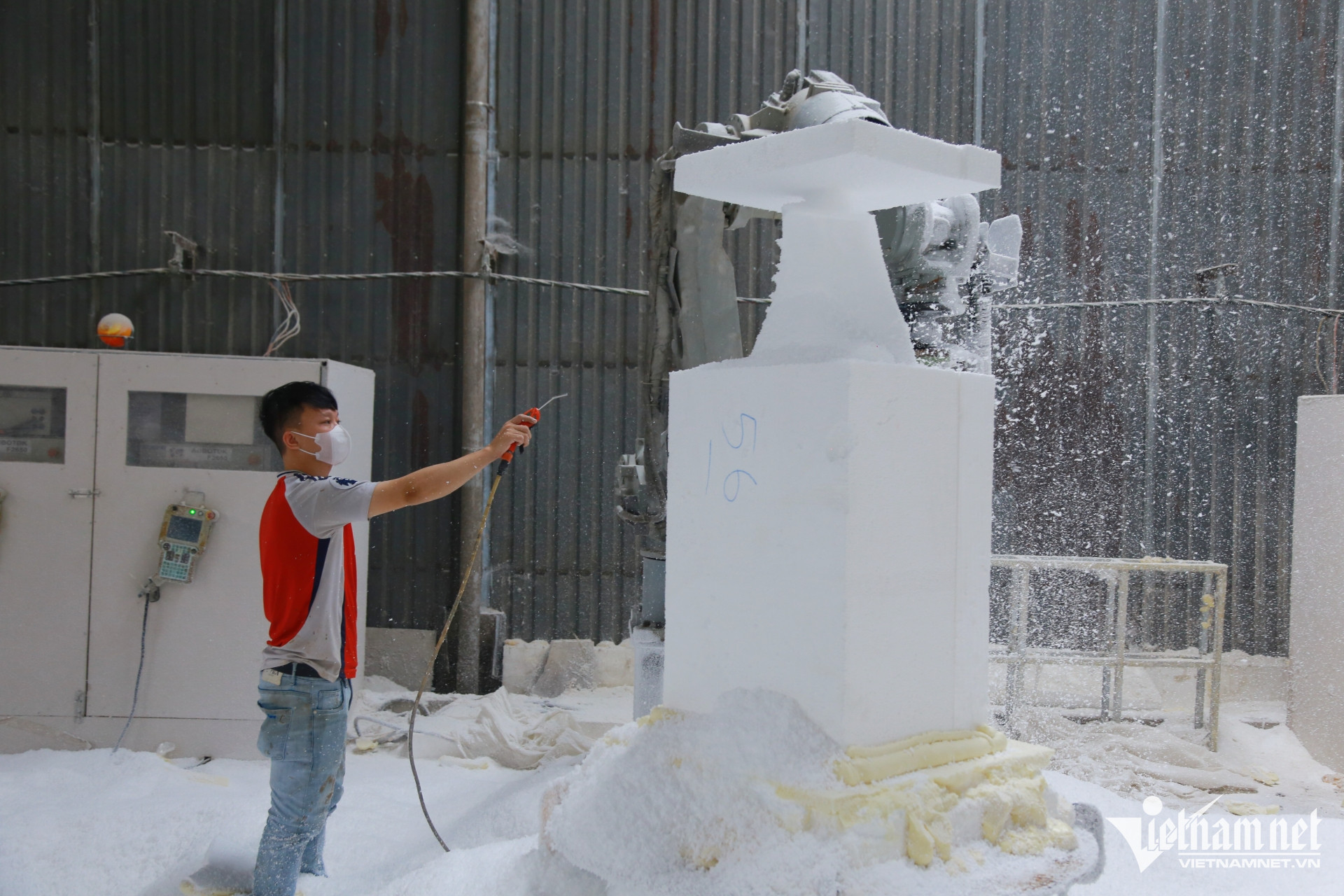
A robotic arm carves model shapes based on 3D designs before human hands refine the details.
Hoang Anh
.svg)
