 Vietnamnet.vn

 Podcast



Six hectares of decontaminated land were officially handed over today at Bien Hoa Airport, alongside the groundbreaking of a thermal treatment system for dioxin remediation – the largest component of the ongoing project, which aims to completely eliminate dioxin contamination at the site by 2030.
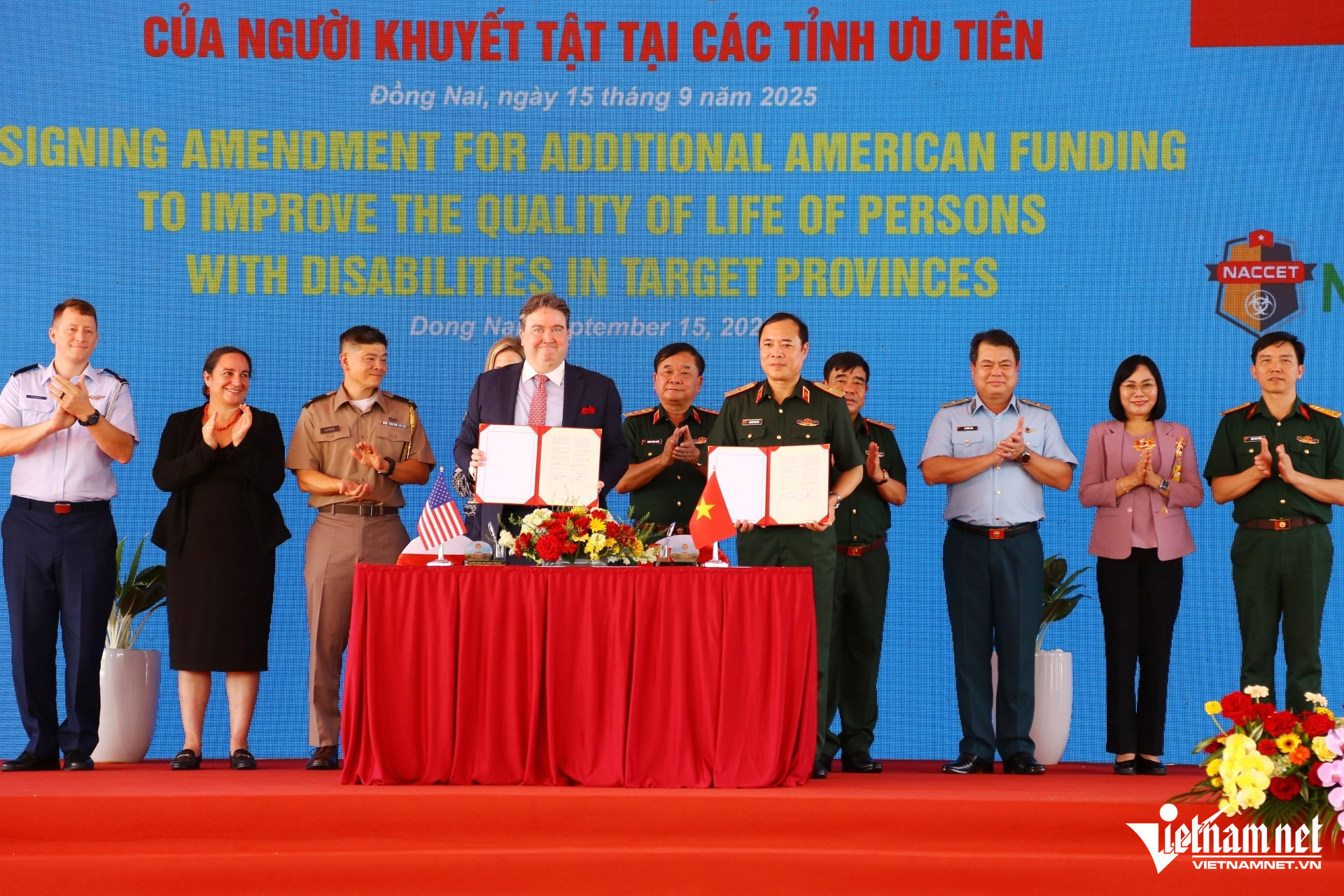
Agreement signed to provide an additional $32 million in ODA funding for a project to improve the quality of life for people with disabilities affected by dioxin. Photo: Hoang Anh
On September 15, in Dong Nai province, the Ministry of National Defense held a ceremony to hand over 6 hectares of land that had been cleaned of dioxin. At the same event, a groundbreaking ceremony was held for the new thermal treatment system and an agreement was signed to supplement grant aid (Official Development Assistance - ODA) for programs supporting people with disabilities affected by Agent Orange.
The dioxin cleanup project at Bien Hoa Airport is a joint initiative between Vietnam and the United States, launched in 2019 and covering an area of approximately 15 hectares. After six years of implementation, nearly half of the contaminated land inside and around the airport has been treated and transferred to the Air Defense - Air Force Service Command and local authorities. These areas will be used for both socio-economic development and national defense purposes.
During the event, representatives from the U.S. Embassy in Vietnam and Major General Nguyen Dinh Hien, Commander of the Chemical Corps and General Director of the National Action Center for Toxic Chemicals and Environmental Treatment (NACCET), signed an agreement for an additional $32 million in non-refundable ODA funding. This funding will help expand the project that improves the quality of life for people with disabilities in provinces heavily impacted by Agent Orange.
The groundbreaking of the thermal treatment system marked a critical milestone in the project. This advanced technology system, the largest component of the project, is expected to become operational in 2026.
Senior Lieutenant General Hoang Xuan Chien, Deputy Minister of National Defense, emphasized that the handover of 6 hectares of clean land and the initiation of the thermal treatment system represent a major step forward. He stated that the event reflects the commitment of both governments and highlights the effective cooperation between Vietnam and the United States in addressing war legacies.
“Today’s launch of the thermal dioxin treatment system at Bien Hoa Airport is a key technological component ensuring the project's success,” said General Chien. “It transforms the commitment of the Vietnamese government and Ministry of National Defense into concrete action, aiming to complete the dioxin remediation at Bien Hoa Airport before 2030.”
U.S. Ambassador to Vietnam Marc Evans Knapper also spoke at the ceremony, noting that this year marks the 30th anniversary of diplomatic relations between Vietnam and the United States. He highlighted the many ongoing joint efforts to overcome the war's aftermath, including the search for fallen soldiers, mine clearance, and support for people with disabilities.
“We are committed to returning Bien Hoa Airport to its original condition, free of dioxin contamination, for future economic development,” said Ambassador Knapper. “Today’s handover of 6 hectares of clean land and the launch of the thermal treatment system demonstrate the shared determination of both governments. We will continue to sign agreements to support individuals affected by dioxin and accelerate other initiatives to address the legacies of war.”
Earlier, on July 27, the U.S. diplomatic mission in Vietnam, through the United States Agency for International Development (USAID), awarded a $32 million contract to Tetra Tech for dioxin treatment in and around Bien Hoa Airport.
Hoang Anh
.svg)
