 Vietnamnet.vn

 Podcast



On June 23, Prime Minister Le Minh Hung, Head of the Government Steering Committee for Science, Technology, Innovation, Digital Transformation and Project 06, chaired a thematic meeting on accelerating the development of science, technology and innovation.
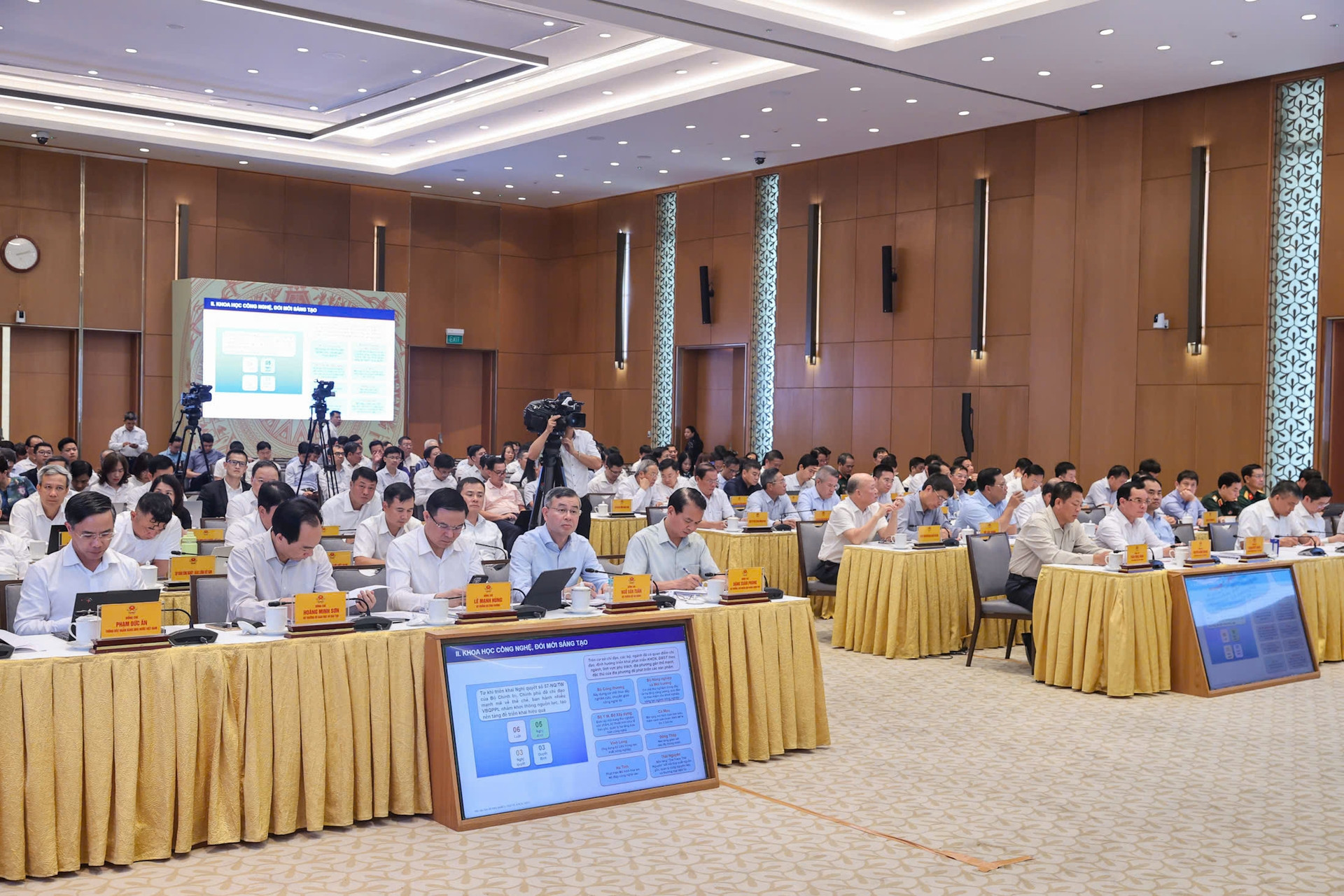
The meeting was held at the Government Office and connected virtually with all 34 provinces and centrally governed cities. It brought together leaders from ministries, government agencies, local authorities, research institutes, universities and technology enterprises.
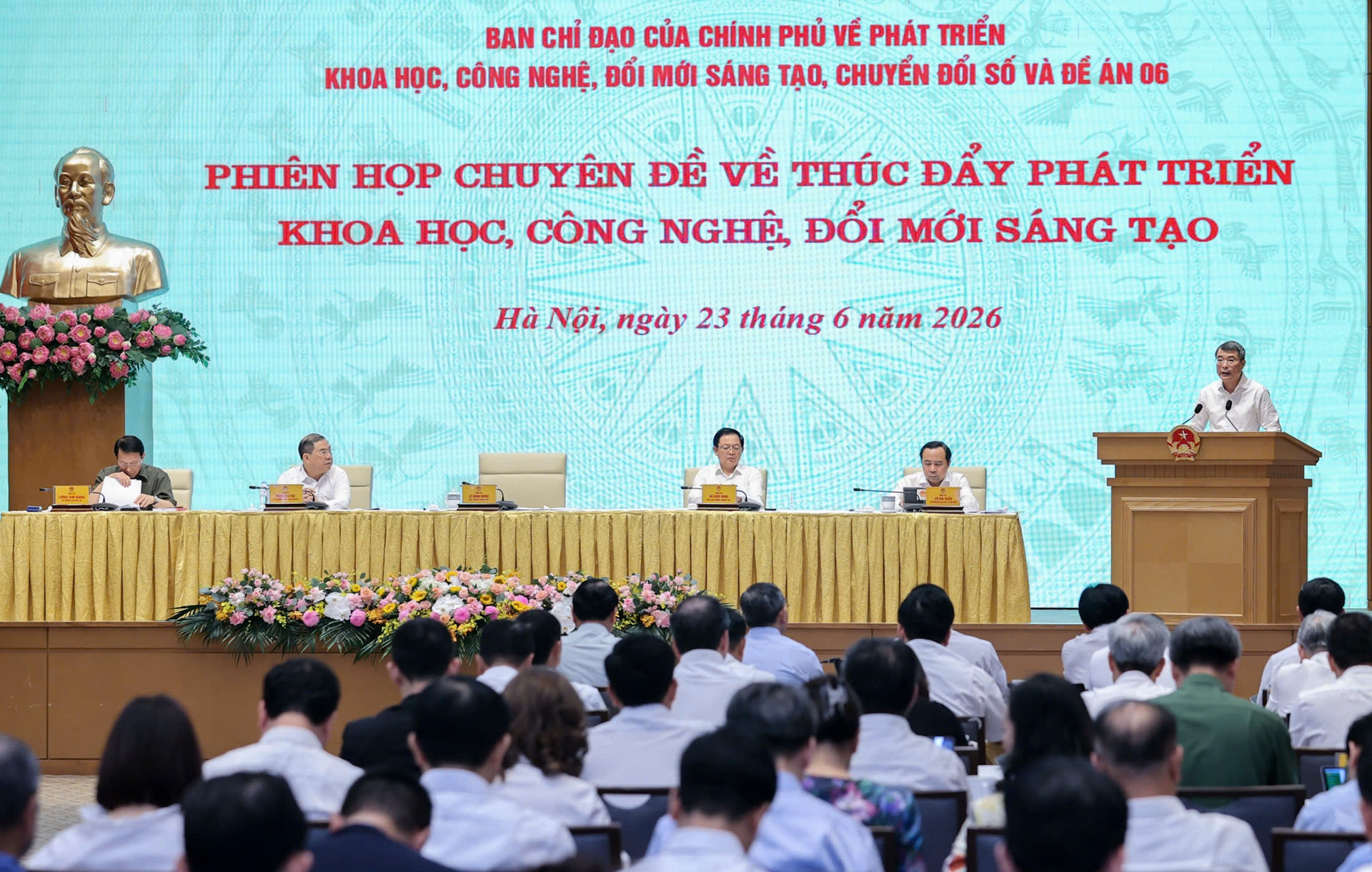
In his opening remarks, Prime Minister Le Minh Hung said the meeting focused on achieving breakthroughs in core technologies, strategic technologies and strategic products that will form the foundation of Vietnam's national digital architecture.
Although Vietnam has already issued its list of strategic technologies and products, he stressed that stronger alignment in both understanding and implementation is required to ensure practical results rather than a "follow-the-trend" approach.
The Prime Minister also called for removing institutional and policy bottlenecks while identifying the critical constraints that must be addressed to shorten the path from research to commercialization. He emphasized the need to clearly define responsibilities so ministries, local authorities, research institutions, universities and enterprises can contribute proactively.
From strategic technology lists to a clear task assignment mechanism
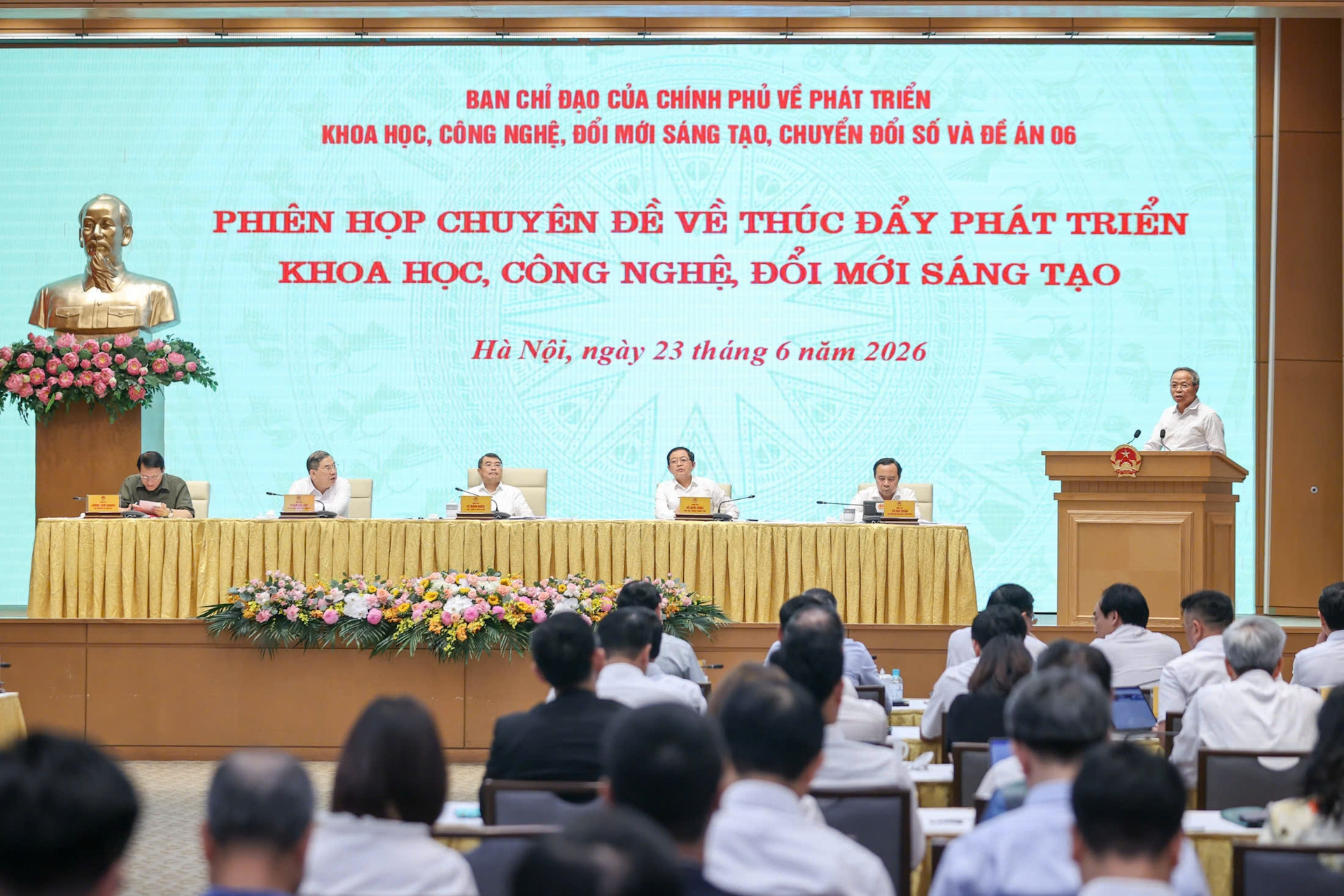
Speaking on behalf of the technology industry, Nguyen Trung Chinh, Chairman of CMC Corporation, said Vietnam has taken the right approach by identifying priority core technologies, strategic technologies and establishing an overall technology architecture.
According to Chinh, the architecture provides a strategic roadmap, while defining the country's priority core technologies - initially 11 and later refined to 10 - represents an appropriate policy direction.
However, he said the greatest challenge now lies in implementation.
"CMC is one of seven technology enterprises selected to work alongside the Government in implementing strategic technology initiatives. However, it remains unclear which enterprise will be responsible for which technology," Chinh said.
According to the CMC Chairman, the semiconductor sector is currently the only area where responsibilities have been assigned relatively clearly, with Viettel taking the lead.
For other strategic technologies, however, no transparent allocation mechanism has yet been established. Although the list of strategic products and missions is extensive and many enterprises are prepared to participate, there is still no sufficiently clear mechanism for selecting companies and assigning responsibilities.
He proposed that for each strategic technology, the Government should first define the specific national missions that need to be carried out. Relevant authorities should then organize a transparent selection process to identify the most qualified enterprises and assign those missions accordingly.
"Only through such a mechanism can we remove today's bottleneck," Chinh said.
Financial resources exist, but disbursement remains difficult
According to Chinh, Vietnam does not fundamentally lack financial resources for science and technology. The real bottleneck is that although funding has been allocated, disbursement remains difficult because there is no clear mechanism for selecting enterprises to undertake national missions.
Although current policies allow direct appointment in certain cases, ministries, agencies and local governments remain cautious because no one can be certain how decisions made today will be evaluated five or ten years from now.
For this reason, Chinh argued that the task assignment mechanism should also protect decision-makers by providing a clear legal framework for government agencies while giving businesses the confidence to make long-term investments.
He also suggested that ministries and local authorities should avoid including every possible technology area in their strategic development plans. Instead, priorities should be determined based on the capabilities, resources and competitive advantages of each sector and locality.
This recommendation echoed the Prime Minister's remarks urging local governments to focus on development priorities aligned with their unique strengths rather than pursuing an overly broad range of initiatives.
Enterprises must be the primary implementation force
Chinh raised a fundamental question: who should be responsible for implementing strategic technologies? In his view, the answer lies in developing strong national technology enterprises.
He cited Huawei as an example of a company that started from a position comparable to Viettel but has since grown into a globally competitive technology leader. China has assigned Huawei specific national missions in areas such as semiconductors and artificial intelligence. Samsung plays a similar role in South Korea.
"I believe the Government should take bold steps to establish a transparent mechanism for selecting enterprises and assigning strategic missions," the CMC Chairman said.
Regarding CMC, Chinh said the company has officially registered to undertake two national strategic missions in cloud computing and artificial intelligence. These commitments were made in the presence of the General Secretary of the Communist Party of Vietnam, with CMC committing significant investment and resources. However, no implementation mechanism has yet been established.
In semiconductors, Chinh said CMC and Viettel have already discussed dividing responsibilities according to their respective strengths. While Viettel would focus on manufacturing, CMC would specialize in chip design.
He noted that CMC already possesses the necessary design capabilities, while outsourcing manufacturing to Samsung or other international partners is standard practice within the global semiconductor value chain.
"Each enterprise can contribute according to its own strengths," he said.
A transparent post-evaluation mechanism is equally essential
The CMC Chairman emphasized that among the issues facing strategic technology enterprises, the most urgent is the task assignment mechanism, describing it as "the bottleneck behind all bottlenecks."
According to him, once a company is assigned a national mission, it must commit to delivering the expected outcomes. At the same time, the Government should establish a transparent post-implementation evaluation mechanism.
For example, if an enterprise fails to complete its assigned mission within 18 months, there should be clear accountability measures. Conversely, enterprises that successfully deliver should receive appropriate incentives and policy support.
Chinh said such an approach would prevent vague task assignments with unclear accountability while encouraging businesses to invest confidently in high-risk, foundational technologies with long-term strategic impact.
He also proposed expanding public-private partnerships (PPP) in the information technology sector. While several large-scale infrastructure projects have already been entrusted to private enterprises, he hopes similar flagship programs - whether valued at USD1 billion or USD5 billion - can also be launched in the digital technology sector.
"With clear task assignments and the right enabling mechanisms, Vietnam is fully capable of building globally competitive technology enterprises like Huawei and Samsung in the future," Nguyen Trung Chinh concluded.
The meeting took place as the Government accelerates implementation of Resolution No. 57-NQ/TW on science, technology, innovation and digital transformation. For technology enterprises, expectations have shifted beyond simply participating in the market toward undertaking strategic national missions and strengthening Vietnam's technological self-reliance.
PV
.svg)
