 Vietnamnet.vn

 Podcast



Along the coastal route from Phuoc Hai to Ho Tram in Ho Chi Minh City, a series of luxury resort and tourism projects once heavily promoted have now become empty lots or abandoned construction sites, some lying dormant for years.

According to a VietNamNet reporter’s observations in mid-September, on the coastal route from Phuoc Hai commune along Provincial Road DT44A to Ho Tram (in the former Ba Ria - Vung Tau province), numerous abandoned tourism projects can be seen. Rusted corrugated iron fences and locked gates guard overgrown land where unfinished structures stand exposed to the elements.
Several projects have only partially completed a few construction items. Their skeletal frameworks now bake under the sun and soak in the rain, creating a desolate scene along what was once dubbed a “billion-dollar coastal corridor.”

One prominent example is the Hai Minh Tourism Complex at the foot of Minh Dam Mountain, also known as Cross Long Hai. The project had a total investment of over 2.2 trillion VND (approximately $88 million) and covered 50,437 square meters. It was designed with two 15-story condotel blocks (658 units) and around 60 luxury villas.
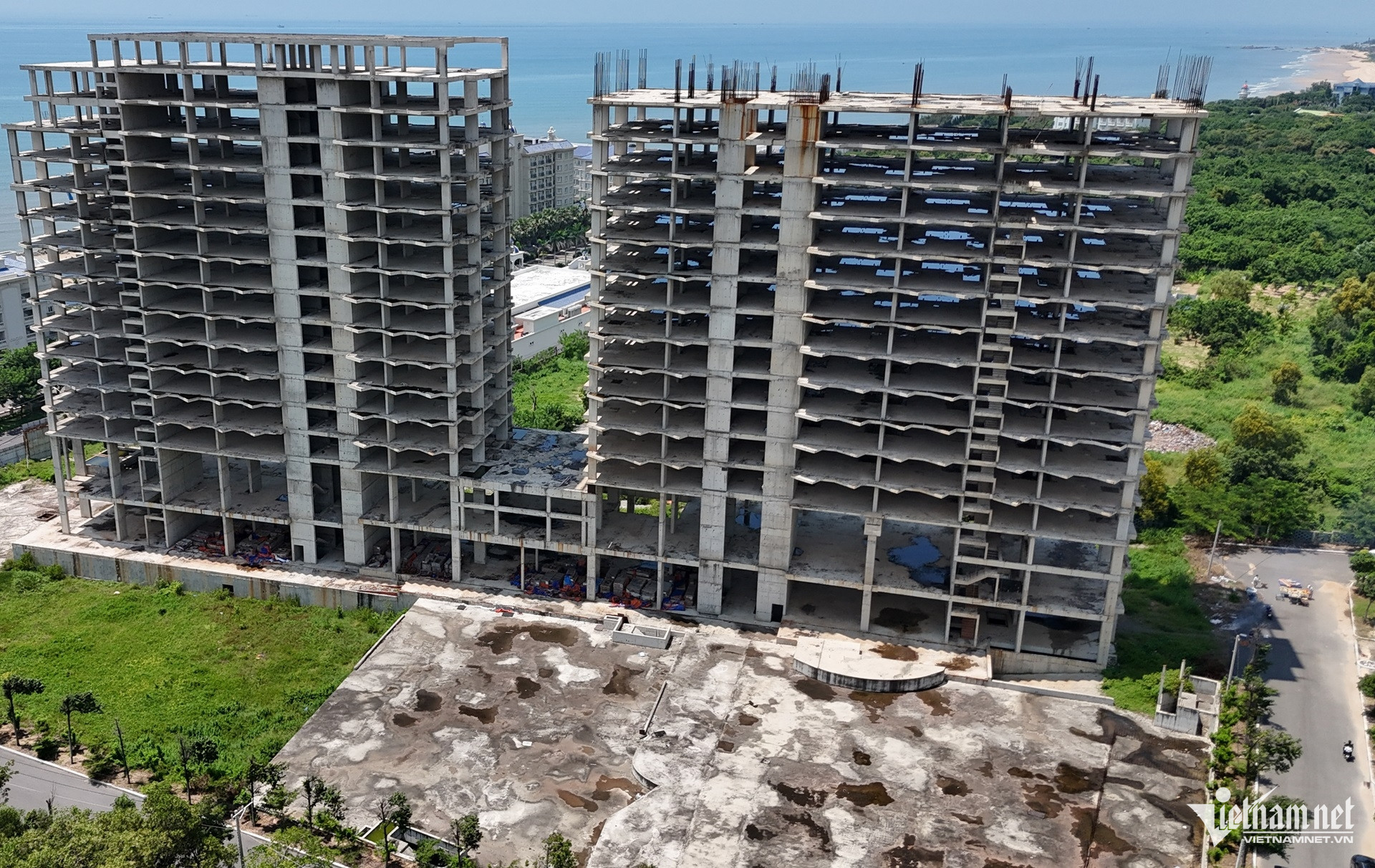
In 2019, the investor launched widespread promotional campaigns claiming the project would be operational by Q4 2022. However, to date, only the rough construction of the two condotel blocks has been completed. Construction slowed and eventually halted in 2020.

Just about 10 meters away lies the Ben Thanh - Long Hai Tourism Project (marketed as Wyndham Tropicana Long Hai), developed by Phat Dat Real Estate Development Corporation. It was introduced as a 5-star international resort, with total adjusted investment rising to 12.145 trillion VND (approx. $485 million) across 12.6 hectares of coastal and mountainous land. Plans included hundreds of hotel rooms, villas, restaurants, swimming pools, and conference facilities.
Although construction started in Q4 2019 with a handover goal of Q2 2024, the site remains mostly vacant. A few partially built structures have since been abandoned.
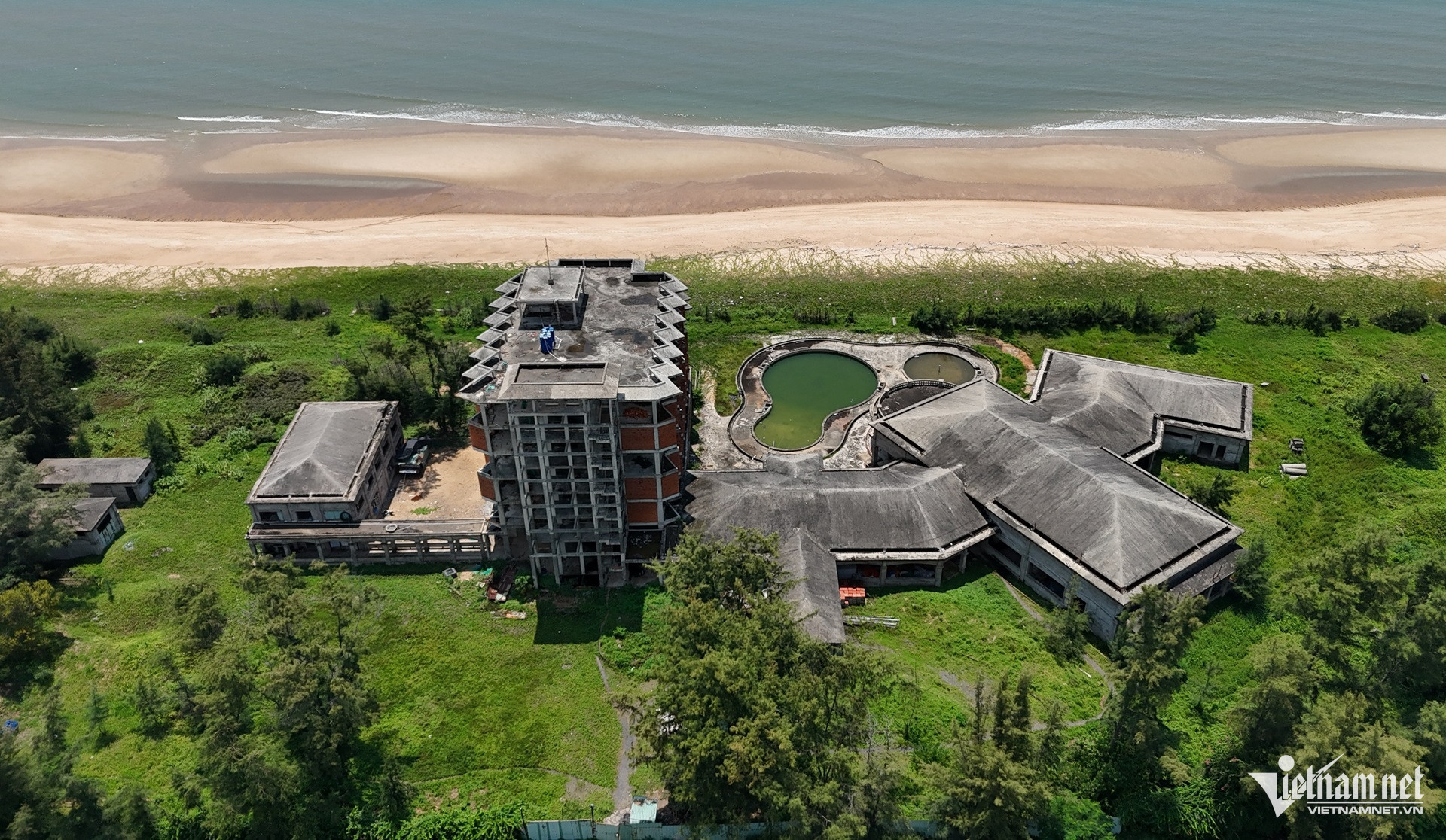
Some resort buildings were nearly completed but are now covered in moss, giving the once-promising developments a neglected appearance.
“Since construction began, we’ve only seen them build a few things and put up fences. That’s it. All this prime land left idle - it’s such a waste,” said Phuoc Hai resident Nguyen Thi Loan.

This situation isn’t limited to Phuoc Hai. Further down the coast toward Ho Tram - once hailed as Ho Chi Minh City’s new “tourism capital” - several other resort projects are similarly stalled.
Some are now just empty sand lots, while others have built hundreds of villas that have since fallen into disrepair and severe deterioration.

At the end of 2021, Charm Group launched its flagship 6-star Charm Resort Ho Tram along this coastal road. According to promotions, the project was to start in Q4 2021 and be handed over by Q4 2023. However, after a grand groundbreaking ceremony, the site now consists of abandoned villas. Many structures are visibly deteriorating, covered in moss and algae.
Despite being professionally designed, the beachfront villas now stand incomplete and battered by the elements. Rusting steel, stained walls, and water collecting on ceilings create a dismal scene.


Most of the land remains idle, overrun by wild vegetation.
According to official sources, at the beginning of 2025, the People's Committee of Ba Ria - Vung Tau (former province) established a task force to review all coastal projects. Preliminary findings revealed that many projects are behind schedule or are not utilizing land according to approved timelines.

To address this, the local government has planned to revoke licenses from stalled or long-delayed projects while offering procedural support to those with development potential to speed up progress. Authorities are also considering re-auctioning the land of revoked projects to attract financially capable investors and reinvigorate the region as a tourism and maritime economic hub.
Quang Hung
.svg)
