 Vietnamnet.vn

 Podcast



Cu De River, also known as Truong Dinh River, is situated in the northwest Da Nang. Its upper reaches are in Hoa Bac Commune, Hoa Vang District, while its lower reaches meet the Nam O estuary in Hoa Hiep Bac Ward, Lien Chieu District.
The river’s name comes from its flow through Cu De Village at its lower end. Remarkably, at the estuary where the river meets Nam O sea, a strange aquatic species appears each early summer, around the second to fourth lunar months.
Local fishermen call it ‘bun me’, while its eggs ‘bun song’, seen as a “heaven-sent” delicacy to make unique, flavorful dishes.
Le Uc, a resident of Van Hamlet in Hoa Hiep Bac Ward, Lien Chieu District, said Cu De nurtures various seafood like shrimp, jellyfish, fish, and snails.
Bun song has emerged in recent years. Named for their vermicelli (bun)-like appearance, they are smaller, pale green or slightly yellowish, and coil into small clumps.
“Bun me reproduce at night in large numbers, laying egg strands called bun song, which form pale green clumps,” Uc explained.
To harvest bun song, locals set nets along the riverbank at dusk to trap bun me to lay eggs. The method is very effective because they often breed in places with many obstacles.
Meanwhile, strong men prefer diving about 5 meters deep in mid-river and collecting bun me with their hands. The method keeps bun song intact, ensuring freshness and crispness, fetching higher prices.
On average, divers collect 1-2 kg per dive. If they catch bun me, they harvest the eggs and release the mothers back into the river. Uc noted that bun song thrive only in flowing, clear, pristine water.
From his experience, if rain or water pollution occurs during their breeding season, bun song vanish, yielding no harvest.
Freshly spawned bun song are pale green, crisp, cool, and mildly sweet. If they turn yellowish, they’ve aged, losing their unique flavor.
Though not widely known, bun song is a common ingredient for households near Nam O estuary. Many local eateries and restaurants now feature bun song dishes on their menus. They can be used in soups, stir-fries, or rolls, but most popularly, used to make ‘goi’ (dish made of raw fish and vegetables).
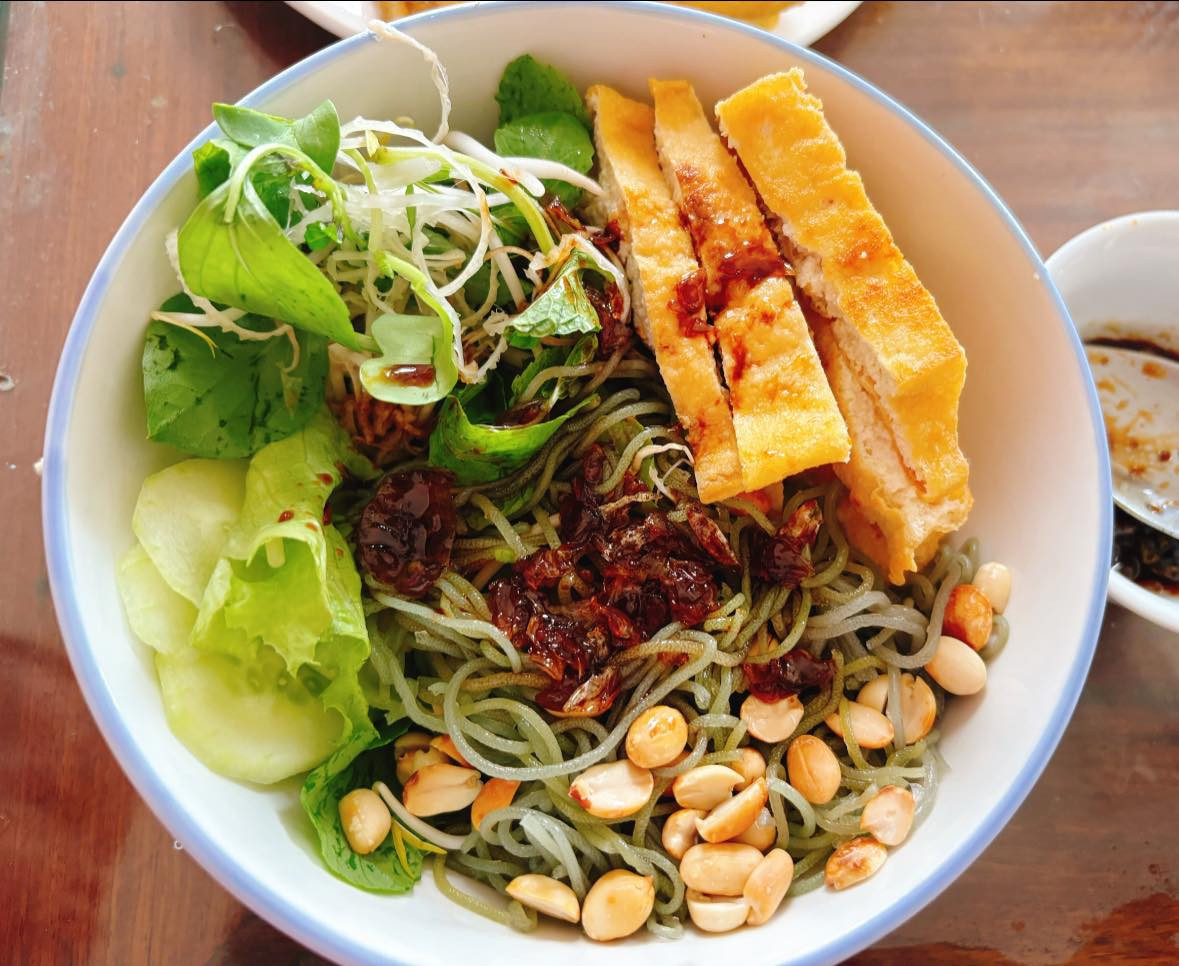
Bun song is mixed with fish sauce, garlic, chili, and ingredients like local shrimp, pork belly, pineapple, thinly sliced cucumber, shredded carrots, herbs, and roasted peanuts.
“The secret to a tasty bun song salad lies in the mixing. Ingredients must cool after preparation or cooking before being tossed evenly. Mixing ingredients while they are still hot may dull the natural green color and soften the crisp texture,” said Kieu Giang, owner of a local eatery in Lien Chieu District.
Thao Trinh
.svg)
