 Vietnamnet.vn

 Podcast



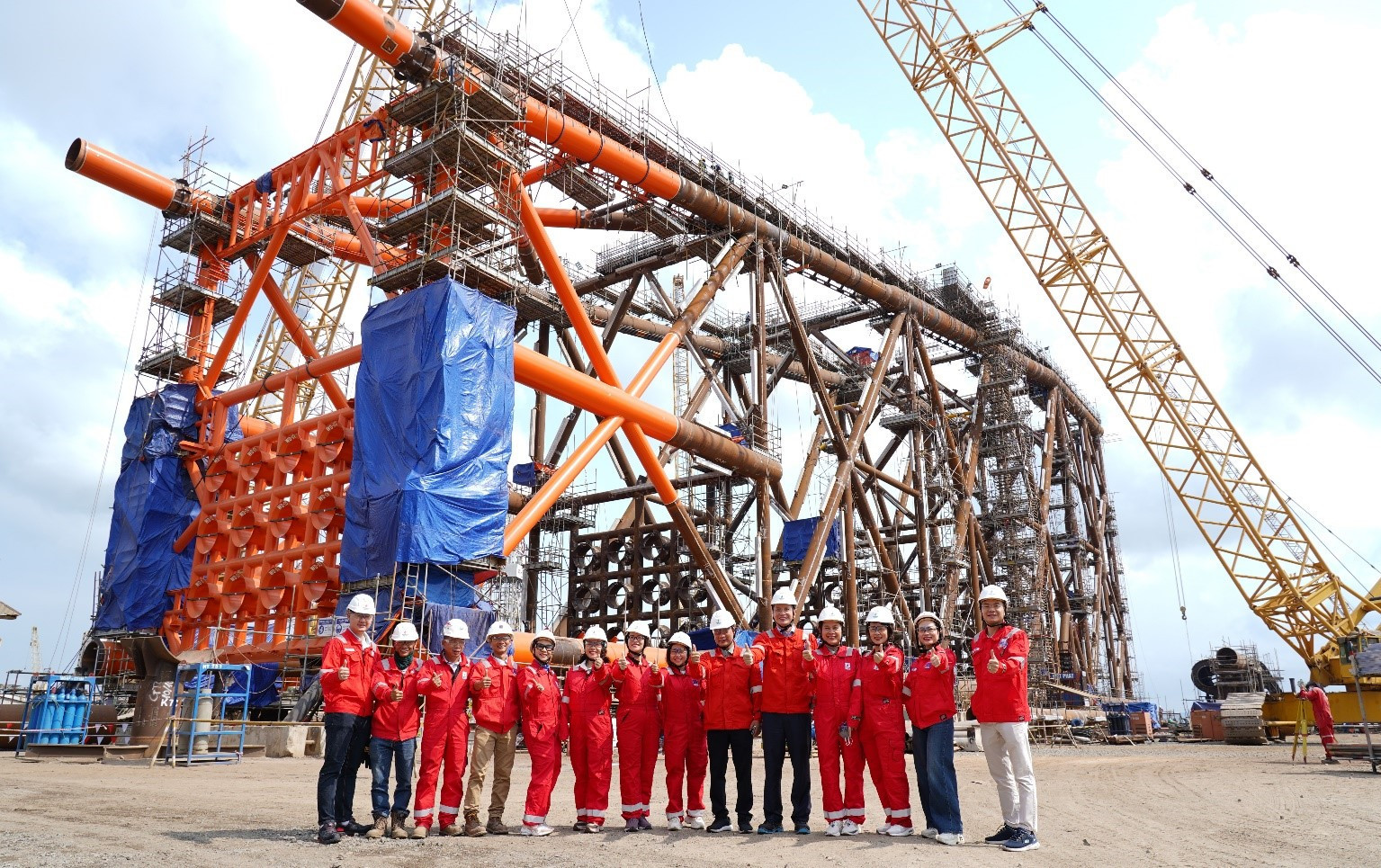
Amid a global oil and gas sector facing declining reserves and pressure to optimize costs, the project titled “Research and application of breakthrough scientific and technological innovations to restore, expand, and enhance the efficiency of Dai Hung oil field exploitation” has emerged as a rare bright spot in Vietnam.
With a unanimous nine votes from the Council for the Ho Chi Minh Prize and State Prize, the work has been recognized academically and has demonstrated its clear practical value.
An interdisciplinary field survey on April 14 by the Ministry of Finance and the Ministry of Science and Technology at the Dai Hung Nam platform base praised the project’s scientific rigor, systematic approach, and practical impact.
As early as 2011, the foundation for the WHP-DH02 platform, the first wellhead platform in deep waters of the Nam Con Son basin, was designed, fabricated and installed entirely in Vietnam, opening a new phase of full localization in offshore engineering.
During the field survey trip, the delegation noted that this is not merely an applied research project, but an integration of scientific thinking, innovation capacity, and operational experience, delivering outstanding efficiency across the entire chain of exploration, development, and production.
The results achieved at Dai Hung show evidence of Vietnamese engineers’ ability to master, adapt and develop technologies in complex geological conditions and harsh operating environments.
A notable highlight is the “reverse approach”: instead of importing technology, Vietnamese engineers designed, customized, and fine-tuned solutions tailored to the field’s unique geological conditions.
This approach helped resolve bottlenecks that international contractors had previously been unable to fully address, from geology and drilling to field development and operations.
Dramatic turnaround
Few could have imagined that Dai Hung, once seen as a burden, would become a project generating billions of dollars in revenue. From the risk of shutdown, the field has been strongly revived, contributing more than $600 million to the state budget.
Output peaks at nearly 30,000 barrels per day, with total production projected to reach 123 million barrels by 2034.
But the bigger value is that, for the first time, Vietnam has mastered the entire oil and gas value chain, from exploration, drilling and well completion to the design, fabrication and operation of offshore facilities.
Beyond economic efficiency, the project marks a major milestone in technological self-reliance. For the first time, Vietnam’s oil and gas sector has taken full control of the value chain, laying a solid foundation for similar projects in the future without relying on foreign partners.
The technological solutions standardized at Dai Hung, such as the lightweight platform model connected to satellites, the CALM buoy system, and seismic data processing technology, have become "standards" for many projects in the Nam Con Son area. This not only helps optimize costs but also improves efficiency on a large scale.
The project has also promoted the domestic supporting industrial ecosystem. Numerous units such as PTSC, VSP, PVD, PVT, and the Dung Quat Shipyard have participated deeply in the value chain, enhancing their capacity and gradually asserting their positions in the regional market. This helps reduce costs, increase efficiency, and especially reduce dependence on foreign technology.
Energy, sovereignty, and maritime strategy
The significance of Dai Hung goes beyond revenue figures. As traditional oil fields decline in output, Dai Hung plays a crucial role in ensuring national energy security. With peak output nearing 30,000 barrels per day and total projected production of 123 million barrels by 2034, the field serves as a stable pillar for crude oil supply, reducing import dependence.
The continuous presence of oil and gas infrastructure at Dai Hung carries special significance in affirming Vietnam’s sovereignty in the East Sea under the United Nations Convention on the Law of the Sea (UNCLOS 1982). It also contributes to implementing Resolution No 36-NQ/TW on sustainable development of Vietnam’s marine economy.
Du Lam
.svg)
