 Vietnamnet.vn

 Podcast



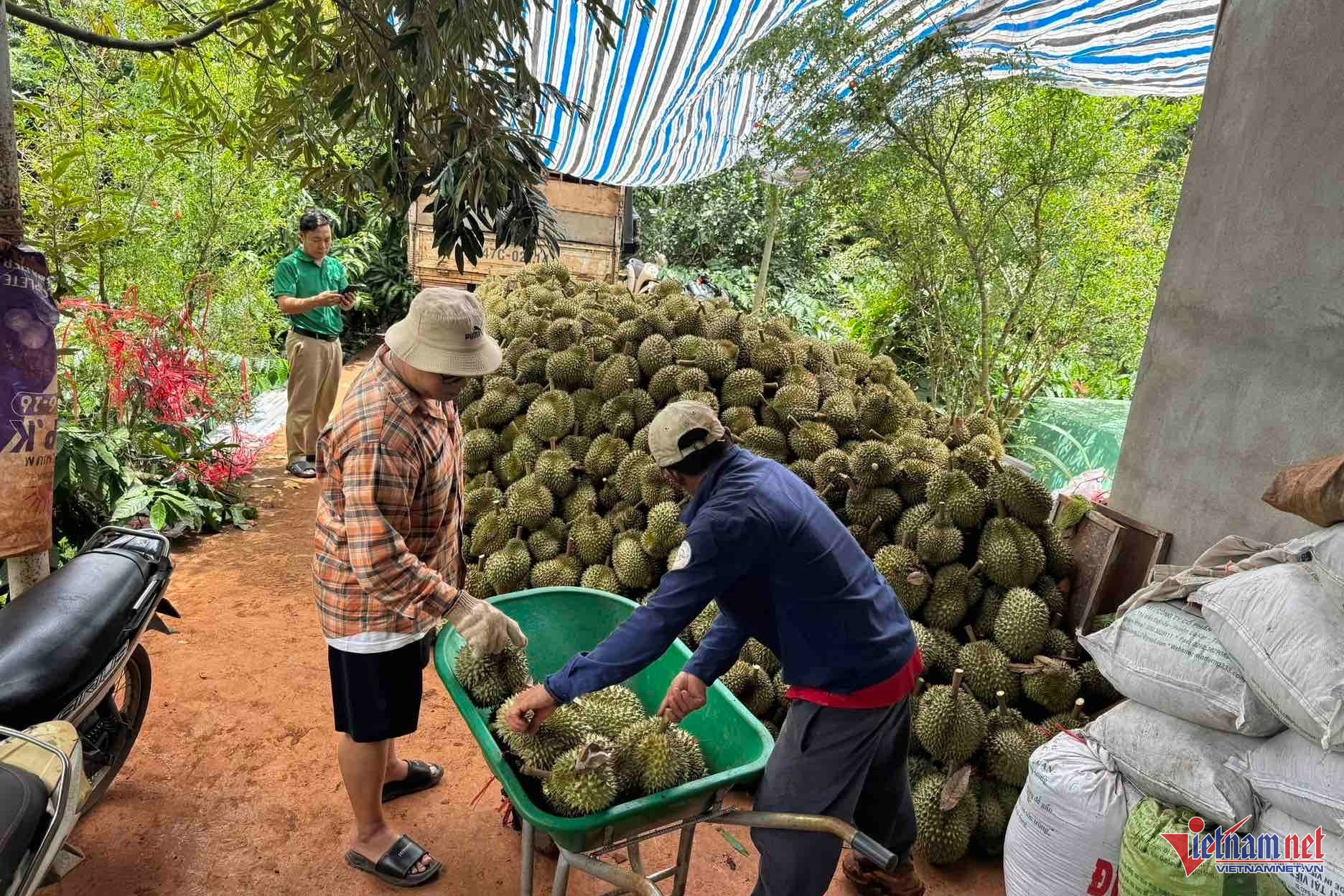
On March 25, the Dak Lak People’s Committee announced the issuance of a regulatory framework for durian trading across the province. The document is considered a crucial legal step to establish order in the market, safeguard the interests of farmers and maintain the credibility of Dak Lak durian both domestically and internationally.
Farmers and businesses engaged in durian production and trade have expressed strong support for the move, noting that the regulation not only protects legitimate stakeholders but also enhances market transparency.
Nguyen Xuan Bang, a durian purchasing representative, said the sector has faced multiple challenges in recent years, most notably the falsification of planting area codes.
According to Bang, some traders have brought in durians from other regions, falsely labeling them as Dak Lak produce for profit. In addition, widespread practices such as contract breaches and deposit forfeitures have disrupted the market and directly harmed farmers’ interests.
“The introduction of stricter management at this time is necessary. It creates a legal framework that protects honest farmers and businesses, allowing them to benefit sustainably,” he said.
He also called on authorities to continue supporting farmers in registering additional planting area codes, noting that the current number of export-certified areas remains limited.
Nguyen Phi Long, a durian farmer in Krong Nang district, emphasized that the new regulation is both timely and essential, providing a solid foundation for legitimate business operations.
He noted that the framework would deliver multiple benefits, including improved market transparency, stronger protection for farmers and more effective prevention of trade fraud, particularly the harvesting of unripe durians.
The regulation also introduces stricter oversight of traders, ensuring product quality and helping preserve the reputation of Dak Lak durian in particular and Vietnamese durian in general. It requires all businesses and traders, whether local or from other provinces, to register and declare their activities, enabling authorities to conduct inspections and enforce compliance.
“It clearly defines the rights and responsibilities of both buyers and sellers, encouraging legal compliance in purchasing contracts and reducing disputes related to deposit agreements,” Long said.
Le Anh Trung, Chairman of the Dak Lak Durian Association, described the regulation as timely and appropriate.
“It provides an important legal corridor for businesses, farmers and traders to better understand their responsibilities in production, procurement, packaging and export,” he said, adding that it will also help authorities strengthen monitoring and improve the overall efficiency and quality of the durian sector.
According to 2025 statistics, Dak Lak has nearly 45,000 hectares of durian cultivation, with an estimated output of 390,000 tonnes and export revenue reaching approximately US$1.1 billion.
The province is widely regarded as Vietnam’s “durian capital,” accounting for roughly one-quarter of the country’s total cultivation area.
Hai Duong
.svg)
