 Vietnamnet.vn

 Podcast




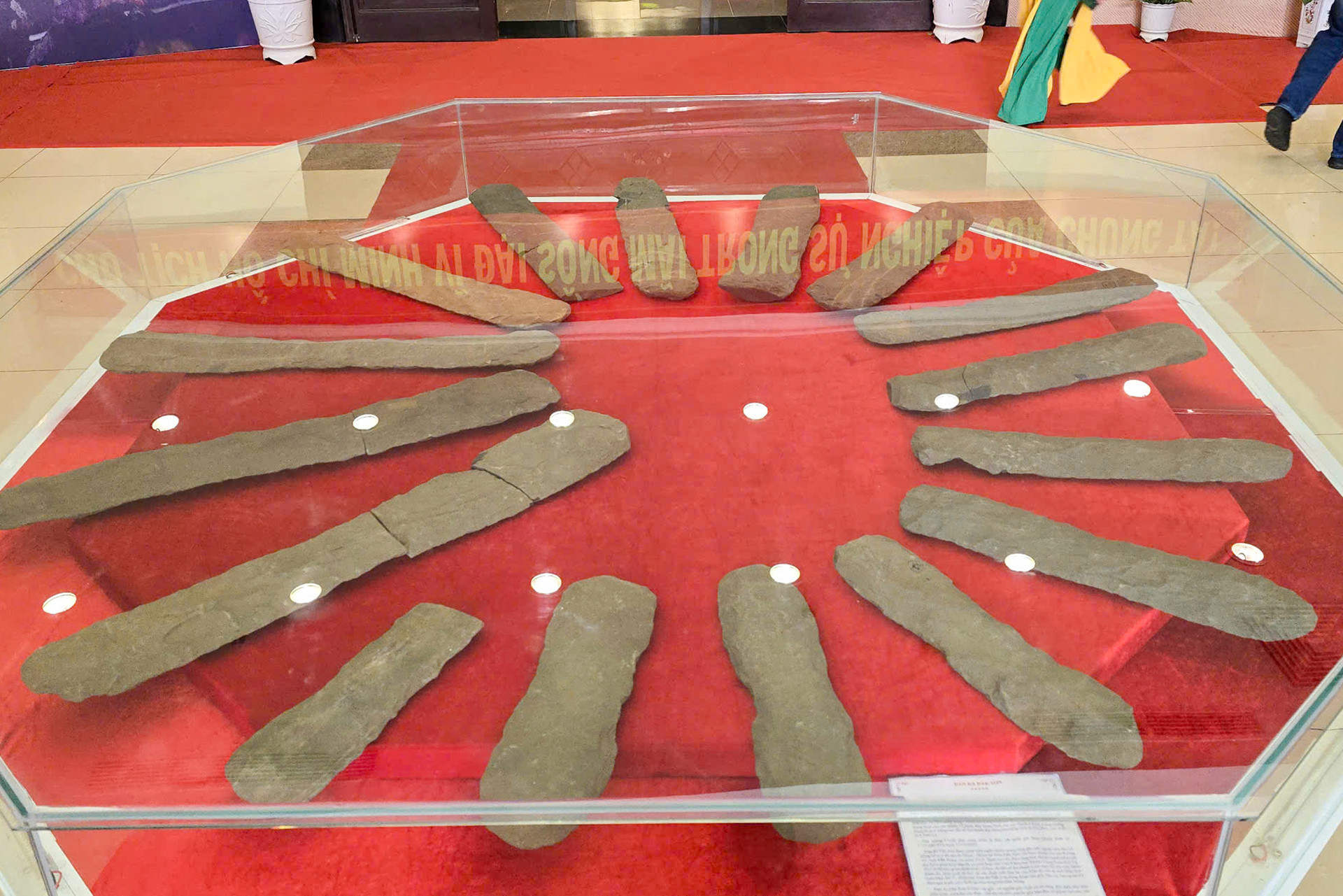
The Dak Son lithophone set comprises 16 stone bars - 11 of which are intact, while five are broken in halves or thirds but can still be reassembled and meet the standards for research and restoration.
Each stone bar measures an average of 57.6 cm in length, 12.4 cm in width, 3 cm in thickness, and weighs approximately 3.94 kg. The instrument produces frequencies ranging from 191.9 Hz to 4,500 Hz, underscoring its remarkable musical value.
The lithophone holds not only historical and cultural significance but also reflects strong indigenous roots. Experts believe it was crafted locally in the Central Highlands during prehistoric times.
During the same ceremony, Lam Dong Province also announced a decision by the Minister of Culture, Sports and Tourism to designate the C3-C4 Cave - a scenic section of the Krong No volcanic cave system - as a national heritage site. This volcanic cave system, formed by eruptions from the Chư B’luk volcano between 600,000 and 200,000 years ago, is considered the longest lava tube complex in Southeast Asia and holds immense geological and research value.
Additionally, the M’nong ethnic group’s Tam Blang M’prang Bon festival (a traditional ritual to bless newly planted trees and protect village boundaries) was officially added to the list of Vietnam’s national intangible cultural heritage by the Ministry of Culture, Sports and Tourism.
Xuan Ngoc
.svg)
