 Vietnamnet.vn

 Podcast



At the foot of Ba Vi Mountain, where ancient knowledge of the Dao community continues to be passed down, traditional medicine remains a living symbol of harmony between humans and nature.
Traditional medicine practitioner and physician Trieu Thi Thoa, one of the few who still maintains the Dao herbal craft in Yen Son Village, Ba Vi Commune, said she began following her mother into the forest to gather herbs when she was in middle school.
Thanks to those early experiences, she learned to recognize hundreds of medicinal plants and understand their properties, uses, and preparation methods. After getting married into another family of herbal healers, she continued studying to perfect numerous remedies.
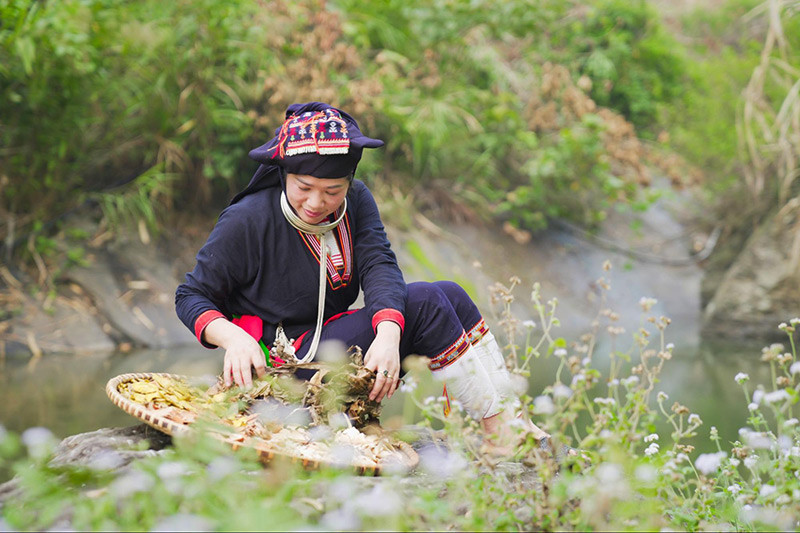
According to Thoa, mastering Dao herbal medicine is no simple task. “You must truly love the craft to follow it. Each prescription is the result of meticulous effort - from identifying plants correctly and cleaning them carefully to mixing and measuring each dose precisely,” she said.
“The herbs must be cleaned, dried, and, if it rains, put into a spinning machine (like a tea roaster) for drying before being packaged. If you’re careless, the whole batch is ruined.”
Yen Son Village, where Thoa lives, is home to dozens of families still practicing traditional Dao medicine. Each household preserves its own unique formulas, combining various herbs in secret proportions.
“My family uses around 120 different medicinal herbs,” she explained. “Each remedy contains between 10 and 30 ingredients, while our bone and joint treatment formula can include up to 60.”
The challenges of preserving a traditional craft in the digital age
Like many Dao households in Yen Son, herbal medicine is Thoa’s family’s main source of income.
Besides treating patients, she creates jobs for local residents. “When we’re making herbal balm, packaging medicines, or during busy orders, I hire neighbors to help. They earn about 200,000 VND (8 USD) per day. It helps everyone sustain their livelihoods while keeping our traditional craft alive,” Thoa shared.
Her family has also established a small cooperative with siblings and relatives. From cultivating herbs to processing and preparing medicine, every step follows strict standards - no chemicals, no preservatives.
“Our home is near the mountain, far from pollution or industrial zones, so the herbs are very clean,” she said proudly.
In recent years, more people have returned to traditional remedies as a natural and long-lasting alternative for chronic illnesses.
“Herbal medicine is 100% natural and very good for health. One of my proudest achievements is helping many people recover from sinusitis using our family’s traditional recipe,” she said.
What makes Thoa different in this modern era is that she refuses to sell products online. She does not livestream, advertise, or use social media for promotion.
When asked why, she smiled softly and explained: “There’s too much misinformation online. I’m afraid people will use our Dao family’s name and remedies to sell fake or low-quality products. If customers buy the wrong medicine and it doesn’t work, it harms our reputation and the integrity of our ancestral craft.”
Thoa hopes that authorities will strengthen regulations to prevent online impersonation and protect traditional Dao medicine, ensuring its sustainable development and its continued role in community healthcare.
For the Dao people of Yen Son, traditional herbal medicine is more than a livelihood - it is a repository of cultural wisdom. Preserving it means not only safeguarding a profession but also protecting the spiritual and cultural heritage of the Dao in modern life.
Binh Minh
.svg)
