 Vietnamnet.vn

 Podcast



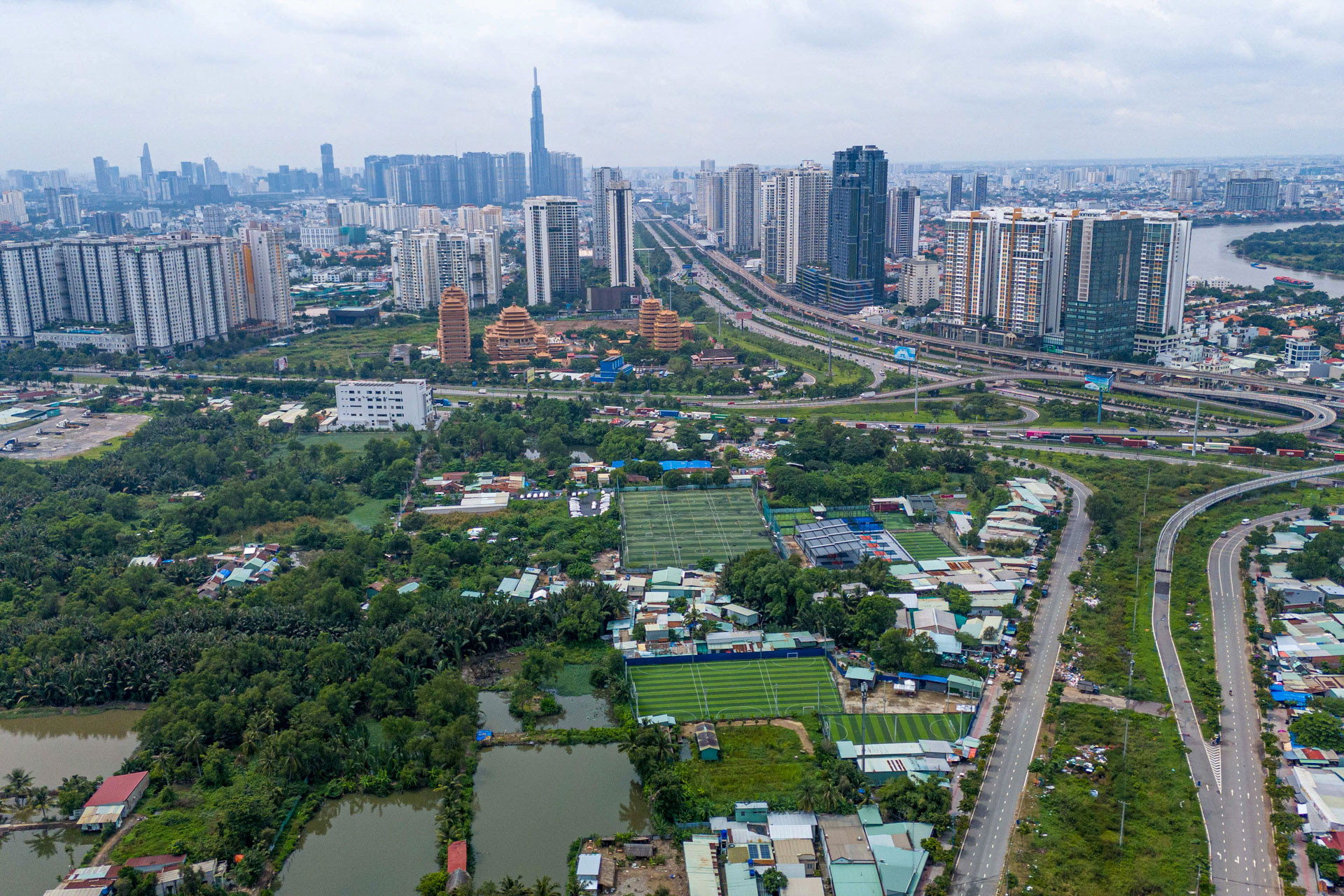
Under the current plan, 752 ownership certificates at Aqua City in Dong Nai province will be handed over from June 2026, while 9,200 townhouses and villas will be delivered between 2026 and 2027.
Nearly 1,200 townhouses and villas have been delivered so far, with many families having moved in and formed a real residential community.
Aqua City is among the first projects included in the Government’s priority list for legal resolution, aimed at unlocking resources that had remained trapped in the economy for years.
Aqua City is one of the first projects on the list of stagnant projects that the Government is focusing on resolving to free up resources that have been "stuck" for many years. After years of waiting, hundreds of families here can finally begin finalizing the legal status of their homes.
Previously, even though residents had settled in, the project remained trapped between inspection conclusions and files dragging across multiple terms, forcing many to pay bank interest for years on homes they could not yet legally own.
And Aqua City represents only one piece of a much larger picture reflecting the Government’s determination to remove long-standing bottlenecks.
On May 7, the Government issued Decree 147/2026/ND-CP, the first legal document allowing authorities to resolve a large number of prolonged legal obstacles involving investment, land and urban projects following Resolution 29 of the National Assembly.
The most notable aspect of Decree 147 is that, for the first time, the legal system allows authorities to address problems inherited from previous years through classification and targeted remedies, instead of suspending entire projects and restarting procedures from the beginning.
The Decree also allows for the handling of cases where certificates were improperly issued, financial obligations remain unfulfilled, or projects are formed but have not yet completed legal procedures. This approach is particularly important for projects that already exist in reality, where residents are living, infrastructure is operating, and massive capital of the society has been invested.
Previously a single procedural error could keep an entire project dormant for a very long time, but Decree 147 shows that the approach is changing: handling violations while ensuring that formed urban areas, works, and assets do not continue to be abandoned. In the context of an economy needing new growth drivers, this is an effort to unblock capital and land that have been buried for many years.
The decisions to resolve these issues are happening rapidly. In a short time, the Politburo's Conclusion 24, the National Assembly's Resolution 29 and the Government's Decree 147 have been issued consecutively, showing great determination to handle long-standing issues.
A massive resolution
According to the Ministry of Finance, by the end of the first quarter of 2026, the country recorded 4,489 projects and land plots facing difficulties, with a total area of 198,400 hectares and a total investment of over VND3.3 quadrillion.
However, it is noteworthy that the processing phase has begun to move strongly. Over 1,000 projects have been definitively resolved, about 2,610 others have resolution plans, while the remainder continues to be reviewed for future handling.
At the National Assembly on April 21, Minister of Finance Ngo Van Tuan stated that about 200,000 hectares of land along with over VND3.3 quadrillion are lying in unfinished investment and land projects, or 3 times larger than the total public investment capital for 2026.
He called this both a "bottleneck" and a massive "resource and growth driver" for the economy if effectively unblocked. These figures show that the story is no longer just about identifying clogs, but that a massive resolution has truly begun.
It is not hard to understand why the Government is pushing this at a rapid pace.
Behind prolonged projects is bank capital that cannot rotate, stalled budget revenue, unfinished works exposed to the elements for years, and assets that citizens cannot legally trade or mortgage.
In recent working sessions, Prime Minister Le Minh Hung has repeatedly requested a focus on resolving stalled projects, considering this one of the key solutions to open more growth drivers. He also emphasized the spirit of "daring to do, daring to take responsibility for the common good," aiming to remove the hesitant and defensive mentality that has existed for a long time.
Along with new legal mechanisms, the Government is also trying to create an environment where localities and officials have sufficient legal grounds to handle files dragging for many years, instead of letting everything stall due to the ‘fear of making mistakes’.
Hong Khanh
.svg)
