 Vietnamnet.vn

 Podcast



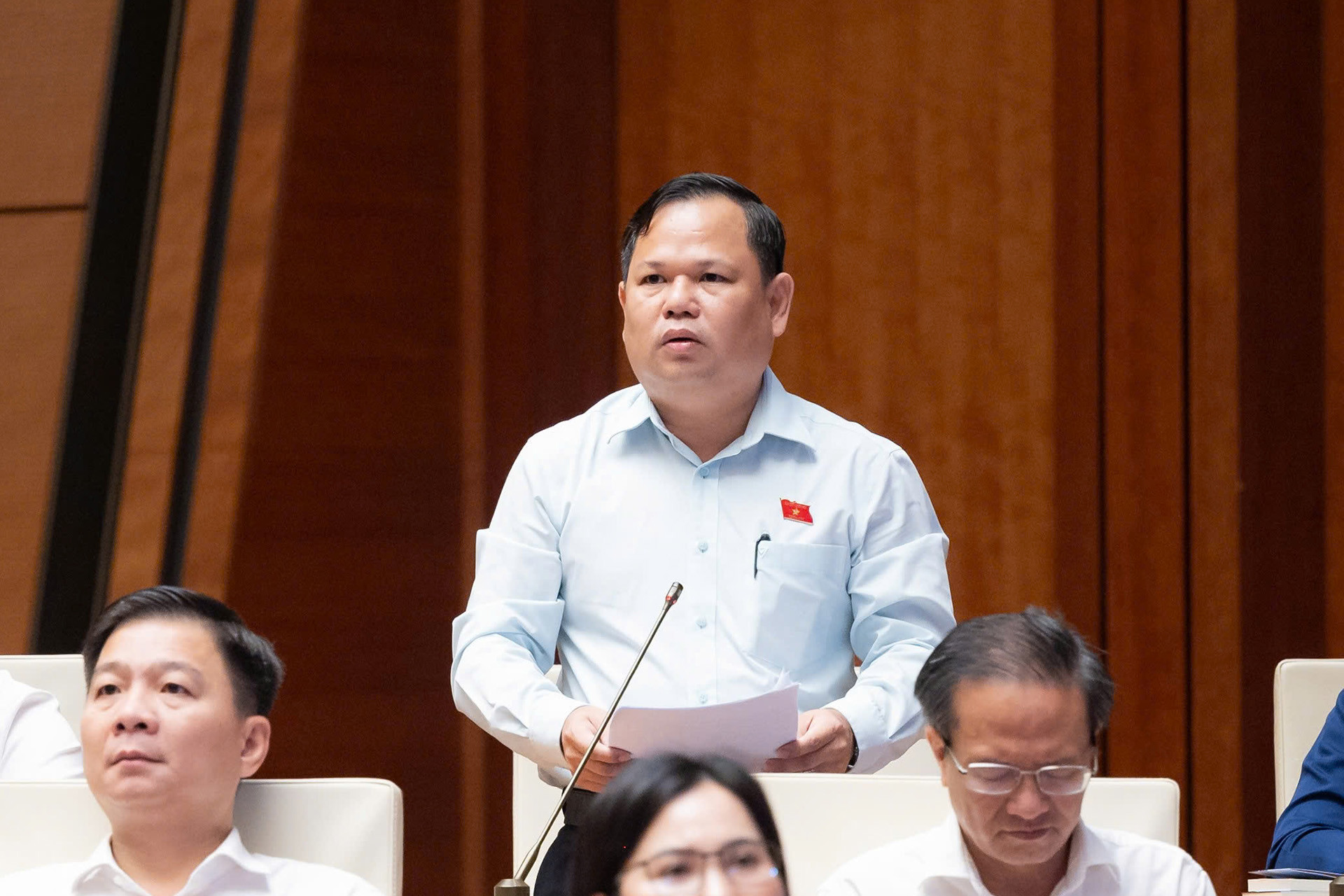
Under current regulations, the revenue threshold subject to VAT and personal income tax (PIT) for household businesses is VND500 million per year.
Deputy Nguyen Duy Thanh (Ca Mau) noted that the decision to raise the threshold reflects greater flexibility in tax management and responds to widespread feedback from business households and citizens regarding the VND500 million threshold. The Government has also acknowledged this issue.
The deputy expressed support for the draft adjustment, noting that it enhances policy flexibility and better reflects reality, given the wide diversity in the scale of household businesses.
“Within the food service sector, revenue can vary significantly between small neighborhood eateries and large urban chains. A fixed threshold in the law would struggle to keep pace with inflation or changes in consumer behavior,” he explained
However, he noted that the draft and the Government’s submission still cannot clearly outline the adjustment plan.
Citing media reports that the Economic and Financial Committee proposed a minimum threshold of VND2 billion, Thanh reiterated his proposal to set it at VND3 billion.
“If VND3 billion worth of revenue for 12 months means a monthly revenue of VND250 million. After deducting all costs such as rent, interest, and labor, business households may retain around 10 percent profit, or about VND20–25 million. For a family of four, that level of income is still low,” he explained.
He added that many deputies had raised concerns about this issue during the 10th session of the 15th National Assembly, including objections to the current VND500 million threshold.
“I strongly support and trust the Government. However, assigning full authority to the Government without a guiding framework may create uncertainty for taxpayers, especially small household businesses that are highly sensitive to tax obligations,” he said.
Thanh proposed setting a fixed framework in the law, such as minimum and maximum revenue thresholds, to ensure policy stability. Alternatively, he suggested establishing clear principles for setting taxable threshold, such as linking thresholds to income per capita, living standards, or the consumer price index, so as to provide a transparent and predictable basis for adjustment.
Meanwhile, deputy Nguyen Thi Viet Nga from Hai Phong supported assigning the Government the authority to set the threshold, but called for clearer mechanisms to monitor implementation. She noted that the draft now includes a principle allowing the Government to set annual revenue thresholds based on socio-economic conditions in each period.
While acknowledging this as a necessary addition, she emphasized that the issue is not only who sets the threshold, but how it is enforced.
“If the revenue threshold is the basis for exemption from Personal Income Tax or VAT, it will easily lead to situations of splitting business households, fragmenting cash flows, dividing points of sale, or using multiple nominees to stay below the threshold,” the delegate warned.
She suggested that in detailed regulatory documents, the Government needs to design principles to prevent artificial revenue splitting, while having periodic reporting to ensure that the revenue threshold adjustment truly hits the support goal and does not become a loophole for budget loss.
Ngo Van Tuan, Minister of Finance, said the drafting agency has thoroughly considered many aspects and carefully calculated the possible impact on both budget revenue and taxpayers.
“With a threshold of VND1 billion, we believe it is appropriate under current conditions. The law follows the approach of assigning the Government to set specific thresholds, based on socio-economic developments and the principle of balanced risk-sharing,” he said.
He pointed out that the VND1 billion/year threshold is already double the current level, and impacts the budget by about VND7,000 billion. Specifically, for households and individual businesses, the VND1 billion/year exemption reduces budget revenue by VND4,800 billion.
For small enterprises, around 256,000 firms would benefit from the adjustment, with an estimated impact of VND2.1 trillion. The minister emphasized that this level is appropriate for current conditions, though the Government will continue to review and refine calculations.
Regarding tax administration, he added that the tax system is designed to ensure neutrality and efficiency.
“That means minimizing collection costs and compliance costs for taxpayers. After considering multiple factors, we proposed a revenue threshold of VND1 billion per year,” he said.
Tuan Nguyen
.svg)
