 Vietnamnet.vn

 Podcast



Xuan Ngoc
A national scientific conference has highlighted the importance of combining tourism development, digital transformation and community-based livelihoods to preserve the cultural heritage of Vietnam's Cham ethnic minority, with local people remaining at the heart of conservation efforts.
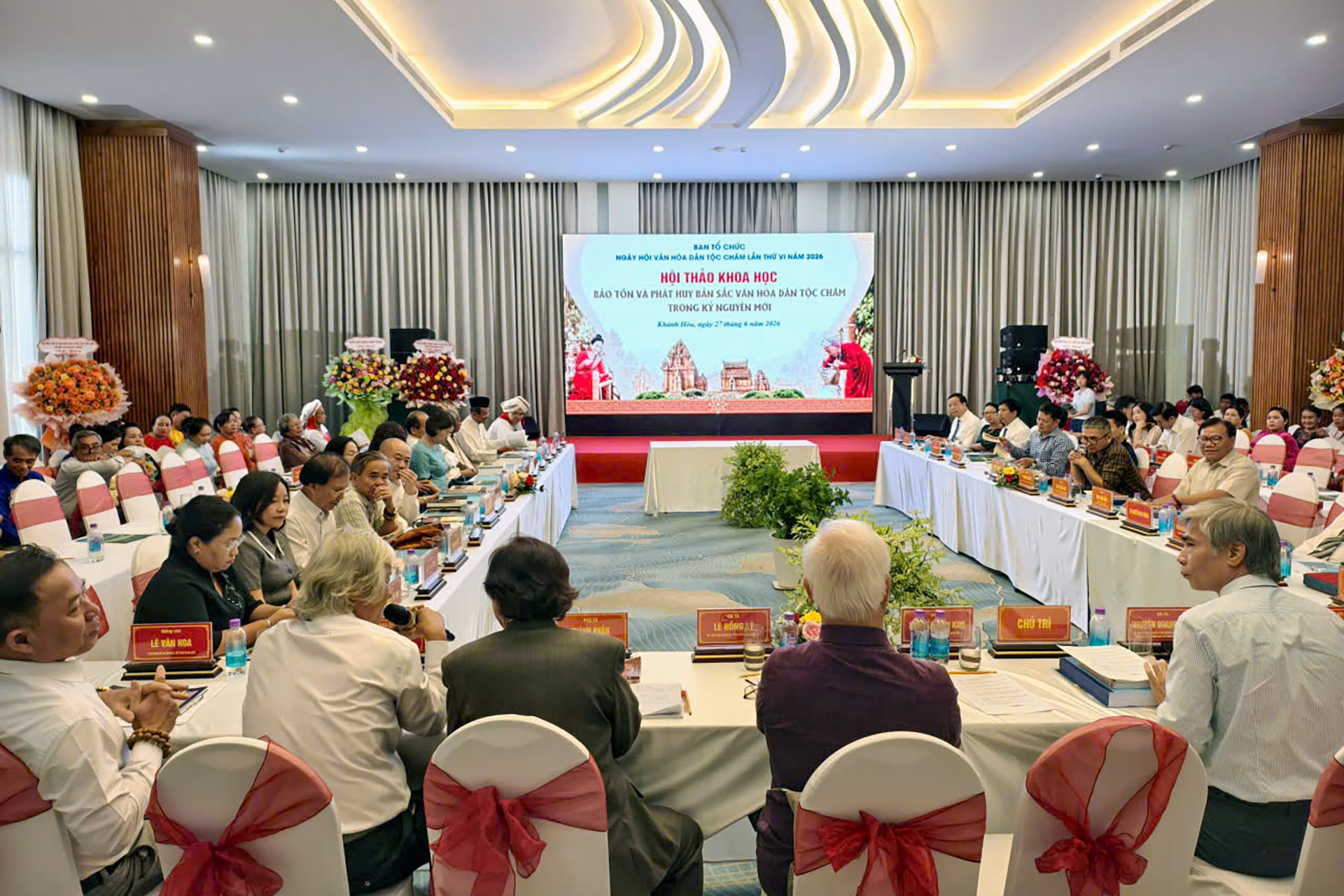
Around 250 delegates, including professors, researchers, cultural experts, policymakers, Cham religious leaders, tourism businesses and members of Cham communities from across the country, attended the conference titled "Preserving and promoting the cultural identity of the Cham people in a new era" on June 27.
The conference was held as part of the sixth National Cham Cultural Festival 2026, taking place in Khanh Hoa Province from June 26 to 28.
Speaking at the event, Nguyen Long Bien, Standing Vice Chairman of the Khanh Hoa People's Committee, said Cham culture is one of the most distinctive components of Vietnam's diverse cultural heritage.
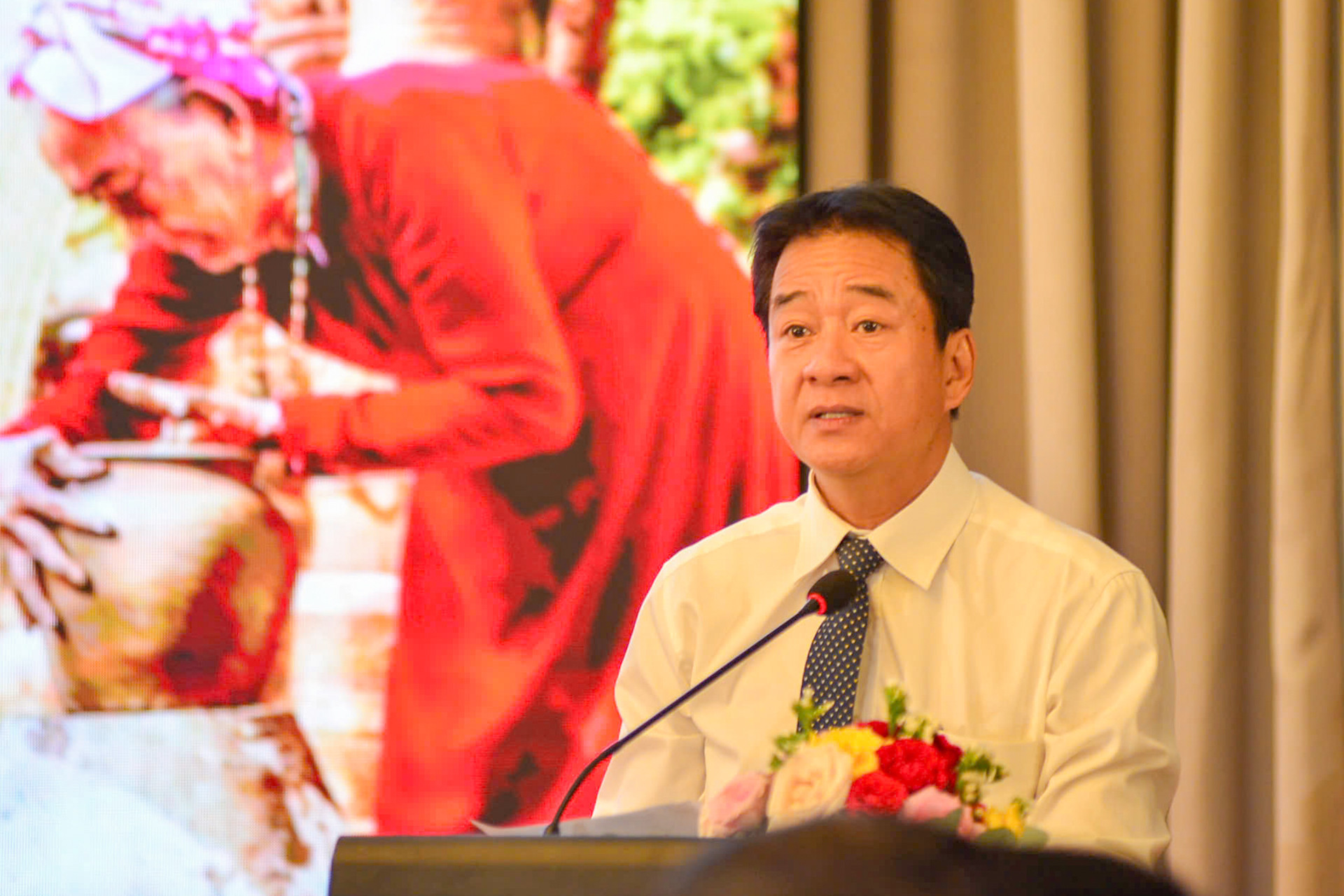
He noted that Cham cultural identity is reflected in its architecture, sculpture, temple towers, bas-reliefs, religious statues, customs, festivals, beliefs, religions, language, script, music, performing arts, decorative motifs and traditional crafts such as pottery and brocade weaving.
According to Bien, preserving and promoting Cham cultural values should be closely linked with tourism development to generate economic resources, improve local livelihoods and reinforce the community's central role in safeguarding its heritage.
Organizers said they received 77 research papers and presentations from scholars and experts from both within and outside the province. The discussions focused on identifying the value of Cham culture, assessing current preservation efforts and proposing solutions that integrate heritage conservation with tourism, digital transformation, sustainable livelihoods and stronger community participation.
Many Cham heritage sites have already become popular tourist destinations, including the My Son Sanctuary, the Da Nang Museum of Cham Sculpture, Cham tower complexes in Khanh Hoa, Gia Lai, Dak Lak and Lam Dong provinces, as well as the Bau Truc pottery village and My Nghiep brocade weaving village.
In Khanh Hoa, heritage sites such as Po Nagar Tower, the Hoa Lai tower complex, Po Klong Garai Tower and Po Rome Tower are valued not only for their historical and artistic significance but also as important spaces for religious practice and cultural life. In addition, the traditional pottery-making art of the Cham people was inscribed by UNESCO on the List of Intangible Cultural Heritage in Need of Urgent Safeguarding in 2022, reaffirming its outstanding cultural value.
Experts also stressed that local communities must remain at the center of preservation efforts so they can actively participate, benefit from and serve as the custodians of their own heritage. They recommended developing distinctive tourism products, including visits to Cham temples and towers, craft village experiences, folk performances, traditional cuisine and community-based tourism to create sustainable livelihoods.
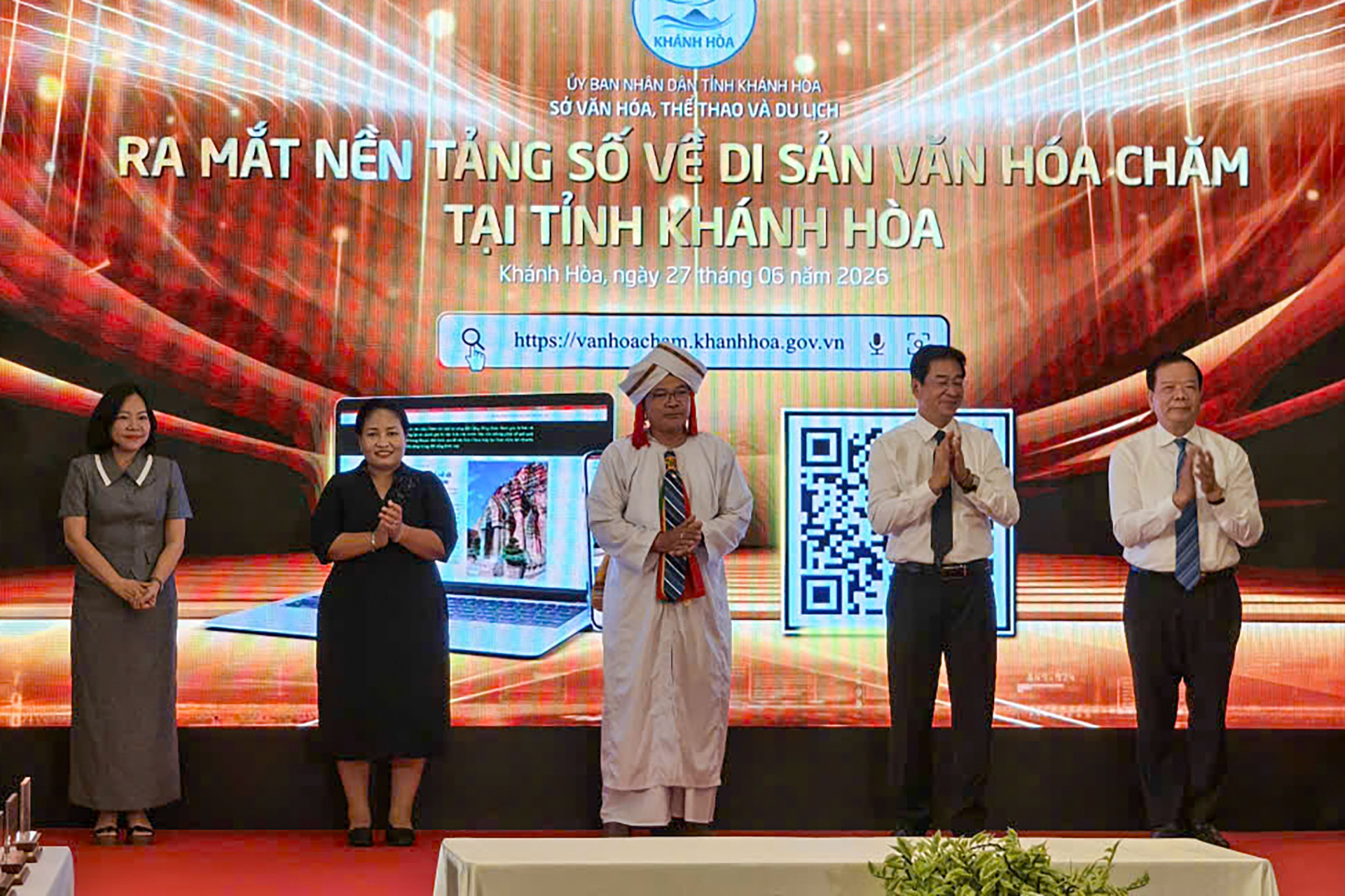
At the conference, Khanh Hoa officially launched its Cham Cultural Heritage Digital Platform and an online exhibition at www.vanhoacham.khanhhoa.gov.vn.
The initiative marks an important step in the digital transformation of the cultural sector, making Cham heritage more accessible to the public, particularly younger generations as well as domestic and international visitors.
Through the digital platform, information on historical sites, festivals, craft villages, performing arts, artifacts, photographs and stories about Cham culture has been systematically organized and presented in an accessible, interactive format. The digitization initiative is also expected to support academic research, heritage education and the promotion of cultural tourism.
.svg)
