 Vietnamnet.vn

 Podcast



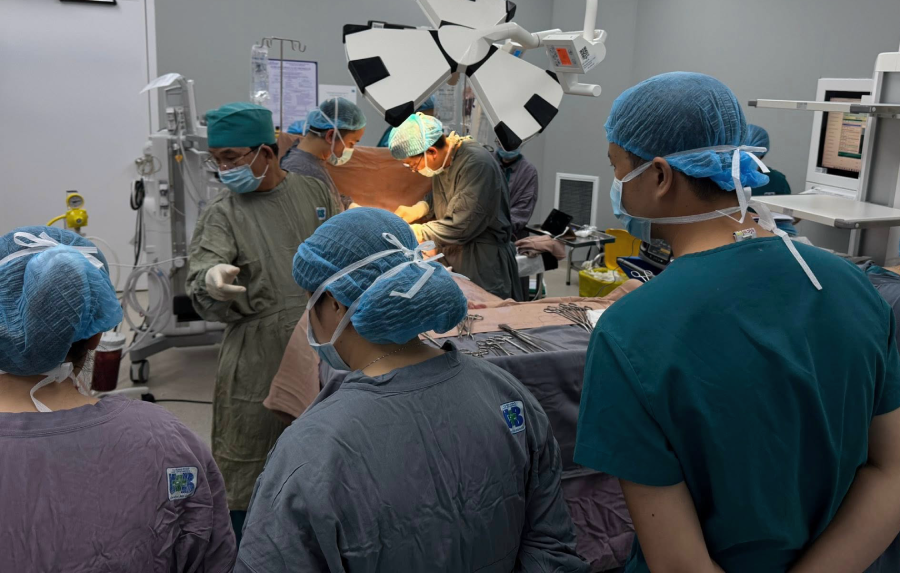
The suspected cancerous pelvic tumor pressed on the uterus, bladder and rectum, and extended to the vagina. Many hospitals had refused surgery due to the complexity of the problem. The risk of losing the uterus and fetus was very high.
Dr Nguyen Van Tien, head of the Gynecology Surgery Department at HCM City Oncology Hospital, said when the patient was admitted to the hospital, the condition was assessed to be even more serious. The surgery was extremely difficult, requiring the removal of the uterus to find the way to the tumor.
The tumor had also invaded muscles and compressed major pelvic blood vessels. Without surgery, it could have caused a miscarriage and even caused death to the patient because of the tumor’s pressing on the uterus, the intestinal obstruction compressing the rectum, and the bladder compression enlarging the kidney.
The surgical team, led by Dr Tien, resolved to perform the surgery to save the mother and, if possible, preserve the fetus.
Dr Tien said the surgery, lasting over three hours, tested the skills and coordination of the surgical and anesthesia teams. The tumor, weighing over 3 kilograms, was extensive and required absolute precision to protect both mother and fetus.
The anesthesia team worked tirelessly to maintain stable blood pressure and blood supply for the patient throughout the surgery. The surgeons, with intense focus, began dissecting the tumor from the major pelvic blood vessels, avoiding damage to critical structures. Each move was meticulous, especially near the uterus, where the fetus was developing, to ensure no harm to the baby.
Next, the team carefully separated the tumor from the bladder and rectum, both severely compressed. They skillfully created a path around the tumor, through the vagina and vulva, to fully remove it without damaging surrounding tissues.
After extracting the tumor from the pelvic region, the surgeons focused on reconstruction. The uterus was preserved intact, ensuring the fetus’s safety. The vagina was carefully reconstructed, restoring its natural function and shape, offering hope to the young woman.
When the surgery ended, the team breathed a sigh of relief. Sweat soaked their blouses, but the joy of saving both mother and fetus was overwhelming.
According to Tien, this outcome exceeded expectations, not only saving the mother but also preserving the healthy developing fetus.
Tien affirmed that the successful surgery inspires the community, highlighting the role of modern medicine in bringing hope to seemingly hopeless cases.
Phuong Thuy
.svg)
