 Vietnamnet.vn

 Podcast


Rather than relying on traditional outlets, cooperatives, businesses and household producers are increasingly using short videos, livestreams and e-commerce platforms to introduce their products, origins and production processes and distinctive values. These tools help bring producers closer to consumers and expand their reach beyond local markets.
In central Ha Tinh province, a Mega Live session held in Phuc Trach commune on TikTok showcased local specialties such as Phuc Trach pomelos, Cu do peanut rice-paper candy, honey and agarwood. Producers introduced their products directly from growing areas, allowing consumers to see the actual products and their origins.
Tran Huyen An, a representative of the CHOA Agricultural Cooperative in Phuc Trach, said livestreaming from the growing area helped promote local specialties and reach more consumers nationwide, thus boosting sales.
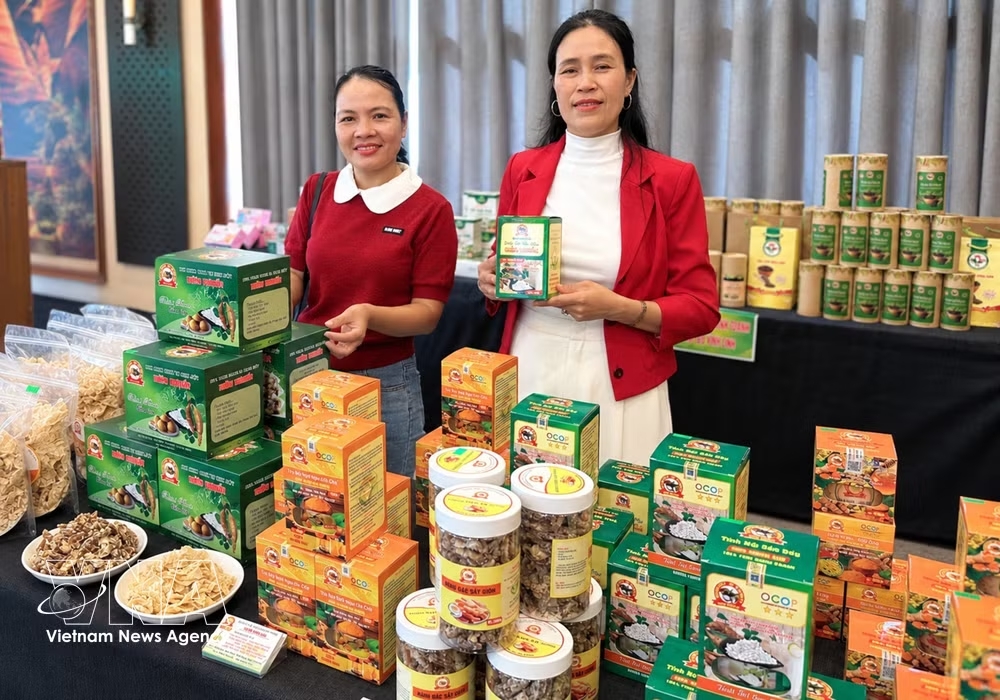
According to the Department of Industry and Trade of Ha Tinh, the locality organised four trade promotion fairs featuring on-site livestreaming. This is a new promotional method to help bring local speciality products to digital platforms.
In Hai Phong, a livestream programme introduced more than 500 products from 65 small and medium-sized enterprises, including over 380 OCOP items, attracting more than 300,000 views. Meanwhile, in Lao Cai, the My vi Muong Lo (Flavours of Muong Lo) Mega Livestream promoted over 40 OCOP products, with 10% of revenue pledged for local social welfare activities.
Nearly 200 livestream sessions were held during a 100-day digital transformation campaign, showcasing more than 1,200 OCOP, craft village and potential products. The capital also launched a digital storefront programme and the “OCOP Hanoi” TikTok channel, towards strengthening online presence and improving market access for producers and businesses.
Tran Duc Hai, Director of the Hanoi Department of Industry and Trade, said good products alone are not enough to attract customers online. The programme therefore focuses on connecting producers, traders and consumers while improving e-commerce capabilities and expanding markets. Participants receive guidance on building online stores, producing videos, livestreaming, affiliate marketing and using business data.
The Vietnam E-commerce and Digital Economy Agency (iDEA) under the Ministry of Industry and Trade said it has also promoted OCOP products through national and local online stores, specialised e-commerce platforms and online-offline trade promotion programmes. Training and one-on-one support have helped producers sell on major platforms such as Shopee, Lazada, TikTok Shop and Tiki.
However, challenges remain, including inconsistent product quality, fragmented databases, limited digital skills among household producers, and unstable Internet connectivity in some areas. High logistics costs, particularly for agricultural products from remote regions, also hinder market expansion.
The Law on E-commerce, effective from July 1, 2026, is expected to create a more favourable business environment and prioritise support for OCOP producers, particularly those in disadvantaged areas, while promoting supply chain optimisation, product traceability and intellectual property protection.
Experts said e-commerce should be integrated into broader trade promotion activities, combining online sales with trade fairs, supply-demand connections, retail networks and distribution systems. Producers also need to standardise product quality, packaging and information, while ensuring sufficient supplies and reliable delivery as orders increase.
They recommended shifting State support from organising individual promotional events towards developing a digital trade promotion ecosystem. Priorities include training producers in online sales and order management, improving product standards and branding, and connecting them with e-commerce platforms, retailers and distributors.
In the longer term, support should be tailored to product groups and production scales, accompanied by better logistics infrastructure and stronger traceability systems. Programme effectiveness should be measured by sustained online store operations, orders, revenue, new customers and expanded distribution networks rather than livestream numbers and online interactions alone.
Closer coordination among management agencies, local authorities, technology platforms, logistics providers and distributors will also be essential to ensure effective support and help OCOP producers operate independently and sustainably, experts said./.VNA

