 Vietnamnet.vn

 Podcast



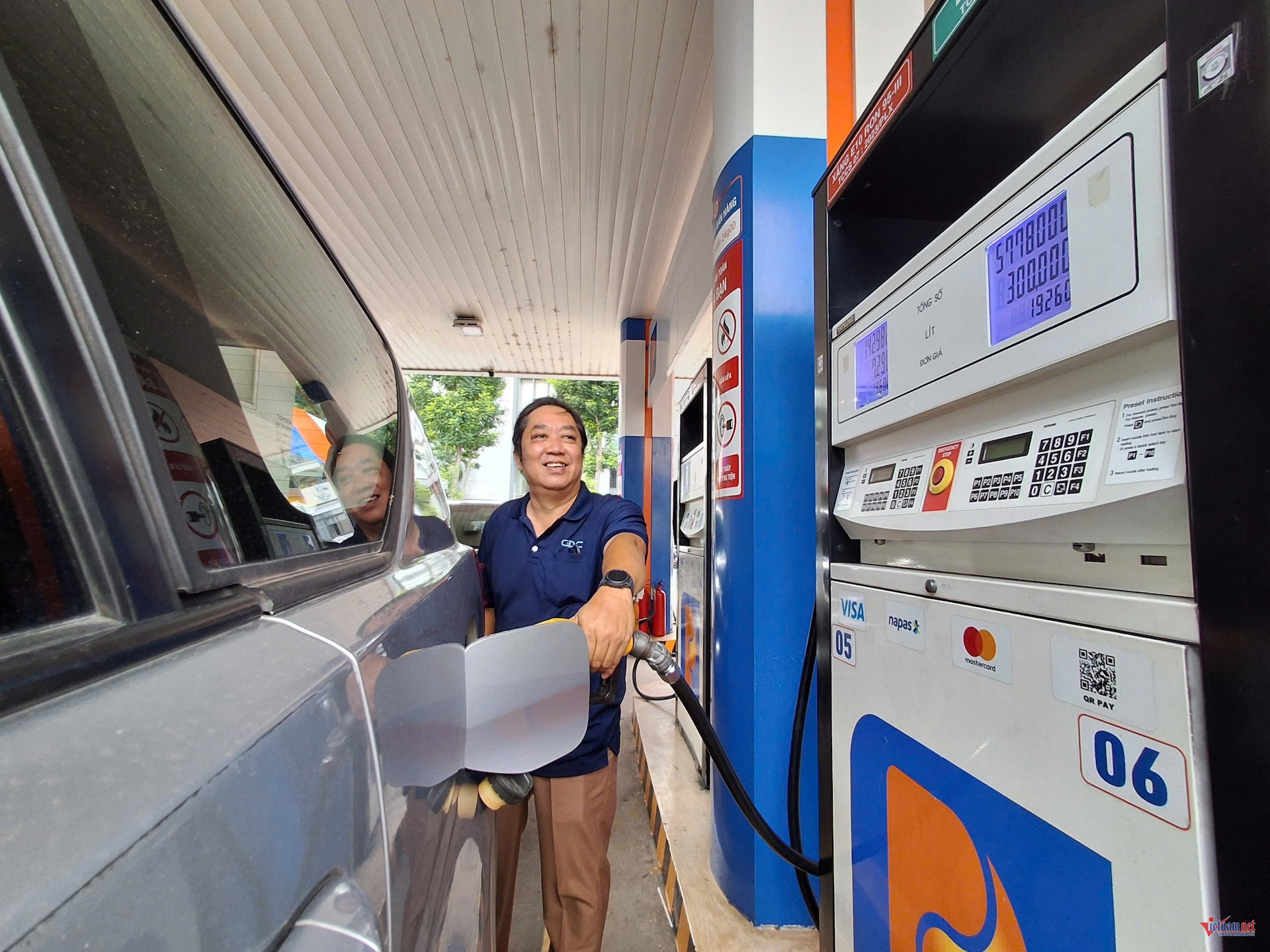
As of August 1, 36 Petrolimex fuel stations in Ho Chi Minh City began supplying E10 biofuel, following a directive from the Ministry of Industry and Trade.
According to VietnamNet’s on-site observations, most customers were still reluctant to opt for E10. Car owners seemed more curious than motorcyclists.
Ngo Ngoc Nga, manager of Petrolimex Station No. 1 in Saigon Ward, said the station started selling E10 the previous day. The daily consumption volume was only about 1,000 liters - a modest figure compared to the 30,000 liters of RON 95 sold daily at the station. E10 accounted for less than 5% of total RON 95 sales.
However, she noted an uptick in awareness that morning, as more customers began asking about E10.
At the station, Tran Van Huong, a representative of a local transport company, confirmed that his fleet had been using E5 for years and began transitioning to E10 two days ago.
“Our monthly fuel cost is around VND 500 million (about USD 19,700). We've used E5 without issues - engine performance remained stable. If manufacturers put this fuel on the market, they must have researched it thoroughly,” he said.
“People hesitate because of unfamiliarity. Lowering the price to match E5 levels would attract more users,” he added.
At other Petrolimex stations in the city, E10 nozzles have been set up to serve customers.
Dinh Thanh Cuong from Nhon Trach, Dong Nai, said he used to ride a 2010 Wave RSX motorcycle and had used E5 without issues. However, after switching to a car and being unable to find E5 stations nearby, he stopped using biofuel altogether.
“I’ve seen TikTok videos warning that E10 could harm engines, so I haven’t dared to try it. I need more time and information,” he explained.
At Petrolimex Station No. 53 in Cau Kieu Ward, Ho Chi Minh City, five E10 dispensers have been installed. Staff are actively informing customers about the new fuel. Previously, the station sold about 2,000 liters of E5 daily. Now, E10 consumption has dropped to around 1,000 liters. Still, more customers are inquiring, and some have opted for E10 after receiving detailed explanations.
A representative of Petrolimex Saigon told VietnamNet that starting August 1, 36 out of 80 of its fuel stations in Ho Chi Minh City (prior to a corporate merger) ceased selling E5 and switched entirely to E10.
To prepare for the switch, these 36 stations gradually sold off their remaining E5 stock in recent days and restocked with E10 sourced from the Nha Be fuel terminal.
According to Associate Professor Dr. Do Van Dung, former rector of Ho Chi Minh City University of Technology and Education, E10 is a biofuel composed of 90% fossil gasoline and 10% ethanol - an alcohol derived from fermenting and distilling crops like corn, cassava, and sugarcane.
In Vietnam, ethanol is sourced both from domestic factories and imports from the United States. Biofuels like E10 are already standard in countries such as the U.S. and across Europe, contributing to carbon emission reductions.
Vietnam’s adoption of biofuels isn’t new. Since 2017, the government has promoted E5 (5% ethanol), but encountered supply issues and public skepticism. With E10, the ethanol content has now increased.
Tran Chung
.svg)
