 Vietnamnet.vn

 Podcast



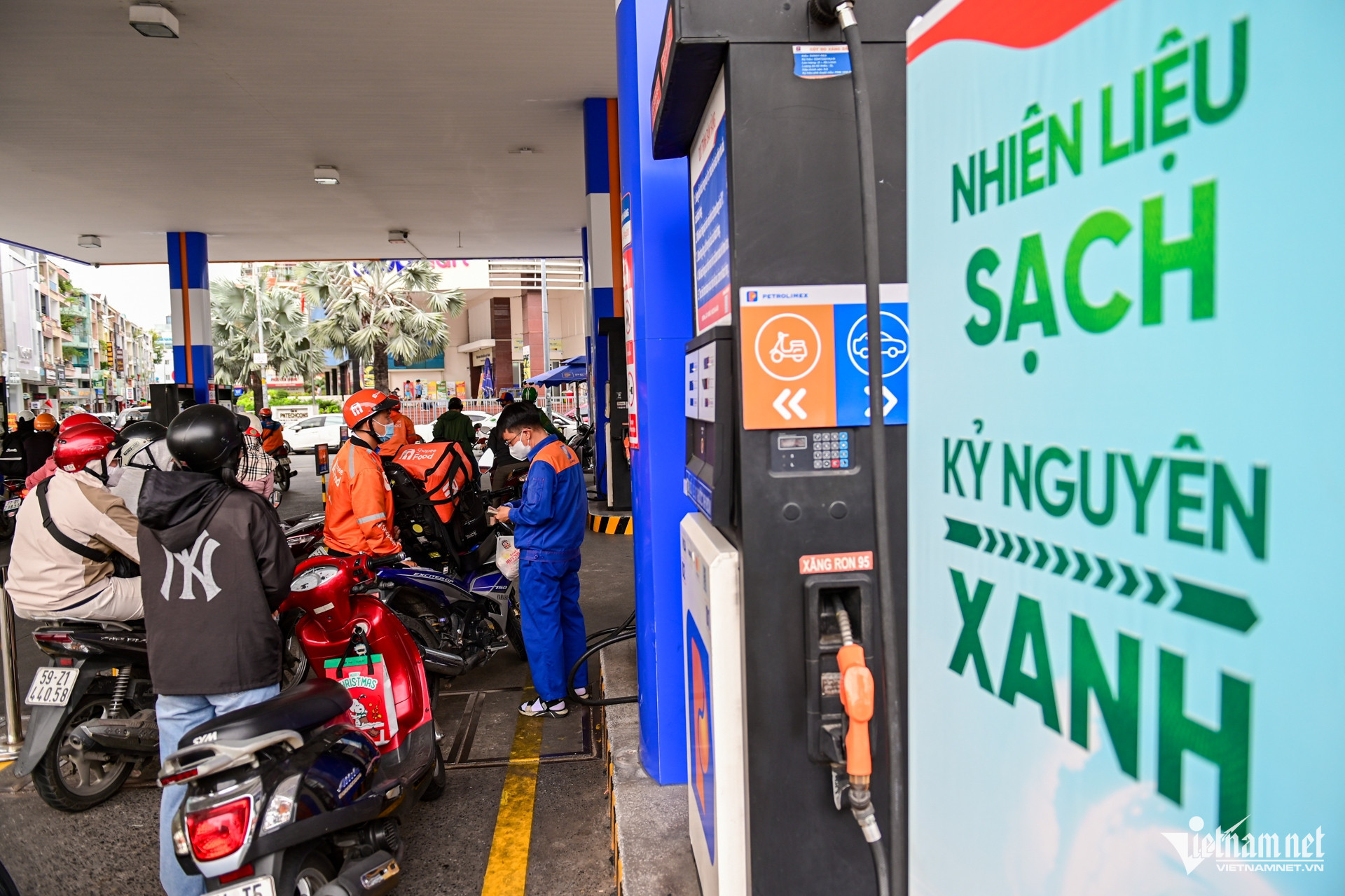
In the context of tense supply as military conflicts in the Middle East escalate, accelerating the use of E10 gasoline is seen as a solution to significantly replace mineral gasoline. Furthermore, implementing the roadmap for nationwide E10 use early also contributes to cooling down gasoline prices, as environmental protection and luxury taxes on biofuel are currently lower than mineral gasoline.
Moreover, one of the greatest benefits of E10 gasoline is the ability to reduce greenhouse gas emissions. Ethanol burns cleaner than fossil gasoline thanks to the oxygen atoms in its molecules, helping to reduce CO2, hydrocarbons (HC), and other pollutants by up to 20-30 percent compared to regular gasoline.
According to Associate Prof Dr Le Hai Hung, former lecturer at Hanoi University of Science and Technology, E10 gasoline is a fuel blend of 90 percent RON95 gasoline with 10 percent ethanol (E100) - a type of biofuel typically produced from corn, cassava, sugarcane, or other agricultural by-products.
The chemical formula of ethanol is C2H6O or C2 H5(OH), while the general formula for gasoline is CnH2n+ 2.
Unlike regular unleaded gasoline, ethanol is considered somewhat carbon-neutral because, during the growth process, crops absorb more CO₂ than the amount emitted during fuel production and combustion. This helps offset a portion of the generated greenhouse gases; however, the level of effectiveness remains a subject of debate.
In Vietnam, ethanol comes from domestic production plants and imports.
“In all cases, using biofuel is an inevitable trend and is particularly suitable for a country with an agricultural economy like Vietnam. Therefore, by using E10 gasoline, consumers directly contribute to protecting the environment and developing the nation's agricultural economy,” Hung emphasized.
Many countries have used biofuel with different blending ratios. Leading in biofuel usage is Brazil, with common fuels being E27 and notably the use of E100 (100 percent ethanol). Most ethanol in Brazil originates from sugarcane with low carbon emission intensity, supported by stable infrastructure and policies.
Meanwhile, in Sweden, E85 is used for taxis and buses in Stockholm. In the US, E10 is the national standard, while E15 and E85 are common for flex-fuel vehicles.
Currently, E10, E20, and E85 gasolines are commonly used in Thailand. The government supports the cultivation of sugarcane and cassava to produce ethanol.
In Vietnam, since 2017, the Government has encouraged the use of E5 biofuel (blended with 5 percent ethanol), but encountered obstacles regarding supply and public awareness.
Meanwhile, E10 gasoline has been introduced for pilot sales at many stations in HCMC, Hanoi, and Hai Phong since August 2025. According to the roadmap set by Circular 50, from June 1, 2026, unleaded gasoline (according to current national technical regulations) must be blended and formulated into E10 gasoline for use in gasoline engines nationwide. Additionally, the blending and formulation of E5 RON92 gasoline will continue for use in gasoline engines until the end of December 31, 2030.
However, facing challenges of energy security and energy market fluctuations worldwide, the Ministry of Industry and Trade has been tasked with promoting the use of biofuel (E10), reviewing conditions to early implement the transition roadmap to E10 gasoline in April 2026, contributing to a 10 percent reduction in mineral gasoline consumption.
Many domestic enterprises are accelerating ethanol production and imports to serve the transition from mineral gasoline to biofuel. Petroleum companies are also ramping up blending activities, preparing to fully deploy E10 nationwide to replace mineral gasoline.
Ho Ngoc Linh from Petrolimex said the company has piloted E5 and E10 gasoline sales in HCMC since August 2025.
Currently, Petrolimex has seven blending depots ready to deploy E10 nationwide, along with a network of more than 2,800 fuel stations. The company is also speeding up E10 distribution ahead of the schedule set in Circular 50.
In terms of supply, ethanol demand for E10 blending within the Petrolimex system alone is estimated at 45,000–50,000 cubic meters per month.
Meanwhile, Binh Son Refining and Petrochemical Joint Stock Company (BSR), the operator of Dung Quat Refinery, has proactively developed operational scenarios to ensure biofuel supply for the domestic market.
BSR said that from late March 2026, Dung Quat Refinery is expected to receive about 60,000 tons of biofuel (E100) from the Central Biofuel JSC for blending E10 gasoline. This supply is expected to help increase domestic fuel output as imports face difficulties due to export restrictions from some countries.
Tam An
.svg)
