 Vietnamnet.vn

 Podcast



She said she feels helpless as her in-laws trust only online information, dismissing their children’s advice. After being given smartphones, the parents spent entire days browsing, absorbing all sorts of information, from lifestyle to health.
Tuyet’s father-in-law has small kidney stones. Instead of following the doctor’s advice to adjust his diet and lifestyle, he believed an online ad for a “three-generation family remedy for kidney stones.” He called the hotline, received advice from sellers, and spent money on functional foods.
Despite Tuyet’s medical background, her advice was ignored. “They scolded us, saying, ‘you’re not sick, so you don’t understand how tough it is to be old,’” she said.
When their children urge them to visit a hospital, they brush it off, saying, “We’re perfectly fine, why go to a hospital?”
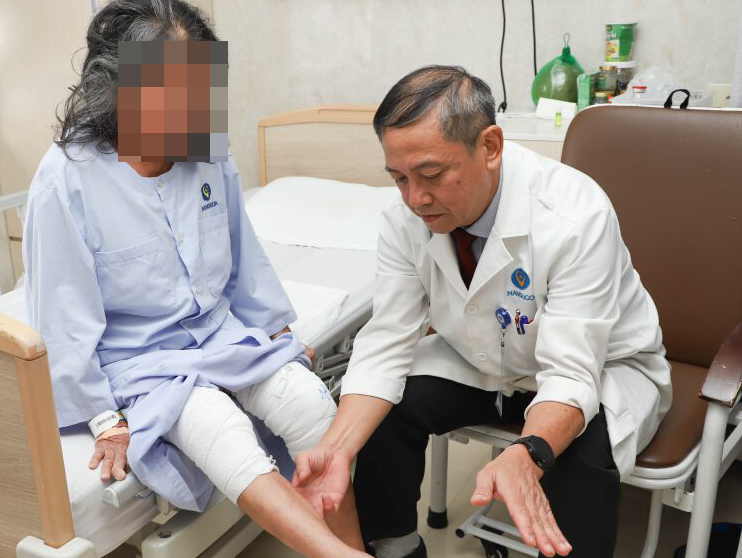
In another case, N.T.T., 69, from Lam Dong, was seriously affected by her use of a drug recommended by a neighbor. She began experiencing knee pain 10 years ago, and initially, dismissed it as a normal sign of aging. Over time, however, the pain intensified, especially during cold weather or seasonal changes.
After a medical visit, doctors diagnosed her with knee osteoarthritis. She could have received proper treatment by following her children’s and doctors’ advice, but her neighbor’s recommendation changed everything.
The neighbor told N.T.T. about an Eastern medicine drug that was “fast-acting, cheap, and didn’t require hospital visits.” She began buying the drugs, priced at VND80,000-85,000 per box, to take whenever she felt pain.
“The pain subsided quickly, unlike the medicine you bought, which didn’t work as fast,” N.T.T. told her son. Gradually, she not only used the drug for pain but increased the dosage on her own, taking it for years.
Recently, her legs began to weaken, her knees turned inward, and alarming symptoms developed: a round face, bloated abdomen, atrophied limbs, slow-healing wounds, high blood pressure, and fluctuating blood sugar.
From struggling to walk, she progressed to using a cane, and one morning, she woke up unable to support her body with her legs, forcing her into a wheelchair and complete dependence on her family.
“I can only shuffle around the house, and my children have to keep everything spotless. I deeply regret not listening to them. Now, I just think about death and tell my children to live harmoniously if I’m gone,” N.T.T. said tearfully.
Dr Vo Van Man, an orthopedic specialist in HCM City, explained that the drug N.T.T. used contained corticosteroids, a fast-acting pain reliever but dangerous when used long-term without medical supervision.
She has developed Cushing’s syndrome, osteoporosis, diabetes, and hypertension. Knee replacement surgery for her has been a challenging process, requiring close coordination between orthopedic and internal medicine specialists.
Dangerous traps on social media
Amid countless advertisements for “miracle drugs” online and recommendations from acquaintances, some elderly people unwittingly fall into dangerous traps.
Promises of “quick cures” with just a few pills lead them to place full trust in these products, despite warnings from their children and doctors. The consequences are often severe: financial loss, worsening health, and even life-threatening conditions.
Dr Doan Dung Manh from the Vietnam Vascular Disease Association noted that unverified online drugs, especially counterfeit Eastern medicines, often contain corticosteroids or painkillers with no lasting therapeutic effect.
“Elderly people are reluctant to share their ailments or burden their children, making them prime targets for these products,” he said.
Dr Manh added that children should spend time explaining to elderly parents about reliable medical information. Health cannot be bought but can be preserved through caution and well-placed trust.
By trusting exaggerated social media ads, the elderly not only risk their health but also become victims of scams. Manh recommends that when health issues arise, elderly individuals should be taken to specialized medical facilities for timely diagnosis and treatment before conditions worsen and affect long-term mobility.
.svg)
