 Vietnamnet.vn

 Podcast



These claims appear widely on Facebook pages of some medical facilities in Hanoi promoting intravenous liver detox therapies.
A Facebook page of a clinic posted: “Intravenous liver detox therapy helps ultra-fast detoxification, lowers liver enzymes and blood lipids, and especially prevents liver cancer.”
Similarly, the Facebook page of a Liver and Kidney Center at a private hospital in Hanoi promoted an intensive detox–liver recovery regimen: “Eliminate long-term toxin buildup in the liver; restore liver function and stabilize liver enzymes; prevent complications such as cirrhosis, chronic hepatitis, and liver cancer.”
Posing as a person with hepatitis B, a reporter contacted the center’s hotline and was advised to visit the hospital for testing.
“If the indicators are normal, you only need 2–3 sessions. If certain indicators need attention, then around 5 sessions are required, priced at VND3 million per session. Each session lasts 2–3 hours and will completely treat underlying conditions while regenerating a protective membrane for the liver,” the staff member said.
Notably, according to this staff member, not only people who drink alcohol or take antibiotics long-term but even healthy individuals can use this therapy.
“This regimen is based on regenerative medicine, and detox therapy is only one step of the protocol. The protocol both detoxifies and regenerates the liver, especially for people with hepatitis B,” the staff member said.
However, many experts believe that the advertised treatment is costly and unnecessary, even potentially posing certain health risks.
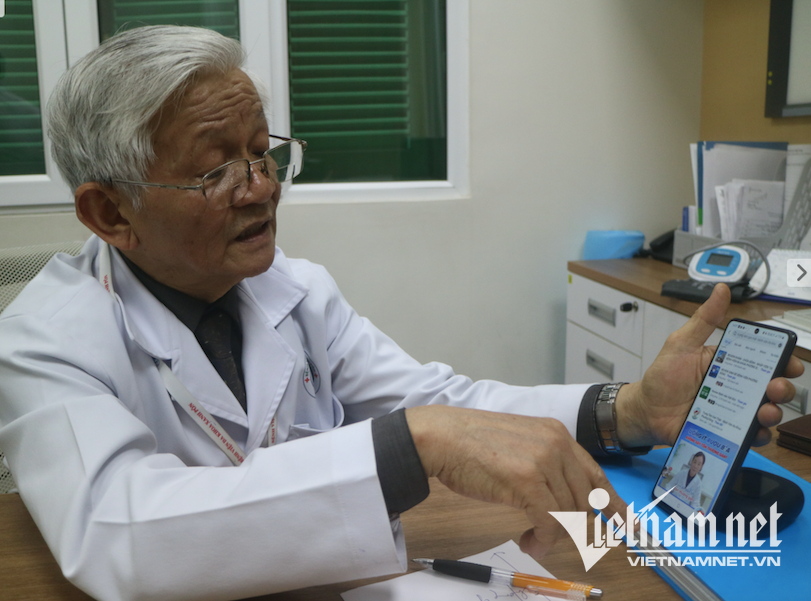
Assoc. Prof. Dr. Tran Viet Tu, an expert at the Hanoi High-Tech and Digestive Center (Saint Paul Hospital), stated that if clinics and hospitals advertise a liver detox treatment with a specific therapeutic protocol, that treatment must be licensed by the Ministry of Health.
Tu questioned whether this treatment has been licensed by the management agency. Are the drugs administered intravenously approved for circulation, and have they undergone clinical trials?
A lot of other questions have also been raised.
“How can you ‘detox the liver’ with something while the liver itself is already detoxifying the entire body? I believe the claims of detoxifying the liver with intravenous therapy are extremely vague. Advertising 3–5 sessions that can eliminate toxins from the liver is nonsense. Such advertisements on social media are dangerous to the community,” Tu emphasized.
When reporters asked for legal documentation or regulatory approval, the facilities could not provide any, explaining that the regimen is a ‘proprietary therapy’ and therefore cannot be disclosed.
According to Tu, the liver is affected by many environmental factors, and even minor issues, for example, fever medication can increase liver enzyme levels. Elevated liver enzymes indicate liver cell necrosis. But if there is no continued harmful exposure, the liver quickly regenerates. Within just three days, the enzyme levels can return to normal. Liver cells are young cells with strong regenerative capability.
Thus, in many cases, the liver can heal on its own without any “detox regimen.”
Experts emphasize that no infusion can detoxify the liver or prevent liver cancer. To maintain a healthy liver, the best way is to avoid harmful substances that overwork the liver.
“For example, people who abuse alcohol must stop drinking. Only when the harmful agent is removed can liver enzymes normalize. If liver damage has progressed to jaundice and very high enzyme levels, the disease is already severe. Therefore, people should not believe claims that a 3–5 session therapy can restore liver enzymes as advertised online,” Tu warned.
The habits of drinking a lot of alcohol, prolonged use of antibiotics, or unscientific eating cause the liver to work continuously in an "overworked" state, leading to weakening and severe damage.
Men just need to drink 40ml of 30 percent alcohol daily for 5 years to carry the risk of "liver damage".When alcohol is consumed, the liver must work continuously to metabolize it, leading to hepatocyte necrosis, fatty degeneration, and the development of fibrous tissue.
In the initial stage, the liver still has the ability to self-regenerate. But if alcohol consumption is prolonged, scar tissue, which does not perform liver function,will gradually replace healthy liver tissue.This is the cause of reduced liver function and, at a more severe level, irreversible cirrhosis the end stage of alcohol-related liver disease. Many cases are detected when the liver has been severely damaged and can no longer recover.
N. Huyen
.svg)
