 Vietnamnet.vn

 Podcast



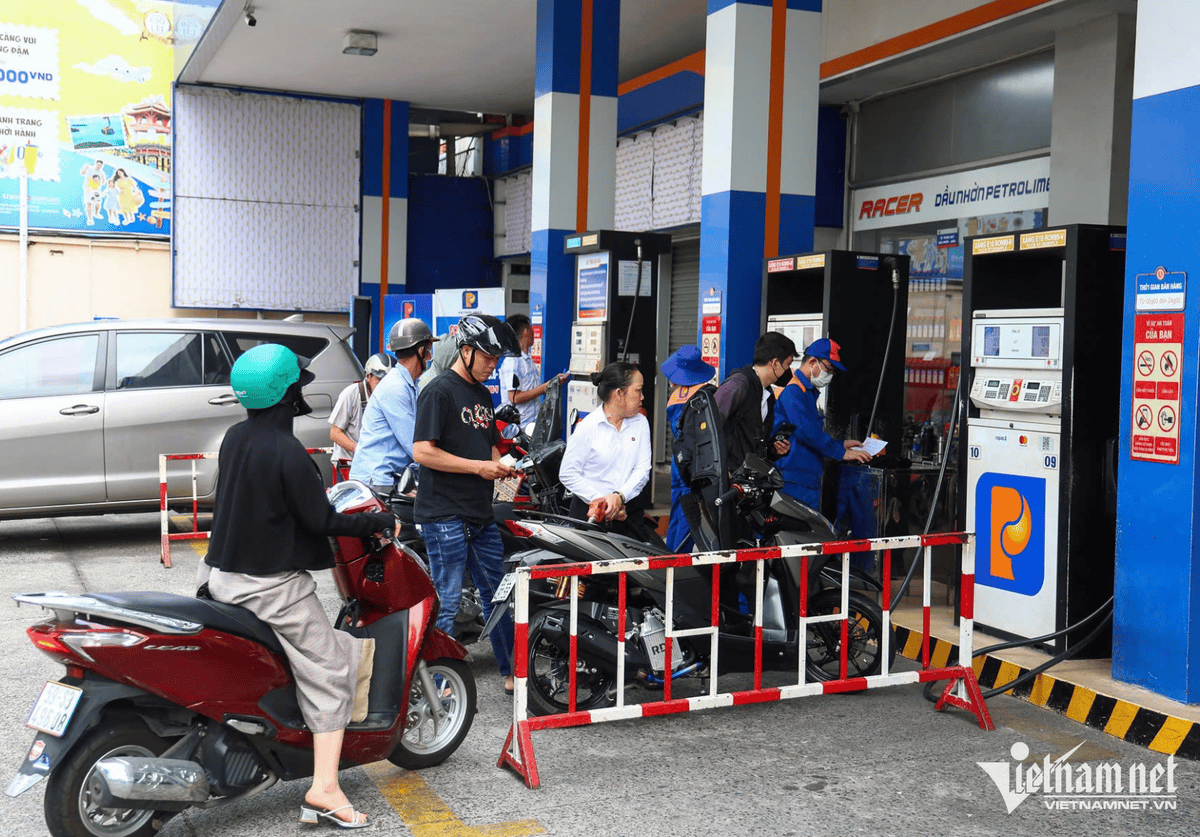
The Working Group for the Implementation of Circular 50 recently submitted a report to MOIT Deputy Minister Nguyen Sinh Nhat Tan on the roadmap for blending and using E10 biofuel in Vietnam.
According to the report, from June 1 (the first day of nationwide E10 sales) to June 28, total biofuel consumption (E5 and E10) reached 980 million liters.
When assessing the environmental impact, the report used air quality monitoring data in Hanoi and HCMC at three times: early May, late May, and late June 2026. The Working Group noted that the data indicates initial signs of improvement, though progress remains uneven across different areas and pollutant groups.
In Hanoi, fine particulate matter decreased significantly in late June compared to late May, with PM2.5 dropping by 31 percent and PM10 by 29.6 percent.
In HCMC, the improvement trend was clearer and more consistent. Compared to late May, late June recorded the following figures: PM2.5 fell by 15.7 percent, PM10 by 14.3 percent, CO by 65.2 percent, NO2 by 68.6 percent, NOx by 57.6 percent, SO2 by 38.5 percent, and O3 by 14.4 percent.
"These results demonstrate a downward trend in both particulate matter and gaseous pollutant groups," the report emphasized.
The Working Group also requested MOIT leadership to continue directing enhanced monitoring of environmental impacts. This includes ongoing monitoring of PM2.5, PM10, CO, NO2, NOx, SO2, and O3 in Hanoi, HCMC, and other major cities, alongside expanding the number of stations with comprehensive datasets.
Furthermore, this data should be integrated with E10 consumption volumes, traffic flow, meteorological conditions, and localized emission sources to provide a more objective and scientific assessment of the biofuel roadmap's environmental effectiveness.
Experts’ analyses
These findings have also drawn attention from experts regarding the extent of E10's impact on air quality in major urban centers like Hanoi and HCMC.
Emphasizing that E10 petrol contributes to reducing air pollution, environmental expert Dao Nhat Dinh argued that standardized data and long-term tracking are essential for a concrete assessment.
For instance, in Hanoi, it is necessary to track the number of days air quality exceeds average thresholds. If there are 70 exceeding days this year and that number drops to 60 next year, there will be a solid basis for comparison and more definitive conclusions.
Additionally, air quality is heavily influenced by weather conditions and varies distinctly between seasons, particularly in Northern Vietnam. During winter, pollution indices are typically high, whereas clear, sunny summer days see a significant reduction in pollution.
"In reality, June, July, and August every year are periods when air quality improves. Even when comparing June across different years, pollution levels can vary by 10 percent to 50 percent," Dinh said.
Assoc. Prof. Dr. Pham The Anh from the National Economics University noted that the improvement in environmental monitoring indicators in June could also stem from other factors. These include weather conditions (rain, wind) or shifts in public production and consumption habits, such as straw burning, coal and oil usage for power generation, commuting, trading, and manufacturing activities.
Dr. Hoang Duong Tung, chair of the Vietnam Clean Air Network, shared that numerous studies have shown biofuel helps reduce emissions from vehicles. The nationwide mass implementation of E10 petrol starting June 1 also reflects Vietnam's determination to lower emissions and improve air quality.
"E10 petrol undoubtedly has a positive impact, contributing to emission reductions and air quality improvements," he said. However, the extent of E10's contribution cannot be assessed solely based on short-term monitoring data.
According to Tung, gasoline-powered vehicles are just one of many air pollution sources in major cities, alongside diesel-powered vehicles, construction activities, industrial production, open burning, and regional pollution transport. Concurrently, meteorological factors such as rain, wind, temperature, and the atmospheric mixing height greatly influence pollutant concentrations.
Data shows that in Hanoi, air quality usually improves markedly during the summer months (from around June to September) due to increased rainfall, wind, favorable dispersion conditions, and a higher atmospheric mixing layer, which help disperse and wash away pollutants.
This means that E10 is merely one link in the strategy to improve air quality, rather than a silver bullet.
Therefore, evaluating its true impact requires a minimum of six months to a year, combined with year-on-year comparisons, adjustments for meteorological influences, and analytical methods to determine the contribution of each emission source.
Tam An
.svg)
