 Vietnamnet.vn

 Podcast



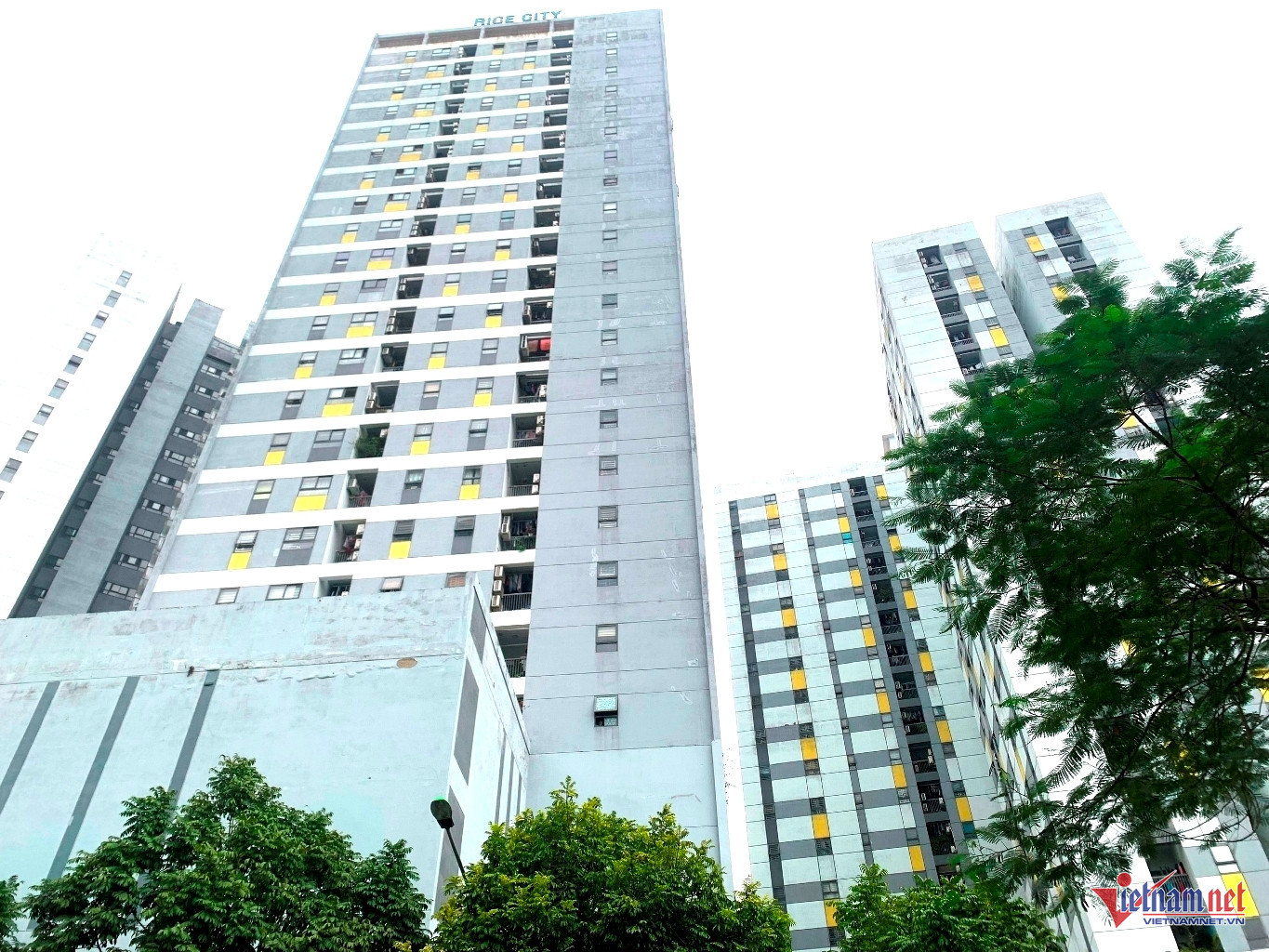
As an entrepreneur who has developed social housing projects, Nguyen Hoang Nam, general director of G-Home JSC, said that developing social rental housing is an incredibly difficult equation for businesses due to prolonged payback periods, high risks, and high financial costs.
He said regulations previously required allocating 20 percent of the social housing inventory for rent. However, this provision proved impractical and was subsequently removed from the amended Law on Housing and Law on Real Estate Business.
Nam assessed that the policy to develop rental housing aligns with global development trends, enabling citizens to flexibly migrate to urban centers with abundant job opportunities. However, in Vietnam, this model still encounters numerous obstacles.
The greatest hurdle is that enterprises must recover capital over a long duration, whereas borrowed capital is predominantly short-term. This mismatch creates immense financial pressure and harbors many risks.
In addition, high borrowing costs cause the rental prices of social housing in many cases to be even higher than those of private residential rentals in the same area. Meanwhile, the eligibility criteria to rent social housing remain highly complex.
“Without truly breakthrough policies, businesses will lack the motivation to invest, while citizens still maintain a mindset of preferring homeownership over renting. To develop rental housing, we need specific support mechanisms such as land policies, land-use fee subsidies, and particularly preferential credit and refinancing packages to lower and stabilize interest rates in the long term,” Nam stated.
He noted that businesses do not necessarily demand excessively low interest rates but require long-term capital sources and stable interest rates to invest with peace of mind. Using short-term capital for long-term investments carries substantial risks.
Nam believes that for the rental housing model to develop sustainably, there must be clear, specific, and quantifiable mechanisms to support enterprises, such as tax exemptions, interest rate subsidies, and loan backing.
Tran Xuan Luong, deputy director of the Vietnam Real Estate Market Research and Evaluation Institute, said housing is an important good directly tied to social security. Society always has different groups, including low-income and vulnerable people who need State housing support.
Currently, Vietnam mainly develops commercial (market-rate) housing and social housing. However, social housing rollout has many problems as capital still depends mostly on commercial banks, while low-income people struggle to prove financial capacity and stable income to access it.
In reality, social housing is being “assetized” because buyers gain ownership, leading to law evasion and fake documents to purchase.
“Instead of focusing on building social housing for sale, we need to shift strongly to a rental housing model. This model primarily uses public resources and the State budget,” Luong told VietNamNet.
Luong proposed Vietnam study setting up a national housing fund to mobilize resources for rental housing. This fund could come from various sources, such as contributions from workers’ wages, capital from employers, or other public resources.
In many countries, employers are willing to contribute to the housing fund to help workers stabilize their accommodations and commit to long-term employment. Workers can allocate a portion of their wages to the housing fund, similar to a housing insurance premium. After a period of accumulation, they can utilize this fund to rent, lease-purchase, or buy a home.
Additionally, in many nations, local governments directly invest in constructing rental housing or hire enterprises to build it, after which the State manages and subleases it to citizens.
For example, in Singapore, the State maintains a central role in developing and managing a massive housing fund, combining multiple forms of ownership and leasing. In New Zealand, the government prepares the land bank and planning, while enterprises participate in construction and then hand it over to the State for management and leasing.
Luong emphasized that enterprises should only play the role of contractors hired to build for the State, while the State directly manages, operates, and leases the housing.
He said social housing is a welfare policy, so it must utilize public resources instead of relying entirely on profit-driven mechanisms. The State needs to plan dedicated land funds for rental housing while investing in connectivity infrastructure, such as public transit, electricity, roads, schools, and hospitals, to shape residential areas with a good quality of life.
"It is not absolutely necessary to develop rental housing in central areas, as the land bank outside the center remains vast if properly planned and linked with suitable infrastructure," he said.
Tran Chung
.svg)
