 Vietnamnet.vn

 Podcast



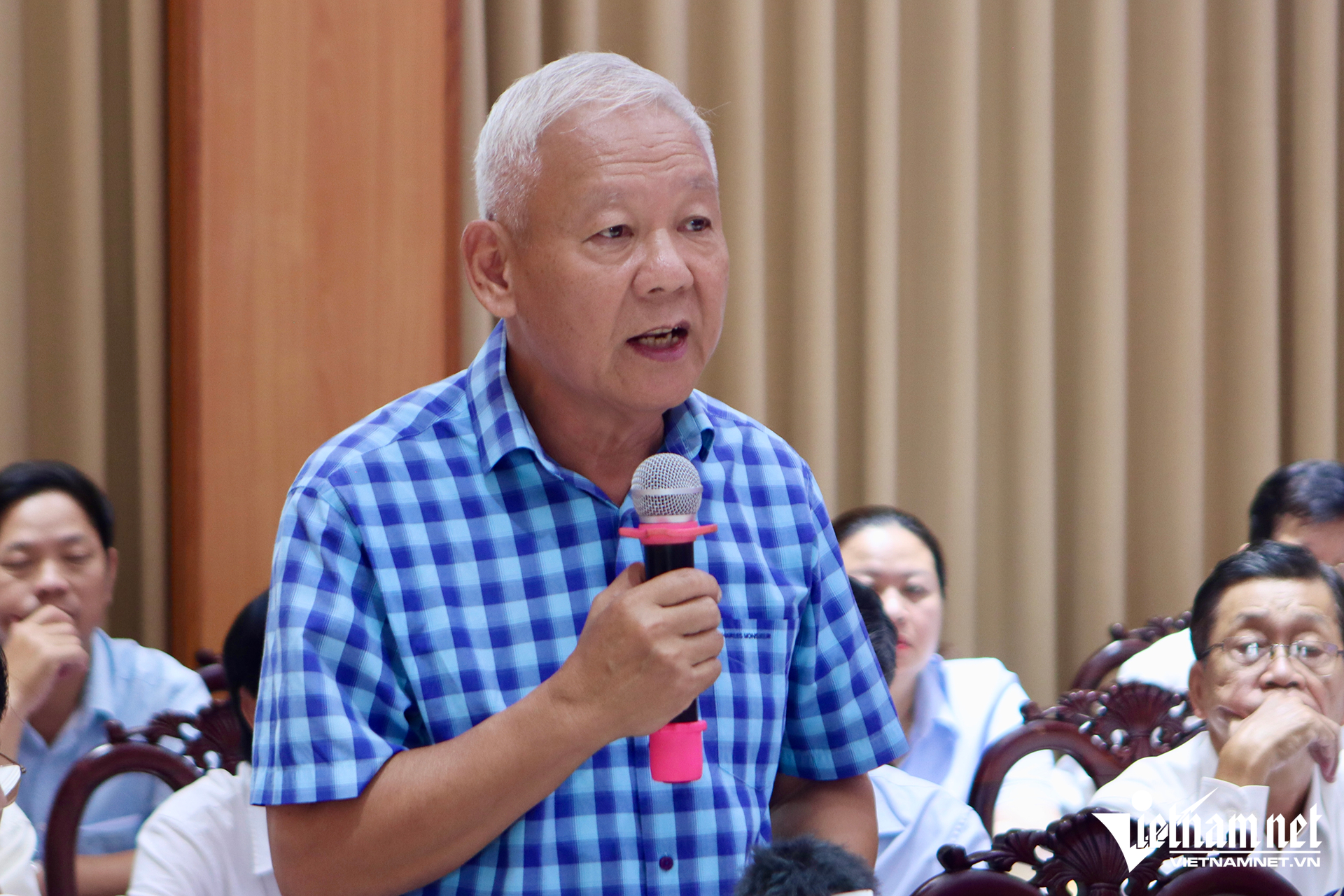
Also speaking at the conference, Dr. Ngo Viet Nam Son, an architect and urban planning expert, said HCMC faces the challenge of managing a megacity while simultaneously pursuing double-digit economic growth. The master plan, he argued, should therefore place greater emphasis on infrastructure connectivity and logistics.
He proposed reorganizing the logistics system to create seamless connections between roads, railways, waterways and aviation. Railways, in particular, should be studied as a means of transporting goods directly from industrial parks to seaports.
According to Son, such an approach could reduce dependence on container trucks, ease pressure on roads and help lower logistics costs.
He also proposed studying the relocation of part of Cat Lai Port’s operations to the Hiep Phuoc and Can Gio areas. This could reduce the number of container trucks traveling through inner-city districts, ease congestion and create additional room for urban redevelopment.
Regarding transit-oriented development, Son said that although Metro Line 1 is already operational, the areas surrounding its stations have yet to develop into a fully realized TOD model.
HCMC, he said, should continue improving urban spaces around Metro Line 1 stations to turn the corridor into a model that can later be replicated across other urban railway lines.
On spatial planning, Son proposed that the city go beyond dividing its territory into 10 architectural and landscape zones and incorporate an approach based on distinct socioeconomic characteristics.
Under this model, HCMC could establish functional areas including a central financial core, the Thu Duc innovation zone, a southwestern gateway connecting with the Mekong Delta, an industrial and service urban zone toward Binh Duong, the Can Gio coastal ecological zone and a logistics zone surrounding the Can Gio port cluster.
These areas, he said, should be developed according to a “15-20-minute city” model, allowing residents to conveniently access essential services within a short period of time.
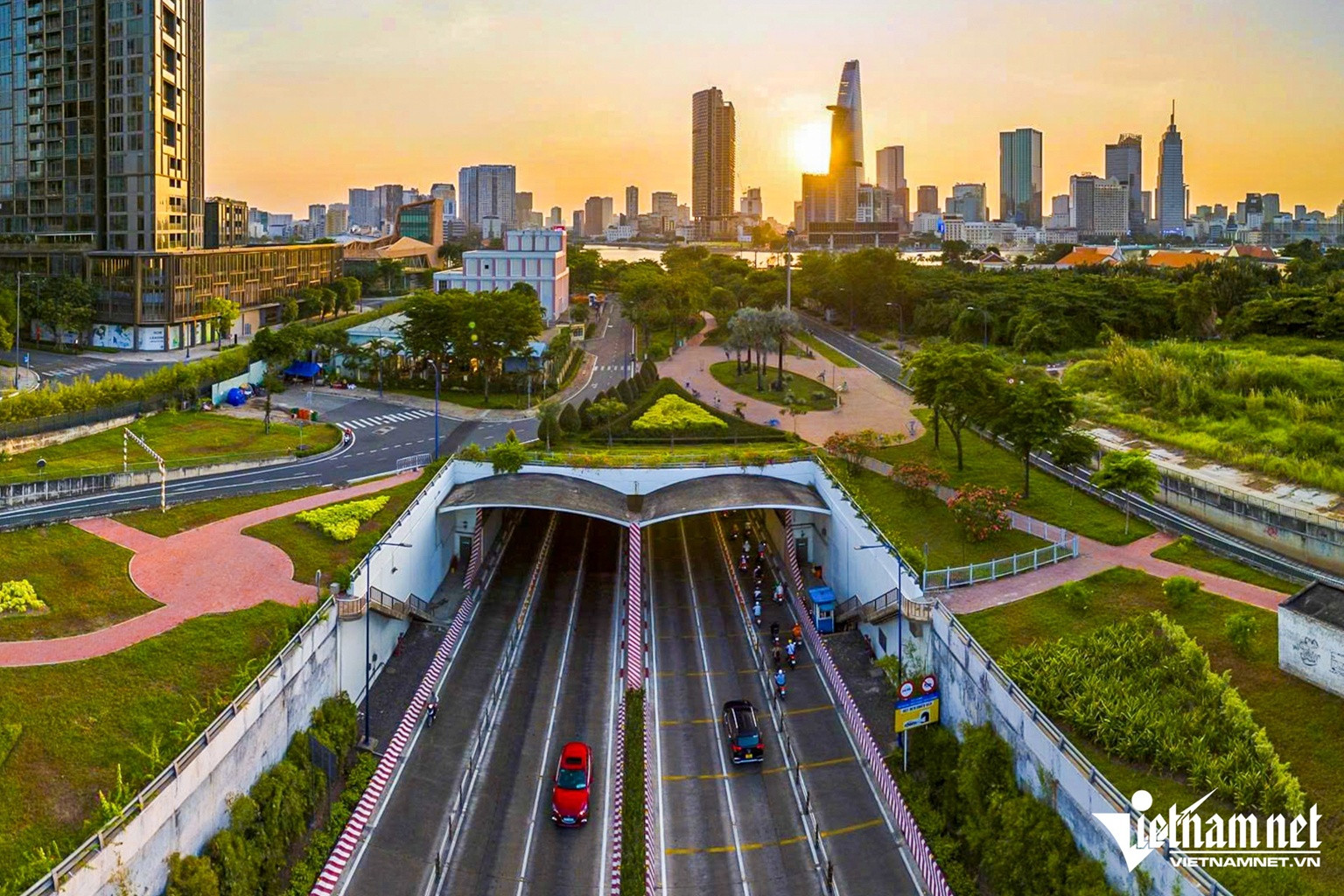
Son also called for HCMC to expand green spaces and improve public transport connections between the two banks of the Saigon River.
Beyond transportation, experts at the conference also offered recommendations on healthcare, education, the environment, culture and residents’ quality of life as part of efforts to refine the HCMC Master Plan for 2025-2050, with a 100-year vision.
Closing the conference, Pham Minh Tuan, Vice Chairman of the Vietnam Fatherland Front Committee in HCMC, said preparation of the master plan was of particular importance as it would provide the foundation for shaping the city’s socioeconomic development, infrastructure and spatial organization while strengthening its overall standing.
According to an overall orientation report prepared for the HCMC Master Plan for 2025-2050, with a 100-year vision, the post-merger city covers approximately 6,773 square kilometers and has a population of around 14.4 million. It comprises 113 wards, 54 communes and the Con Dao special zone. Its population is projected to reach 22-23 million by 2050.
The plan aims to transform HCMC into a smart, modern global city under a model described as “one international megacity, five growth poles, five corridors, 10 zones and six special areas.”
The development roadmap is divided into three stages. By 2030, HCMC aims to become a civilized, modern city with a prominent position in Southeast Asia; by 2045, an economic, cultural, scientific and technological hub of Asia; and from 2075, a city of global stature.
The report targets average annual GRDP growth of 10% during 2026-2035. GRDP per capita is projected to reach at least $14,000 by 2030, $25,000 by 2035, $75,000 by 2045 and $100,000 by 2075.
Phuoc Sang
.svg)
