 Vietnamnet.vn

 Podcast



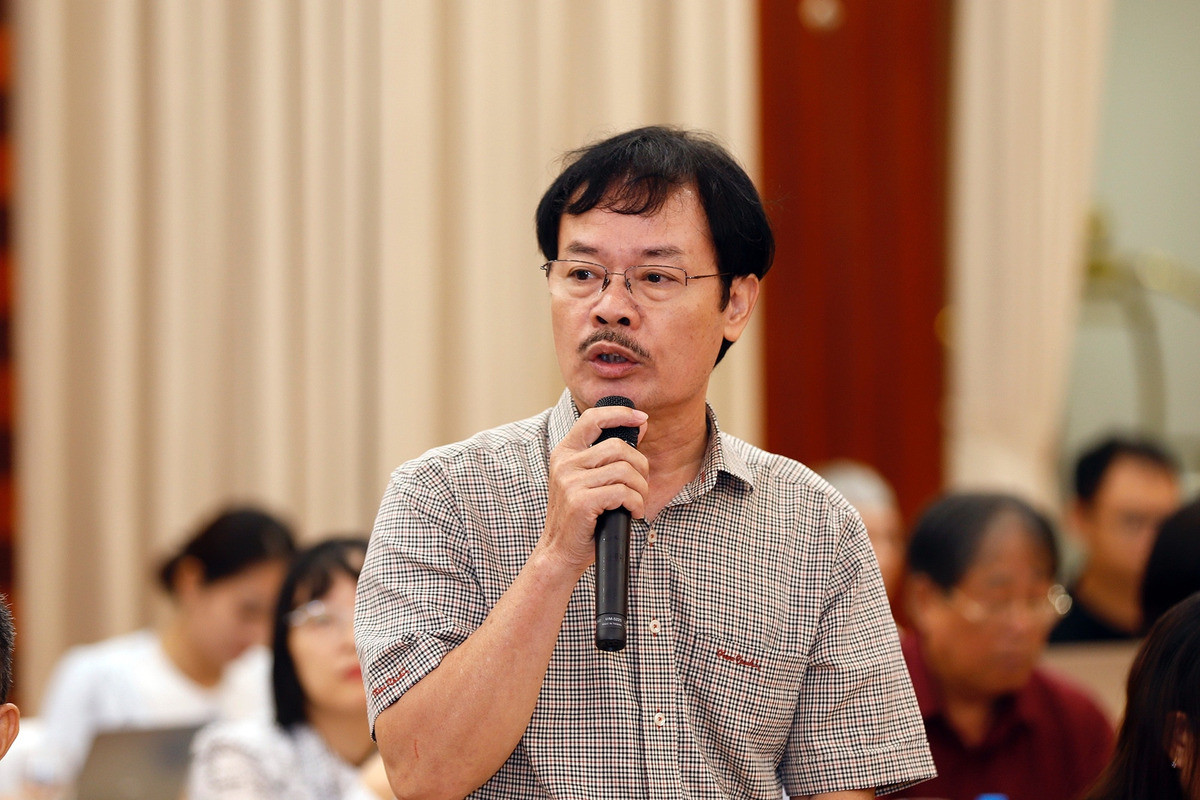
A workshop was organized by the MAE’s Legal Department on September 18, focusing on amending and supplementing provisions of 15 laws in these sectors.
Commenting on the draft, Nguyen Xuan Duong, chair of the Vietnam Livestock Association, pointed out a key issue: the same type of product, such as animal feed and aquaculture feed, is subject to different management by various agencies, leading to overlap and inconsistency.
"Such regulations make it impossible for us to explain to the central government why animal feed and aquaculture feed are managed differently. In other countries, these are treated as a single field, and such an illogical separation should be avoided," Duong said.
According to Duong, risk classification is needed to prevent management overreach that harms businesses. Labeling 100 percent of agricultural input products as high-risk lacks scientific basis and imposes additional burdens on enterprises.
"Why are rice, corn, or even fertilizers all classified as high-risk? Without clear criteria, we will force businesses to incur unnecessary costs while potentially overlooking products that truly require stringent control," he warned.
He proposed following international practices: categorizing products into three groups of low, medium, and high-risk groups, with corresponding post-inspection mechanisms.
The monitoring should be funded by the state budget rather than relying entirely on businesses’ voluntary compliance, which he described as "letting the chickens loose and chasing them."
Duong raised concerns about overlap between specialized laws like the Livestock Law and framework laws such as the Law on Standards and Technical Regulations. For example, many products already registered under specialized laws are still required to undergo additional conformity declarations, forcing businesses to redo paperwork and causing unnecessary hassle.
“We’re making it harder for businesses by asking them to repeatedly do what they’ve already done. Once a product is registered for circulation, it should not require another conformity declaration. Classification must be clear and transparent and we can't arbitrarily assign a product to group 1 or group 2,” he stressed.
Unreasonable regulations may lead to wrongdoings
Regarding fertilizers, Hoang Van Tai, a representative of the Vietnam Fertilizer Association, pointed out several shortcomings in current management.
He noted that the definition of ‘fertilizers’ in the law remains vague, easily exploited, leading to cases where facilities simply grind raw materials and sell them as fertilizers.
Equating soil conditioners with fertilizers also causes confusion. He expressed concern that the current fertilizer naming system generates hundreds of thousands of names, making oversight difficult. Additionally, provisions allowing continued use of revoked products are unreasonable, harming health and the environment.
"The law needs thorough evaluation before National Assembly approval to avoid enabling violations that cause long-term damage to land, crops, businesses, and the public," Tai said.
Phan Tuan Hung, Director of the Legal Department, said the law amendment process should focus on three main areas: strengthening the state management apparatus, streamlining procedures and business conditions, and addressing overlaps between specialized laws.
Issues that can be resolved immediately will be included in this amendment round, while major policies with broad impact will be studied and submitted to authorities later.
He noted that the review is not merely technical but an opportunity to resolve bottlenecks, particularly regarding business conditions, technical standards, and post-inspection mechanisms.
Significant issues, such as outsourcing management, conformity declarations under specialized laws, or decentralizing environmental impact assessments, will be compiled and reported to the Minister, the Government, and National Assembly committees.
The guiding principle is to ensure the law is "clear, consistent, and feasible," avoiding difficulties for businesses and localities.
Tuan Nguyen
.svg)
