 Vietnamnet.vn

 Podcast



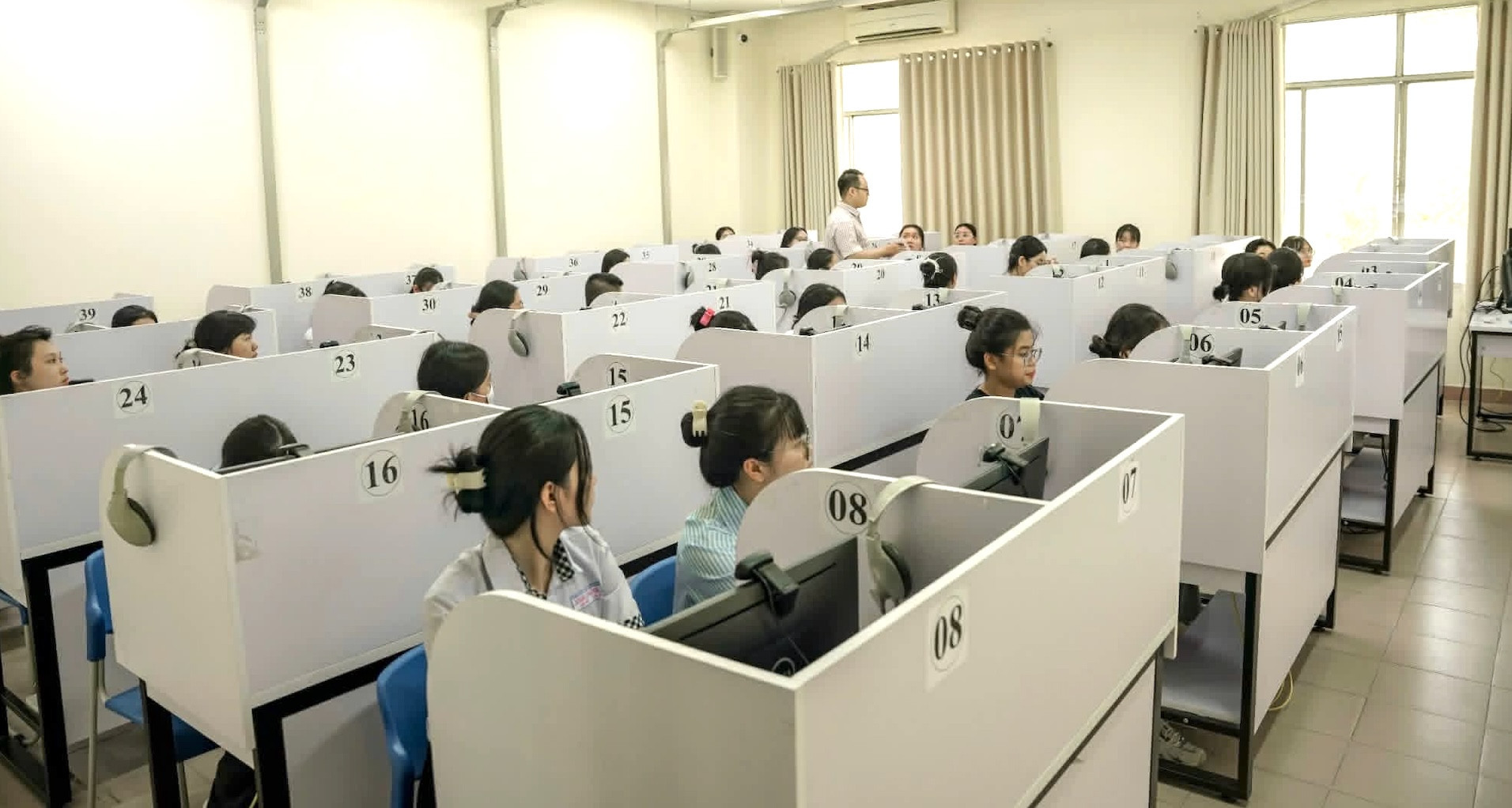
Pham Thai Son, Director of Admissions at the Ho Chi Minh City University of Industry and Trade, said computer-based graduation examinations should serve not only as the graduation test but also as the foundation of a national assessment infrastructure that could support multiple standardized examinations in the future.
According to Son, the model could include eight key components.
First, Vietnam should establish a nationwide network of testing centers. Rather than investing heavily in new facilities, the country could make use of existing computer laboratories at universities, colleges and qualified high schools. MOET would certify eligible institutions as official National Assessment Center testing sites.
Second, a secure technical infrastructure is essential. Examination computers should operate only on an internal local area network (LAN) without internet access. Each testing site should have both primary and backup local servers operating simultaneously to ensure uninterrupted service.
Third, Vietnam should develop a standardized question bank containing hundreds of thousands of questions based on modern assessment theory. Each candidate would receive a different examination paper with an equivalent level of difficulty. After every examination, artificial intelligence could assist in analyzing question quality and continuously improving the question bank.
Fourth, candidate authentication should be strengthened through chip-based national identification cards combined with facial recognition technology, while fingerprint verification could also be explored. Each candidate would be allowed to log into the examination system only once.
Fifth, the examination environment should be tightly controlled. Examination computers would run only the testing software, while USB ports, Bluetooth, Wi-Fi and other applications would be disabled. The system would automatically save candidates' work every few seconds to minimize the risk of data loss.
Sixth, the integrity of submitted examinations should be protected. The system would generate a digital hash for every examination, digitally sign the data and store both the hash and system logs on a dedicated blockchain platform to prevent unauthorized alterations. Multiple-choice examinations would be scored automatically, while essay responses, if included, would be marked anonymously and independently on a digital platform.
Seventh, technology should enhance examination monitoring. AI-powered cameras could detect unusual behavior, while every action taken by proctors and technical staff would be recorded in system logs to ensure full traceability.
According to Son, every data modification should leave a permanent audit trail.
Eighth, examination results should be published through a digital platform. Results would carry digital signatures, allowing candidates to access them online and receive electronic certificates with QR codes that universities could verify directly.
Son also proposed that universities chair examination councils and take responsibility for managing question banks and grading, while provincial Departments of Education and Training would oversee testing facilities, examination sites and invigilation.
He believes Vietnam could eventually organize the graduation examination multiple times each year, holding a new testing session whenever enough candidates register.
Such an approach would reduce pressure on the examination system while eliminating the need to equip a large number of computer laboratories simultaneously.
"In my view, Vietnam should gradually introduce computer-based graduation examinations while applying modern technologies, including blockchain, to improve the transparency, security and efficiency of the entire assessment process," Son said.
Smartphones could become a future option
Associate Professor Bui Hoai Thang, Head of Academic Affairs at Ho Chi Minh City University of Technology, said the fundamental purpose of Vietnam's high school graduation examination is to verify whether students have achieved the required learning outcomes after completing 12 years of general education.
The examination should also provide reliable data that allow education authorities and schools to evaluate teaching quality and make informed adjustments to curricula, teaching methods and education policies.
According to Thang, once that objective is clearly defined, expecting a single examination both to certify graduation and to identify the highest-performing candidates for university admission places an unreasonable burden on the examination system.
"A school-leaving examination designed for universal education should not also be required to differentiate students at the highest level for university admissions. These are two different objectives that require two different assessment tools," he said.
He argued that building highly selective questions into the graduation examination distorts its original purpose while increasing academic pressure, expanding the private tutoring industry, raising social costs and encouraging schools to focus excessively on examination preparation rather than developing students' broader competencies.
If the examination simply certifies minimum graduation standards, organizing multiple testing sessions each year would not be unusual, Thang said.
The goal is not to create a competition to identify the very best students but to determine whether candidates have met the required academic standards. Multiple testing windows would therefore give students additional opportunities to earn their graduation qualification without changing the examination's fundamental purpose.
Once examinations move to computers, he believes organizing multiple sessions throughout the year becomes entirely feasible.
Rather than mobilizing the entire national examination system on a single date, testing could take place continuously across multiple sessions.
Looking further ahead, Thang said that as digital infrastructure and cybersecurity technologies continue to improve, Vietnam could even explore delivering examinations on personal devices such as tablets or smartphones, significantly reducing organizational costs while expanding access for candidates.
However, he cautioned that safeguards would be needed to prevent candidates from repeatedly retaking the examination simply to improve their scores.
The experience of the Vietnam National University Ho Chi Minh City Competency Assessment Test in 2026 showed that allowing many candidates to sit a second examination substantially increased organizational costs and required additional social resources.
If Vietnam adopts multiple graduation examination sessions, he said policymakers should clearly define the number of permitted attempts or establish an appropriate result-recognition mechanism that balances flexibility for students with the efficient operation of the examination system.
Le Huyen
.svg)
