 Vietnamnet.vn

 Podcast



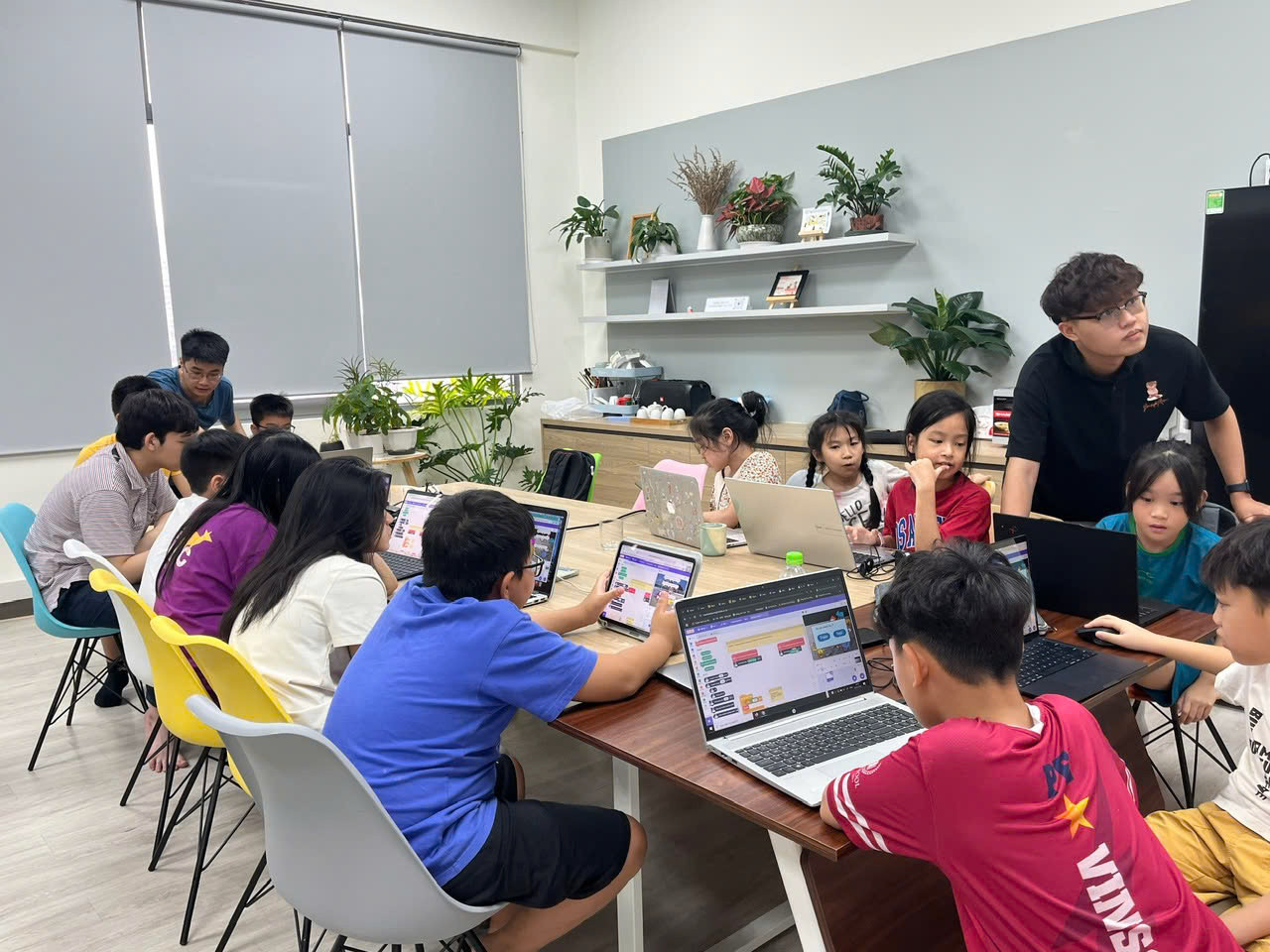
After years of researching and implementing AI projects, Assoc. Prof. Dr. Nguyen Phi Le, Acting Director of the International Research Center for Artificial Intelligence (AI4LIFE) at HUST, said that early grounding in advanced mathematics and logic is crucial for students to move beyond using AI tools to designing complex global models.
However, Vietnam cannot wait until the university level to start specialized training, because by then, the “golden time” of many students who have the aptitude and could become talents in the AI field later may already have been missed, she said.
Prepare early
According to Le, undergraduate programs in engineering fields in Vietnam last four years but if all foundational and specialized knowledge about AI is concentrated within four university years, it is difficult to ensure sufficient depth.
“AI is not only programming but also requires a solid foundation in mathematics, especially probability and statistics, linear algebra, and calculus. If these areas of knowledge are prepared from the end of secondary school and during high school years, students will have a great advantage when entering university,” Le said.
In addition, AI is not simply a part of computer science. Many students who are good at competitive programming may not necessarily be suitable for AI, because this field requires modeling thinking and a deep mathematical foundation, which is different from the thinking used to solve pure algorithmic problems. Students who want to pursue AI in depth need to be guided and trained systematically from the secondary school level.
Le said that in some countries, high school students are taught probability, discrete mathematics, and even introduced to Python programming and basic AI problems. Thanks to early preparation, when entering university they can quickly keep up with machine learning and build models instead of only using AI as a tool.
She believes that in Vietnam it is necessary to identify students with mathematical aptitude, logical thinking, programming skills, and especially a passion for AI. If they are not guided early that, besides using AI, they can also train and design models themselves, they may easily follow the “old path” and miss opportunities for in-depth research.
Training AI elites
The Ministry of Education and Training has begun piloting AI teaching at the secondary school level. However, Le believes that mass training and elite training are two different directions.
Mass training helps students understand what AI is and how to use it safely. But to become AI researchers or experts, students need specialized training, understanding the mathematical foundations of AI, having a background in probability and statistics or understanding simple concepts about matrices and machine learning algorithms, and further participating in real-world AI application projects and becoming familiar with academic AI research.
Le said that in recent years, HUST has organized the “Vietnam Artificial Intelligence Championship” to identify talent, while also establishing the AIstein Young Talent Club for secondary school students. These activities aim to help students learn AI systematically, approach mathematical foundations and machine learning, and participate in research projects and write scientific papers on AI.
However, in order to build a strong elite AI workforce, it is necessary to develop curricula and teaching materials for secondary school students who have the ability and desire to explore AI in depth. These programs need clear roadmaps instead of short-term courses that are more movement-driven.
In addition, Vietnam needs centers or coordination models between secondary schools and universities to both identify and provide specialized training and organize research. All of this would form a continuous thread, helping students receive support in learning and researching AI from an early stage through university and postgraduate levels.
In this process, the role of policymakers is particularly important. Relevant ministries and sectors could organize national competitions for excellent students in AI or introduce policies to support and honor students participating in international AI Olympiads. This could create motivation for students and schools to invest seriously.
“In the context that AI Olympiads such as the International Artificial Intelligence Olympiad (IAIO) or the International Olympiad in Artificial Intelligence (IOAI) have appeared since 2024 and are gradually becoming more common, building an official training strategy is becoming increasingly urgent. Without early preparation, Vietnamese students will find it difficult to compete in this new arena,” Le said.
Thuy Nga
.svg)
