 Vietnamnet.vn

 Podcast



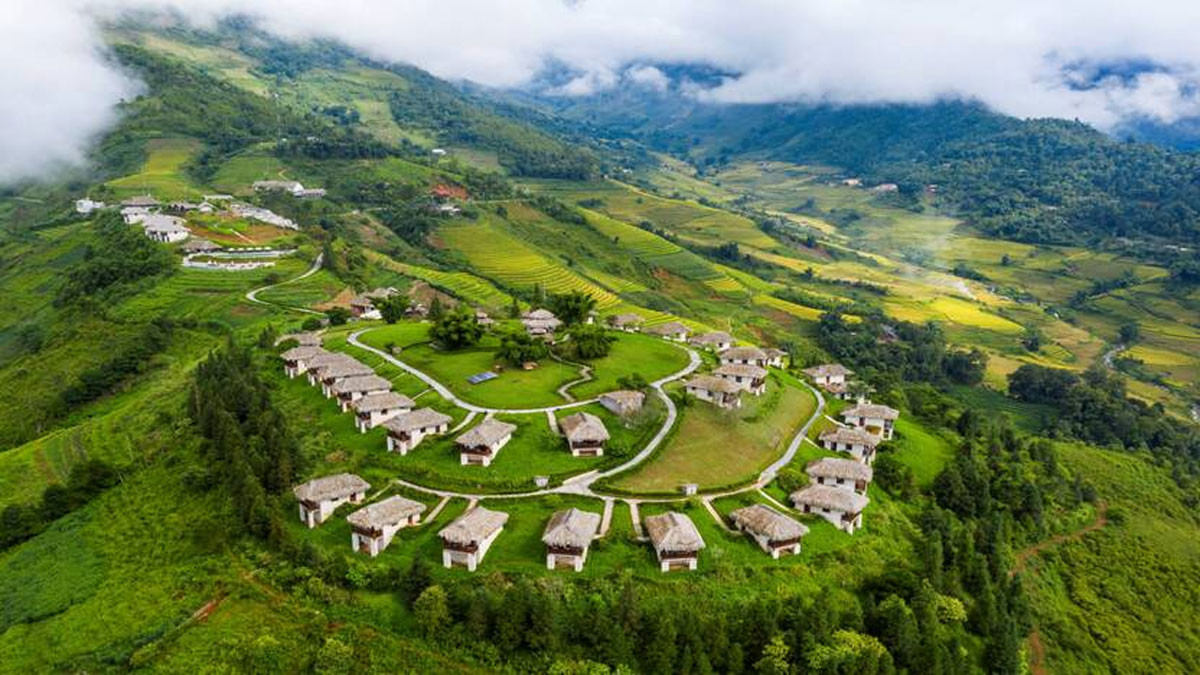
Fields are abandoned in many areas, especially in the Mekong Delta and Central Vietnam, where agricultural land was once the primary livelihood.
Recent policies promoting private sector growth, including increasing access to resources such as land and capital for private enterprises, can contribute to helping large and small enterprises develop the economy not only in big cities, but also in localities and rural areas, from industry and services to tourism and agriculture.
The Politburo’s Resolution 68 aims to remove administrative barriers and unleash the private sector’s potential in all fields. This trend mirrors past developments in China.
Over the past few decades, China has experienced dizzying urbanization. According to the South China Morning Post, by 2023, over 65 percent of China’s population lived in urban areas, up from less than 20 percent in 1980. Young rural residents flocked to cities, leaving vast agricultural land abandoned.
In 2018, China launched the “Rural Revitalization” strategy, aiming to “new rural area development” by 2035 and achieve “a strong agricultural sector and comprehensive prosperity for farmers” by 2050.
Chinese policy
China has implemented “rural consolidation” policies, encouraging farmers to contribute land to cooperatives or businesses for large-scale, efficient production. According to Xinhua, these policies promote a shift from small-scale farming to industrialized, modernized models, supported by technology, machinery, and market linkages.
Major tech giants like Alibaba, JD, and Tencent have entered the agriculture sector. Alibaba’s subsidiary, “Alibaba Digital Agriculture,” develops e-commerce and supply chain platforms for farm produce. In Sichuan, Alibaba invests in an “agricultural data center” to help farmers sell products via Taobao.
Beyond production, farmland has been repurposed for renewable energy projects like solar and wind farms or developed into rural tourism sites. Farmers contribute land or abandoned houses to large enterprises, which renovate and develop projects, sharing profits based on agreed ratios.
As a result, many rural Chinese households have gradually become rich not only because of rising land prices but also because they know to "contribute land to do business".
Opportunities for farmers
Vietnam’s rural landscape shows striking similarities. Urbanization has driven young people from smaller provinces to cities for education and work. Many villages are left with only the elderly and children, with garden and farmland abandoned or inefficiently used.
Statistics show Vietnam has about 12 million hectares of cultivated land.
Over the years, the government has increased agricultural land tax exemptions and relaxed land trading policies to encourage land concentration for large-scale production, modernizing agriculture and rural economies.
Recently, Vietnam’s rural areas have seen a strong resurgence thanks to better infrastructure, increased land prices, people’s bigger investment in larger-scale production, and to other services such as tourism.
Like China, the greatest opportunity for Vietnamese farmers may lie in leveraging rural land for partnerships or developing new economic models. Large-scale agriculture with high-tech applications can boost productivity and quality.
Major corporations like Vinamilk, TH True Milk, and startups like GreenPath and Orlar have begun value-chain models, providing inputs and guaranteeing offtake for farmers.
Vietnam’s rural areas, with stunning natural landscapes and favorable climates, hold great potential for ecotourism. Homestays and farmstays have emerged as locals contribute land or houses, which companies renovate and share innthe profits. Community-based tourism models in Mai Chau, Pu Luong, Ninh Binh, Moc Chau, and Ha Giang are examples.
In energy, solar farms in Ninh Thuan and Binh Thuan have started by consolidating local land, with corporations investing in infrastructure and operations.
In Lam Dong, after the 2013 Land Law took effect, the provincial authorities issued a policy to give residential and agricultural production land, allocating 820.51 hectares, including 13.16 hectares to 658 households and 807.35 hectares of production land to 2.076 households.
Manh Ha
.svg)
