 Vietnamnet.vn

 Podcast



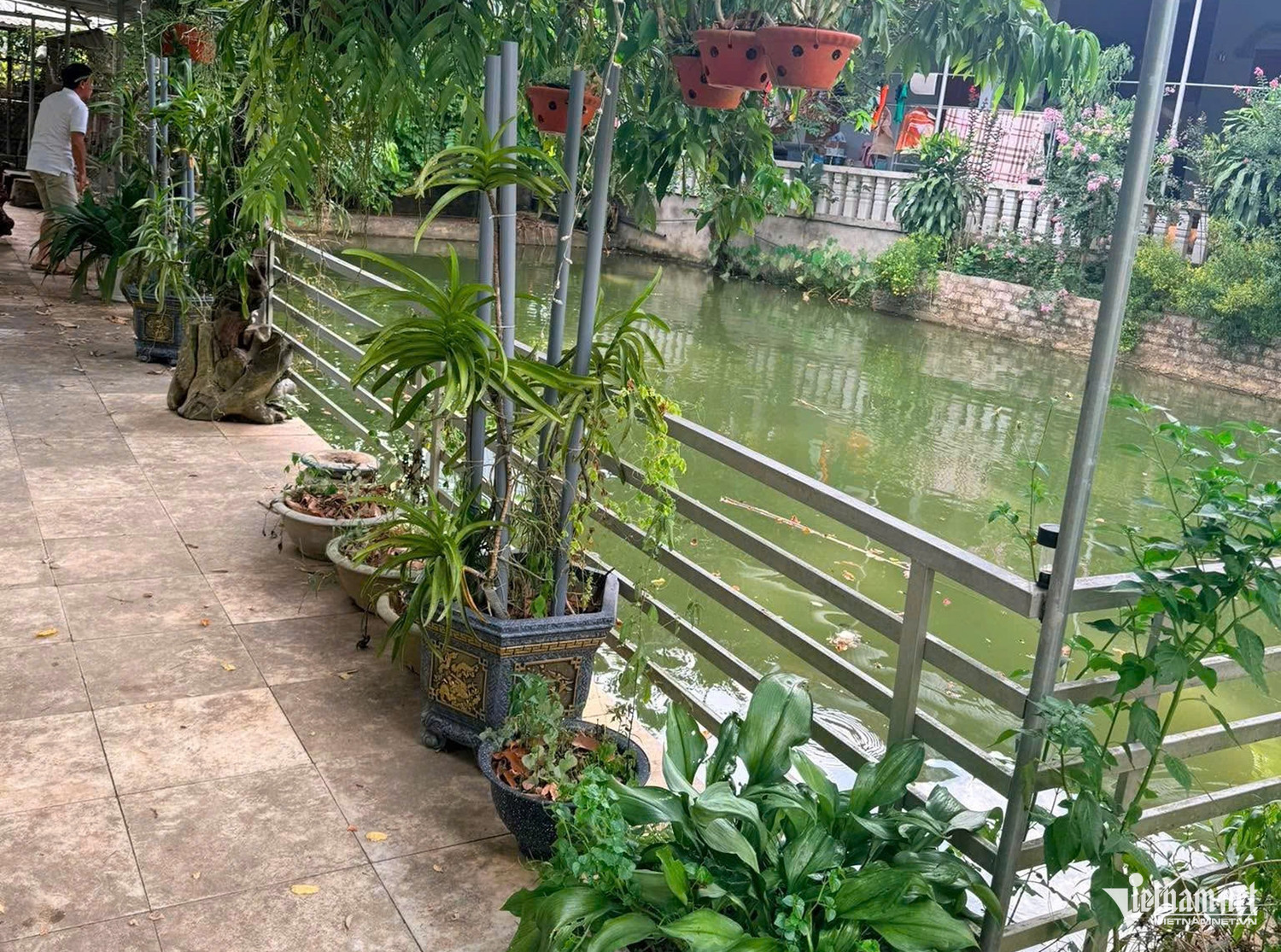
In the days following the tragic drowning incident in Con village, Quy Hop commune, in Nghe An, the home of the couple has been engulfed in grief.
Holding her seven-month-old baby, the wife silently gazed at the family altar, where portraits of her two children, aged 7 and 3, are displayed. Tears streamed down her face. The husband, a construction worker in Da Nang, rushed home to bid his two children a final farewell.
On the morning of June 25, the two siblings were at home with their mother and grandmother. While the grandmother attended a neighborhood meeting and the mother cared for the infant, the children went to play at a neighbor's house.
Local authorities said the homeowner was away at the time. While playing, the children accidentally fell into a pond unnoticed.
At around 10 am, when the children had not returned home, their mother went looking for them and found one of them floating on the surface of the pond. Although family members and neighbors quickly pulled the child out and called emergency services, the toddler could not be saved.
Unable to find the other child, relatives and neighbors continued searching and discovered the child's body in the pond a short time later.
Tragically, this was not the first time the family had suffered such a loss. Three years earlier, another child had drowned after falling into the family's own pond.
"After that tragedy, we fenced off the pond to prevent it from happening again. We never imagined another tragedy like this could still occur," the father said through tears.
He described the incident as an unimaginably painful lesson for his family and urged parents to closely supervise their children at all times.
According to Phan Lan, a neighbor, after learning about the family's difficult circumstances, many donors offered financial support to help cover funeral expenses and assist them through this devastating period.
Lan said the pond where the children drowned was close to the neighbor's house, and the children often played there.
"That day, the neighborhood was holding a community meeting. The homeowner also attended and forgot to close the gate. Normally, the gate is locked, so the children couldn't get inside, Lan said. “The fence around the pond was quite high, but the gaps between the horizontal bars were fairly wide. Perhaps the child squeezed through, fell into the water, and the older sister jumped in to try to save the younger sibling but couldn't.”
28 child drownings in six months
Le Van Thuy, head of the Social Protection and Children Division under the Nghe An Department of Health, said the province recorded 26 drowning incidents in the first six months of the year, claiming the lives of 28 children across 24 communes and wards.
Thuy said most victims were school-age children, primarily in rural and mountainous areas, where rivers, streams, ponds, reservoirs, and irrigation facilities are abundant but safety measures remain inadequate.
He said the causes of child drownings stem from Nghe An's complex terrain, with numerous rivers, coastlines, ponds, and lakes, combined with prolonged summer heat. Children are often drawn to these areas for swimming and recreation.
At the same time, awareness among some parents, caregivers, and communities about drowning prevention remains limited, while supervision of children is often inadequate. Many children also lack the knowledge and skills needed to protect themselves around water, and public awareness campaigns in some localities remain insufficient.
According to Thuy, the health sector has advised the provincial People's Committee to issue various plans and directives aimed at strengthening prevention of child injury and drowning.
Authorities urge parents never to allow children to visit ponds, lakes, rivers, streams, canals, or other high-risk water areas without adult supervision. Parents should also remind children not to swim in unsafe locations or play near dangerous bodies of water.
Local authorities are encouraged to regularly inspect hazardous areas, install warning signs, erect protective barriers at high-risk locations, and promptly prevent children from swimming in unsafe waters.
According to the World Health Organization (WHO), an estimated 300,000 people died from drowning worldwide in 2021, with 57 percent of victims being children and adolescents. About 92 percent of these deaths occurred in low- and middle-income countries.
In Vietnam, 4,019 drowning deaths were recorded in the same year, with 40 percent involving children under the age of 14, making drowning one of the leading causes of death among children.
Tran Tuyen
.svg)
