 Vietnamnet.vn

 Podcast



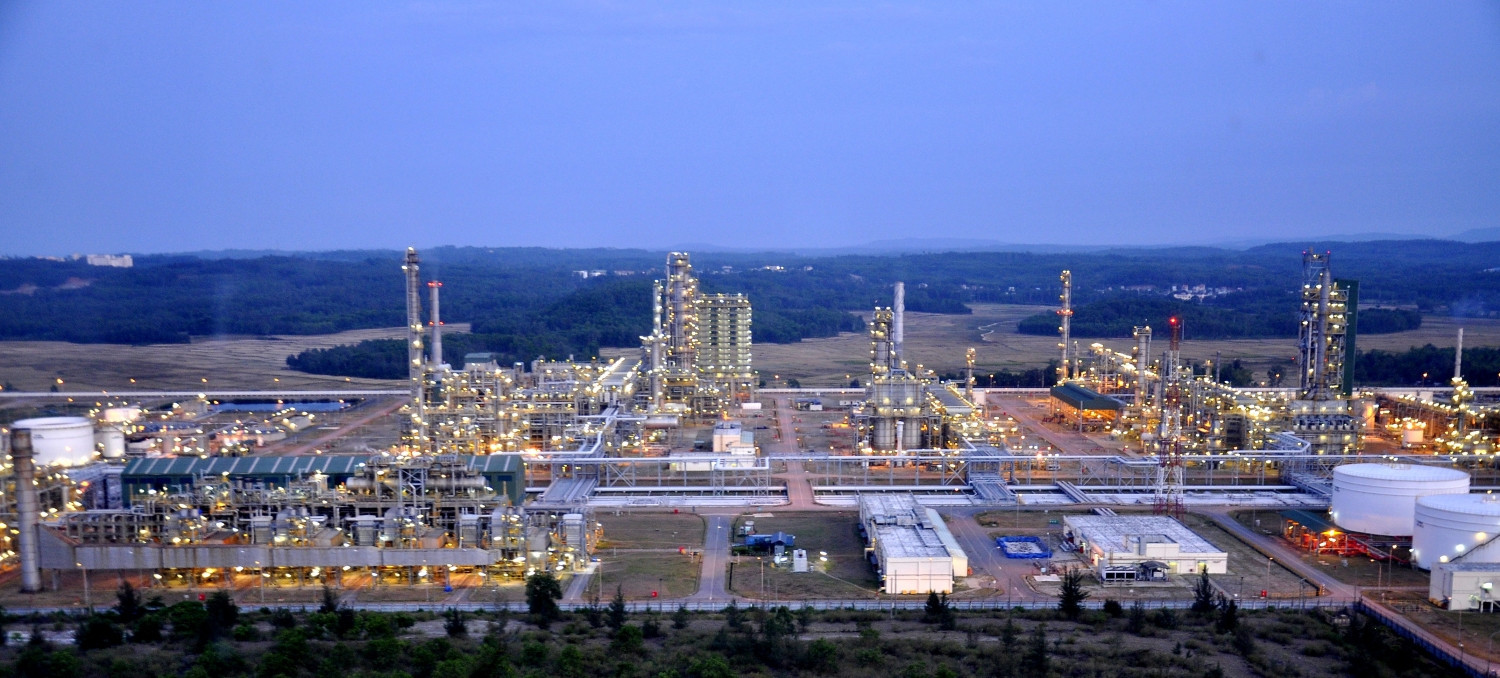
Petroleum enterprises are sitting on edge as tensions escalate in the Middle East, with oil prices, surcharges, freight rates and insurance costs all at risk of surging, significantly increasing input costs and financial exposure.
Proposes priority mechanism for domestic crude
Nguyen Viet Thang, General Director of Binh Son Refining and Petrochemical Joint Stock Company - a member of Petrovietnam and operator of the Dung Quat Refinery - said the plant currently uses about 30-35% imported crude, mainly sourced from West Africa, the Mediterranean region, the US and partly from the Middle East.
If the conflict in the Middle East drags on, oil prices, freight surcharges and insurance premiums could continue to climb sharply, heightening input costs and financial risks.
Since early 2026, in preparation for double-digit growth targets and to proactively respond to global uncertainties and climate change impacts, BSR has raised inventory levels, flexibly adjusted production in line with market demand and diversified crude supply sources.
For the March-May 2026 period, BSR signed contracts to import around 3 million barrels of crude, including Qua Iboe, Bu Attifel, Medanito and Palanca Blend grades. Although these sources are not located in direct conflict zones, geopolitical tensions in the Middle East could still indirectly affect delivery schedules, freight costs, insurance and maritime safety.
Notably, with additional spot purchases estimated at 900,000 to 1 million barrels in May 2026 and 1 to 1.3 million barrels in June 2026, operating the refinery at 118-120% capacity will place considerable pressure on prices and access to supply.
Beyond price factors, Thang warned of potential supply chain disruptions if some countries restrict exports to prioritize domestic demand. Such developments could directly affect the refinery’s operating plan, especially toward the end of the second quarter and the beginning of the third quarter of 2026.
In reality, geopolitical instability and conflict in the Middle East tend to increase demand for domestic crude, intensifying competition in international tenders for Vietnamese crude oil.
To mitigate the risk of feedstock shortages, BSR has proposed a mechanism to prioritize enterprises in purchasing the maximum volume of domestically produced crude oil and condensate.
At the same time, management authorities are urged to apply a temporary mechanism prioritizing domestic crude for the Dung Quat Refinery to process into finished petroleum products, while limiting exports of domestic crude during peak risk periods, until the end of the third quarter of 2026 or until international markets stabilize, in order to ensure national energy security.
BSR has also requested permission to directly purchase crude from the Ruby, Bunga Orkid and Chim Sao fields during this period at the highest bid price of the most recent tender, as a temporary solution to secure timely supply amid strong market volatility.
Market could shift from price crisis to shortage
The Strait of Hormuz is currently the world’s most critical strategic energy transit route, linking major Gulf oil producers with global consumer markets, particularly in Asia. According to the US Energy Information Administration, about 20 million barrels per day of oil and condensate pass through the strait, equivalent to nearly 20% of global oil consumption and more than one quarter of total seaborne oil trade.
Approximately 84% of oil flows through Hormuz are destined for Asia, making the region among the first and hardest hit by any disruption.
Although major exporters such as Saudi Arabia and the UAE have bypass pipeline systems, total alternative capacity stands at only around 2.6 million barrels per day, insufficient to offset a severe maritime disruption.
Thus, Hormuz is not merely a geopolitical flashpoint but a decisive factor affecting oil price premiums, logistics costs, maritime insurance and supply stability for Asian refineries.
In a scenario where the Strait of Hormuz is closed, oil supply could be disrupted from one week to three months. With roughly 20 million barrels per day affected, the market could rapidly shift from pricing risk to actual shortage.
Existing bypass capacity would not be enough to compensate, potentially spreading shockwaves across crude oil, LNG - about 20% of global LNG transits Hormuz - and the broader energy chain.
If disruption lasts one week, markets may react in panic, driving prices higher largely due to extreme risk expectations rather than real supply shortages.
After two to three weeks, shortages of prompt cargoes in Asia could begin to surface, forcing refineries to adjust crude slates or cut throughput.
If disruption extends to one month, supply risks could materialize, pushing energy prices sharply upward to rebalance supply and demand while triggering significant logistics volatility. Commercial inventories would decline rapidly, and regional price differentials and crack spreads could fluctuate strongly.
Should the disruption last three months, high prices would suppress demand, prompting market self-adjustment through consumption cuts, releases from strategic petroleum reserves and a restructuring of global trade flows. The risk of oil prices exceeding US$100 per barrel would rise significantly.
Tam An
.svg)
