 Vietnamnet.vn

 Podcast



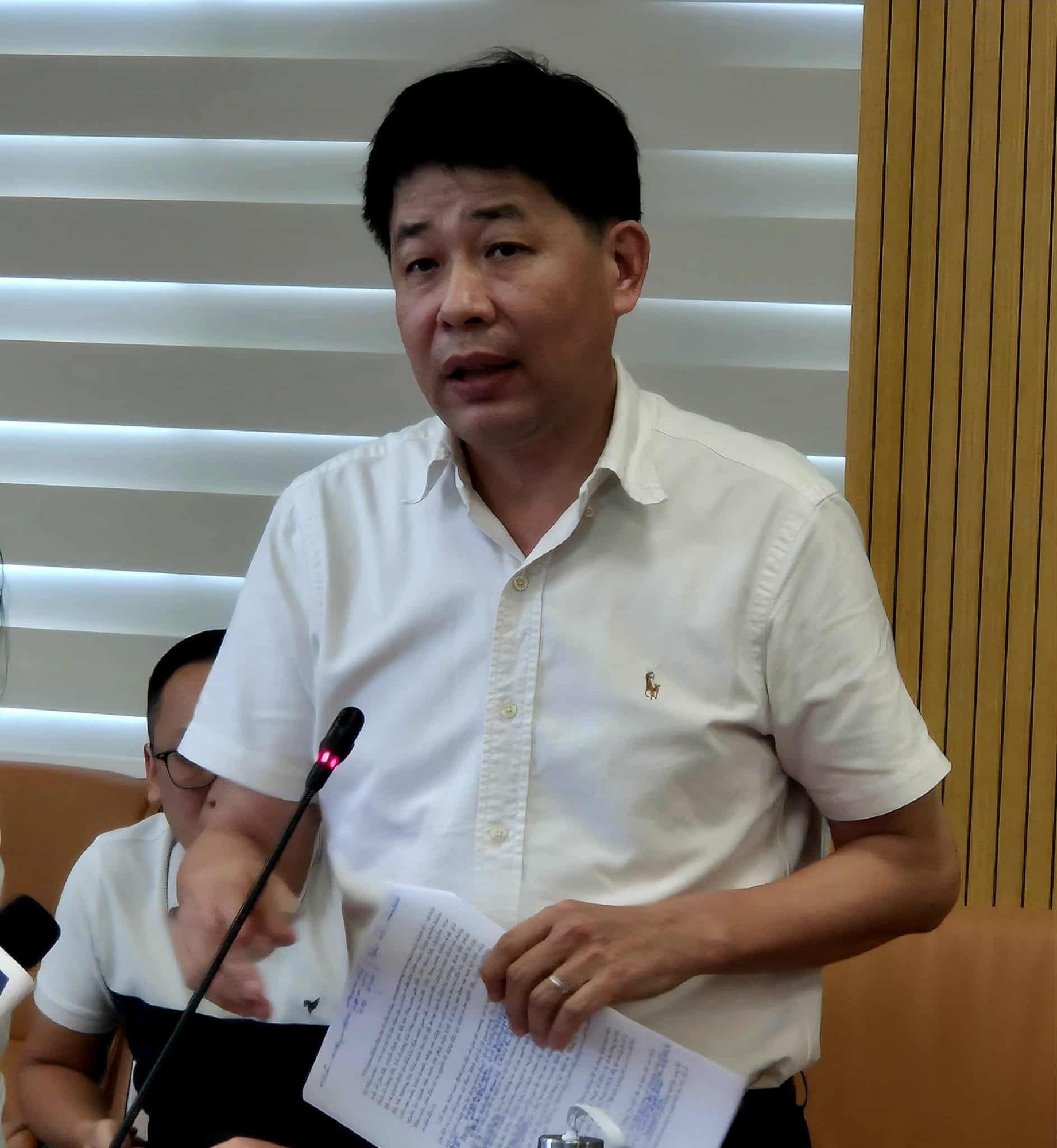
At a press conference held on September 4 by the Ministry of Agriculture and Environment, representatives from the Land Management Department spoke about new amended provisions of the 2024 Land Law, particularly concerning land pricing mechanisms and land-use conversion.
VietNamNet raised questions about the current market-based land valuation, which is causing difficulties for residents looking to convert land use or access social housing. Mai Van Phan, deputy director of the department, stated that the amended law closely follows the spirit of Resolution 69 of the Party Central Committee, aiming at major reforms in land pricing and administrative procedures.
Phan pointed out that many households are currently using residential land interspersed with garden or pond land, and when they wish to convert it into full residential use, they face high costs. The government has tasked the Ministry of Finance (MOF) with drafting a resolution to address the issue.
The latest draft proposes that residents changing land-use purposes within the allocated residential land limit will not have to pay land-use fees. For conversions exceeding the limit, a proportional fee from 30 to 50 percent will be applied, depending on specific conditions.
The Ministry of Finance is currently collecting feedback from other ministries and sectors to finalize the draft before submitting it to the government.
For low-income individuals, access to housing will be aligned with the social housing development policy managed by the Ministry of Construction. This is intended to harmonize the interests of land users and affected individuals, and align with the goals of Resolution 18.
One of the most significant changes drawing public attention is the new land pricing mechanism. Previously, there were two types of prices – specific land prices and official land price frameworks, which led to inconsistency in law application.
Under the 2024 Land Law, the land price list is maintained but will now include an adjustment coefficient for flexible application depending on the purpose, such as compensation for site clearance, land recovery, or land-use conversion.
“If the land-use fee is set too high, investors may shrink back due to excessive costs. But if it's too low, it may fail to secure budget revenues. This revision aims for a balanced, flexible, and transparent approach,” Phan explained.
He added that the amended law aims to both ensure sufficient state revenue and reduce investment costs to attract businesses. The combination of land price lists and adjustable coefficients will be applied on a case-by-case basis to support genuine residential needs while encouraging investment and driving economic development.
Vu Diep
.svg)
