 Vietnamnet.vn

 Podcast



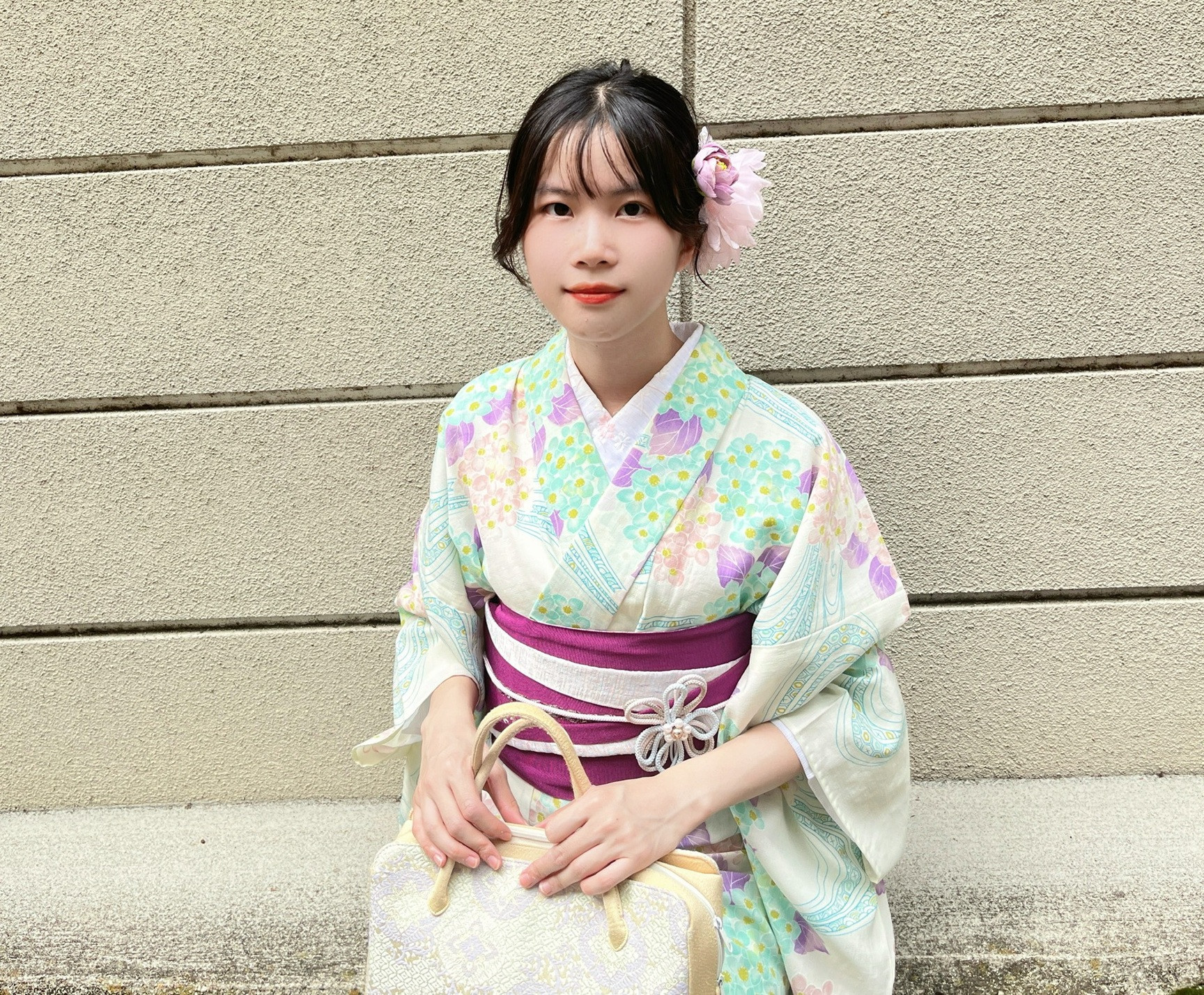
With a cumulative GPA of 3.88/4, Trang achieved not only the highest score in her department but also became the valedictorian of the entire university. Trang's results are even more impressive given her field of study is predominantly male. Her class has the highest number of females in recent years, yet there are only four women out of 51 students. In Trang’s entire cohort, there are only five female students.
As a former student of the Japanese language specialized class at the Foreign Language Specialized High School (VNU), Trang decided to choose civil engineering when selecting a university, rather than following languages, interpretation, or economics as her family had envisioned.
"Many people advised me against Civil Engineering Technology, as most students are male and they thought it would be too strenuous. But when choosing my major, I didn't start with the question 'is this for men or women?'; I only asked myself two things: Can I learn it, and am I ready to commit to it long-term? For civil engineering, my answer to both was 'yes,' and I chose it. At that time, I thought that in the future, many technical jobs would require thinking, knowledge, and caution more than physical strength. So, gender difference is no longer a major barrier," Trang recounted.
Trang did not face many difficulties with general subjects, but things became more challenging when she dove into specialized subjects starting in her third year, such as Strength of Materials and Structural Mechanics, which required frequent projects.
"People’s advice wasn't wrong; studying this major is indeed hard. But I still feel my choice was right. While the studies might be more strenuous, there are more opportunities when entering the workforce," Trang shared.
Trang's study method is "learn as you go, understand as you learn." She focuses on lectures in class and tries to divide her workload day by day. Whatever can be finished early, she does immediately, avoiding a backlog of knowledge and assignments.
For Trang, the key to maintaining strong academic performance lies in concentration and effective time management. She developed the habit of prioritizing only one important goal at a time, setting long-term plans, and breaking tasks into smaller parts to avoid overwhelming pressure.
In addition, participating in collective activities and serving as class monitor, head of the student association unit, and deputy head of the faculty association helped her develop essential soft skills such as communication, teamwork, presentation, and problem-solving.
She also asked lecturers about concepts she did not fully understand. “Not only in class, but at home I also sent messages to ask questions. The lecturers were willing to answer after working hours and provide guidance on study and career orientation. That made me feel heard and trusted. I believe that when you take initiative in studying and working, regardless of your grades, lecturers will recognize your efforts,” Trang said.
Beyond classroom lectures, she was encouraged and guided by lecturers to learn professional software, update new industry trends, and pursue professional certifications.
Throughout her studies, Trang consistently received academic encouragement scholarships and was recognized as an Outstanding Student for multiple years.
Demonstrating a strong academic foundation, her graduation thesis received a high score of 9.6/10. Her project focused on special structural components such as shear walls, transfer beams, and combined footing, reflecting her ability to apply theoretical knowledge to practical situations.
Trang has also shown well-rounded development and global integration capacity, holding a JLPT N2 Japanese certificate and an IELTS score of 7.0.
She believes her Japanese language background helped her study more effectively and seize many opportunities, even providing a competitive advantage when applying for jobs and negotiating salary.
One of her most memorable memories was in early sophomore year, when she participated in the Virtual Design World Cup and was nominated to travel to Japan for the award ceremony. Trang was chosen to go to Japan because she was fluent in both Japanese and English.
"In that moment standing on stage, presenting the project I had worked so hard on, and receiving the award along with congratulatory messages from my teachers, I believed even more that my choice of major was correct," Trang said.
With her language advantage and professional certificates, Trang built her portfolio, searched for job opportunities, submitted her CV, and participated in interviews starting from the end of her third year. Currently, she works as a consultant and construction survey engineer, executing projects for a company headquartered in Japan.
Thanh Hung
.svg)
