 Vietnamnet.vn

 Podcast


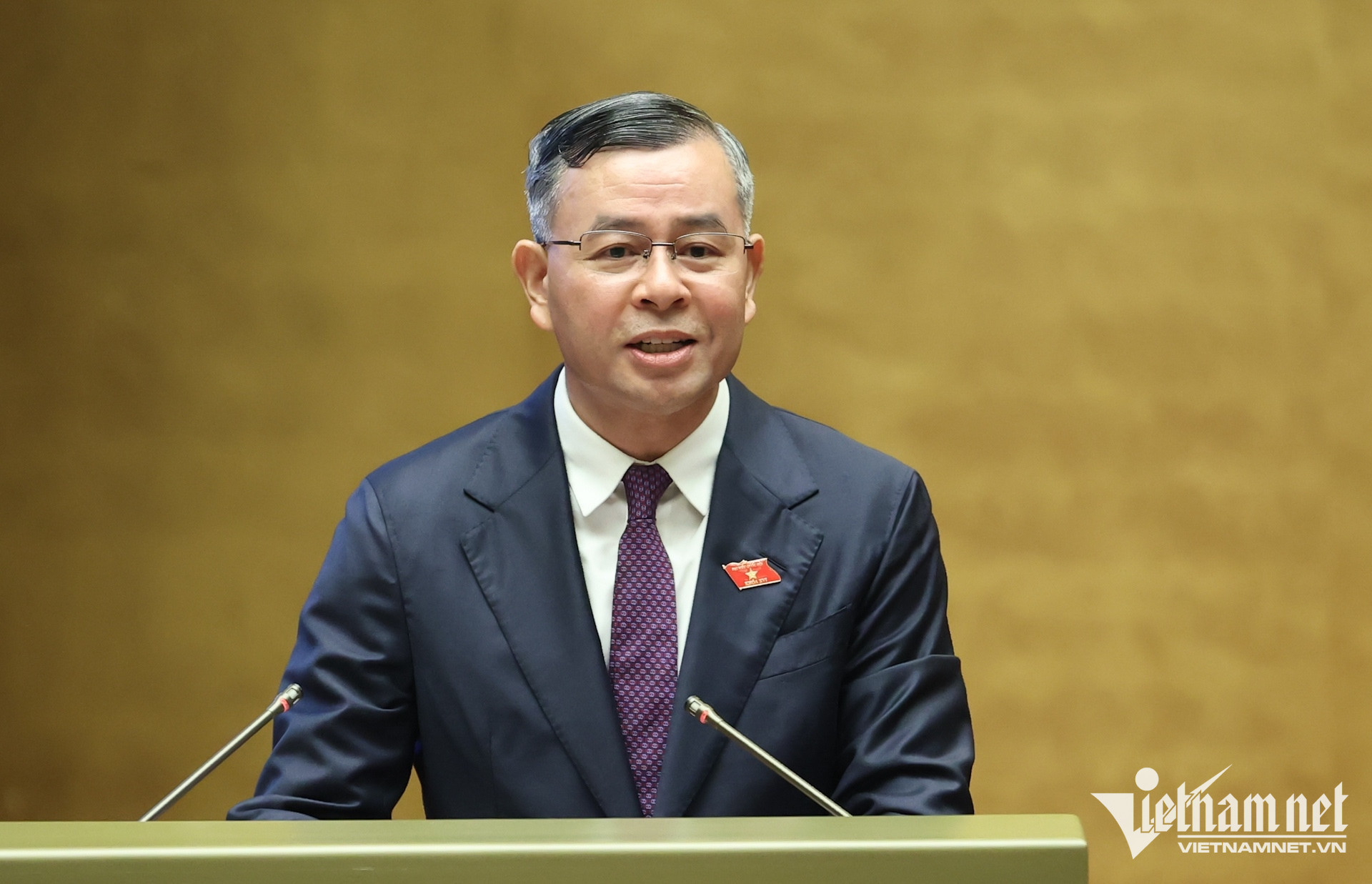
The National Assembly on October 28 discussed the draft law amending and supplementing several provisions of the Law on Securities in a plenary session. The draft proposes that the State adopt policies to modernize information technology infrastructure for the securities market, as well as policies to encourage, reward, and attract talent to the securities sector.
While supporting the proposal, deputy Bui Xuan Hai, rector of Hai Phong University, said the draft only stated in general terms that “the State shall adopt policies to encourage, reward, develop and attract human resources for the securities sector,” without defining what the “securities sector” encompasses.
This could lead to an interpretation that the incentive and reward policies would also apply to employees of securities companies. Hai said this would be unreasonable because businesses are commercial entities that compete with one another.
Furthermore, if the State introduced incentives, rewards and talent attraction policies for everyone working in the securities sector, this would be unfair to people working in other fields. Securities play a very important role, but many other sectors are also vital to socioeconomic development.
He urged the drafting committee to consider more convincing grounds and justifications for the proposed incentive and reward policies. If adopted, the policies should be limited to attracting, rewarding and retaining qualified personnel working in state agencies responsible for regulating securities and the securities market, rather than covering everyone employed in the sector.
Regarding securities market development, the Hai Phong deputy said the most fundamental and important objective of securities laws worldwide is to mobilize medium- and long-term capital for economic development.
To achieve this, the law must protect investors and establish a transparent and efficient securities market. This requires protecting investors’ legitimate rights and interests and ensuring that the market operates transparently, openly and efficiently.
He proposed adding a provision stating that “the State shall adopt appropriate policies and measures to protect investors’ legitimate rights and interests in the securities market.”
Speaking on the same issue, deputy Tran Hoang Ngan of HCMC said the provisions on policies to encourage and support human resources in the securities sector needed to be clarified.
“I support the State adopting policies to support investment in securities market infrastructure. Vietnam’s securities market officially began trading in July 2000. Since then, the market has experienced one or two major system failures that halted trading and forced the market to close, affecting investor sentiment, including that of foreign investors,” he said.
He noted that there are more than 14 million individual and institutional trading accounts on the market, making investment in modern information technology infrastructure essential to ensure continuous, safe and seamless operations. Such infrastructure could also pave the way for trading without a lunch break, around-the-clock trading 24/7 and connectivity between markets.
On human resources, Ngan supported prioritizing personnel for state management, particularly those responsible for operating and monitoring the market, as well as inspecting and investigating trading orders.
“Collusion, market rigging and manipulation can occur in the securities market, so these positions require highly qualified personnel who can promptly detect manipulative and market-rigging transactions,” Ngan proposed.
Fierce competition for talent
In his closing remarks, Finance Minister Ngo Van Tuan said the securities market had experienced multiple system failures as operating conditions and market scale changed.
Although the current trading software is relatively stable, he stressed that developing the market required Vietnam to master the underlying technology so it could upgrade and repair systems to meet the market’s scale and operating conditions, particularly requirements for openness and transparency.
Regarding human resource development in the sector, the Finance Minister said a special mechanism had previously been introduced for officials and civil servants at the State Securities Commission because competition for highly qualified personnel between the public sector, represented by the commission, and securities companies and fund management companies is fierce.
Meanwhile, highly qualified professionals in the securities sector were relatively scarce in the market.
“When securities companies, fund management companies and investment funds came looking for talent, they were willing to pay high salaries to attract our staff. I remember that when the market was booming, around 2010–2012, there were years when many people at the State Securities Commission resigned to take jobs elsewhere. At the time, the entire commission had just over 300 employees, yet as many as 180 left,” the minister said.
Tran Thuong

