 Vietnamnet.vn

 Podcast



The ministry has submitted a request to Government members to gather feedback on several revised elements of the draft amended Law on Personal Income Tax. The proposal incorporates opinions from National Assembly delegates and assessments from the Economic and Financial Committees.
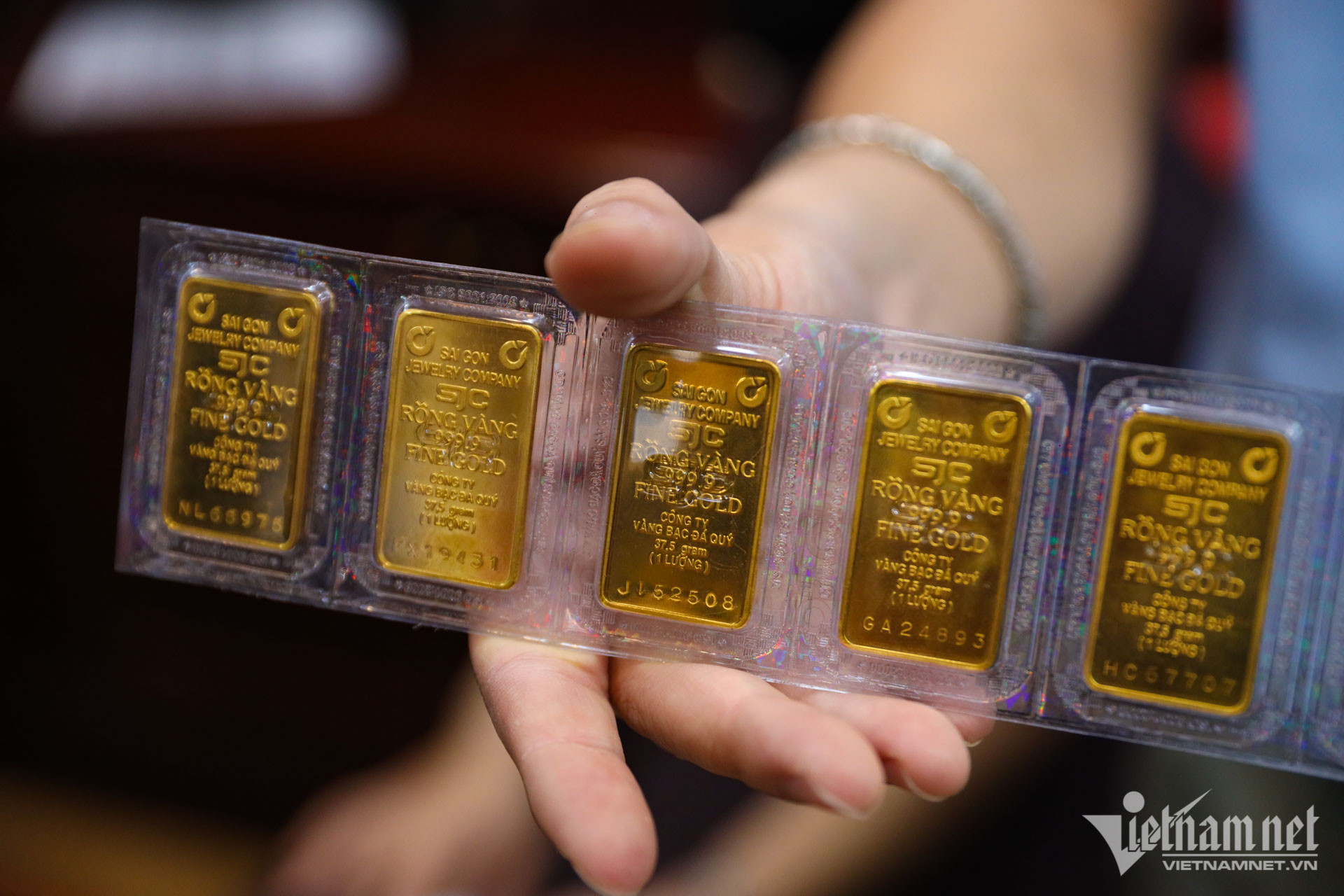
According to the assessment, the idea of taxing gold bar transactions should be carefully weighed to avoid creating difficulties for individuals who transfer gold without speculative or business intent.
The drafting body has been urged to further study appropriate tax levels and application methods. A key goal is to distinguish between short-term investment and long-term saving, in order to curb speculation and stabilize the gold market.
In its response, the Ministry of Finance noted that the proposal to tax gold transactions had been thoroughly reviewed and assessed.
Based on feedback from various ministries and agencies - as well as National Assembly delegates - the draft law authorizes the Government to define market-specific implementation details. These include the effective timeline, the value threshold at which tax applies, and adjustable tax rates suitable for each period.
Currently, the draft law proposes a personal income tax of 0.1% on each gold bar transfer, calculated based on the transaction value.
Empowering the Government to set the value threshold allows for exemptions in cases where individuals buy or sell gold for saving purposes rather than for business, which aligns with traditional gold-holding practices in Vietnam.
Previously, in a discussion with VietNamNet, Dr. Nguyen Ngoc Tu, a lecturer at Hanoi University of Business and Technology, suggested that while real estate transactions are taxed at 2%, a 1–2% tax rate could be suitable for gold. He also recommended collecting the tax at the source - having gold traders withhold it during the transaction.
According to Dr. Tu, taxing income from gold sales would reduce speculative "surfing" behavior and encourage capital to flow into productive activities instead of being locked in gold. Lower demand could also cool down gold prices.
However, he stressed the importance of a taxable threshold. For instance, only gold sales of at least one tael (approximately 37.5g) should be taxed. Smaller sales - such as a few grams accumulated for saving - should remain exempt.
Meanwhile, Shaokai Fan, Regional Director for Asia-Pacific (excluding China) and Director of Central Banks at the World Gold Council, said any gold-related tax policy in Vietnam must strike a balance between discouraging speculation and avoiding driving people to the informal market (black market) to evade taxes.
He also emphasized the regional context. If Vietnam imposes a gold tax while neighboring countries like Singapore, Hong Kong (China), and Malaysia maintain zero tax on gold, this could cause a cross-border flow of gold. It’s a risk Vietnam must carefully evaluate.
Nguyen Le
.svg)
