 Vietnamnet.vn

 Podcast



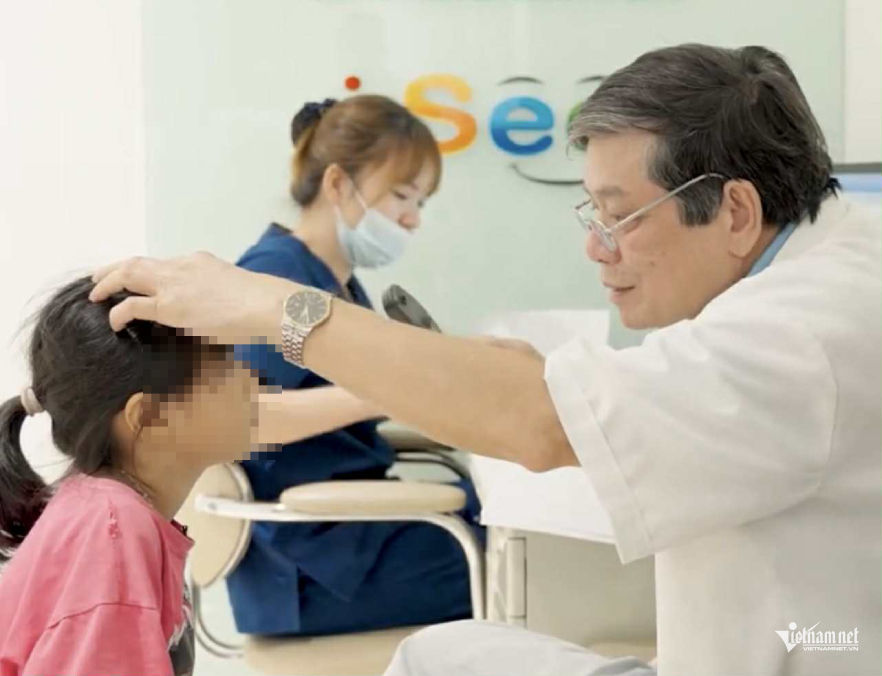
According to 2024 data from the Vietnam Ophthalmology Council, around 30-40% of schoolchildren nationwide suffer from refractive errors such as nearsightedness, farsightedness, and astigmatism. The rate exceeds 50% in major cities like Hanoi and Ho Chi Minh City, largely due to poor study habits and excessive screen time.
To address the issue, the Department of Ophthalmology - Refractive Surgery at Hanoi Medical University, in collaboration with Dong Do Hospital, organized a scientific conference themed “Child eye care from theory to practice.” The event updated pediatric eye care advancements and strengthened clinical skills among medical professionals.
At the event, MSc. Dr. Dinh Thi Phuong Thuy, an ophthalmology specialist, highlighted that children may experience a wide range of eye conditions. These range from common refractive errors to more serious disorders such as amblyopia (lazy eye), strabismus (crossed eyes), and congenital glaucoma.
Refractive errors are the most common, caused by both genetic predisposition and lifestyle factors such as incorrect posture, poor lighting, unsuitable furniture, prolonged screen use, and improper reading habits. If untreated, these issues may lead to amblyopia and long-term vision loss.
Dr. Thuy added that hospitals are also seeing cases of conjunctivitis (pink eye), congenital cataracts, and nystagmus—an uncontrolled eye movement disorder that can severely impair vision if not treated promptly.
Approximately 2-4% of children, or 200,000 to 400,000 nationwide, are affected by strabismus. Without timely treatment, this condition can cause amblyopia or other serious visual problems. Although rare, nystagmus also poses significant challenges, often linked to congenital neurological or visual conditions.
Experts recommend parents take proactive steps to protect their children’s eyes: ensure regular eye check-ups, limit screen time, maintain proper lighting and posture during study, encourage outdoor activities, and provide a balanced diet rich in vitamin A.
Children should sleep 8-10 hours daily, eat plenty of leafy greens and fruits, and use corrective lenses prescribed by specialists. In some cases, surgery may be necessary to prevent amblyopia and safeguard long-term vision.
Phuong Thuy
.svg)
