 Vietnamnet.vn

 Podcast



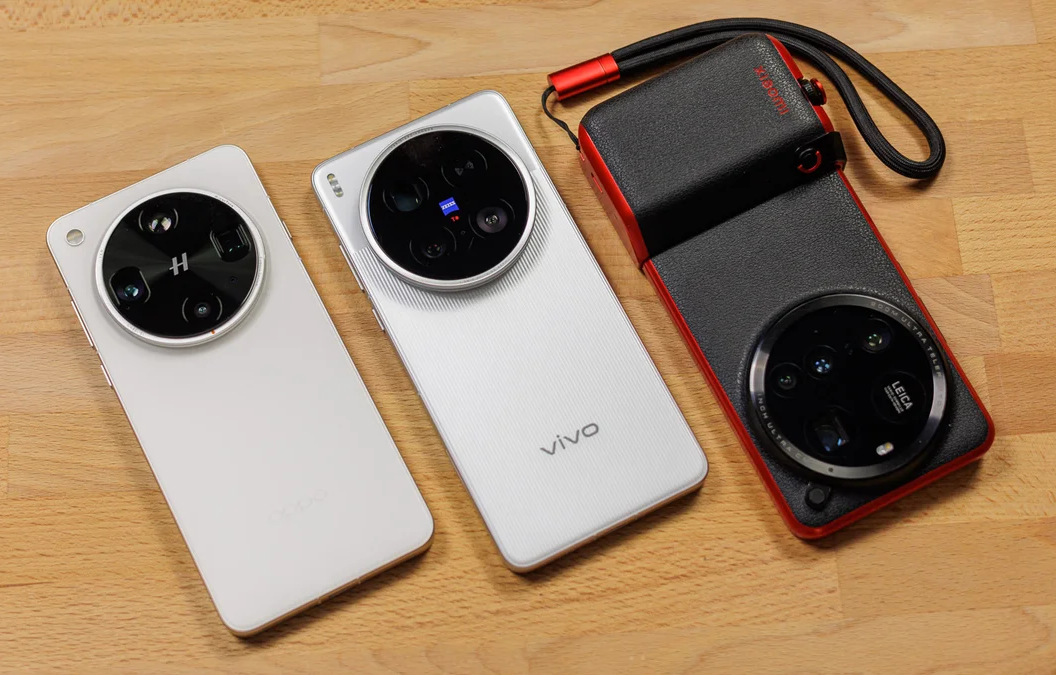
As 2026 approaches, the smartphone world braces for another wave of high-end releases. But while Apple, Samsung, and Google prepare their next devices - expected to feature largely recycled hardware and modest software-AI tweaks - enthusiasm is cooling.
The iPhone 18, Pixel 11, and Galaxy S26 aren’t stirring much excitement. In contrast, China’s Android elite - Xiaomi, Oppo, and Vivo - are poised to steal the spotlight with daring flagship designs and aggressive hardware upgrades.
Xiaomi 17 Ultra: 1-inch sensor, 200MP telephoto, and LOFIC tech
One of the most talked-about Chinese devices is the upcoming Xiaomi 17 Ultra - a follow-up to the playful 17 Pro Max, which revived the rear mini display once seen on the Xiaomi 11 Ultra.
Though leaks suggest the secondary display may be dropped, its replacement is far more exciting: a cutting-edge camera system.
The 17 Ultra is expected to feature a 50MP 1-inch Omnivision OV50X main sensor paired with a 200MP telephoto lens, ideal for both optical zoom and high-resolution cropping without loss of detail.
Drawing from the impressive performance of the Xiaomi 15 Ultra, this model is almost certain to rank among the top smartphones for photography and video.
Even more impressive is the inclusion of LOFIC (Lateral Overflow Integration Capacitor) sensor technology. This allows high dynamic range in a single shot, reducing noise and minimizing LED flickering in artificial lighting - key for video shooters.
While rumors of variable optical zoom have surfaced, expectations are tempered.
Still, Xiaomi is set to boost portrait photography, introducing a new 35mm focal length crop from the main sensor, updated filters, enhanced bokeh, and Live Photos portrait mode.
Portrait HDR shots under strong backlighting will also benefit from LOFIC’s dynamic range.
Beyond the camera, the phone will offer a flat display, the latest Snapdragon 8 Elite Gen 5 processor, a massive 7,000mAh battery, and 100W fast charging - checking nearly every box on the modern flagship wishlist.
Vivo X300 Ultra: First phone with dual 200MP cameras
The Vivo X200 Pro has been widely praised as one of the best phones of 2025. Its successor, the X300 Ultra, is now generating even more buzz.
According to leaks, this phone could be the world’s first to feature two 200MP cameras - a milestone in mobile photography.
The main shooter will reportedly be a 200MP Sony LYT-901 sensor (1/1.12”) with a 35mm focal length. The telephoto will use Samsung’s HPB sensor, also at 200MP with an 85mm focal length. An ultra-wide lens with a 50MP 1/1.28” sensor rounds out the setup.
If true, the X300 Ultra could become the most feature-packed camera phone in history.
Specs are still limited, but the device is expected to pack a 7,000mAh silicon-carbon battery, 100W wired charging, and the Snapdragon 8 Elite Gen 5 chip.
What excites users most is the possibility of a global release. The X200 Ultra was China-only - a move many fans saw as a missed opportunity.
Oppo Find X9 Ultra: Flawless hardware, four powerful cameras
The Oppo Find X9 Pro already ticks almost every box, but the upcoming Find X9 Ultra appears to be taking things even further.
Rumored to include a quad-lens setup, the phone could feature:
A 200MP Sony LYT-901 main sensor
A 200MP short-range telephoto lens
A 50MP long-range telephoto
A 50MP ultra-wide camera
If it edges out the already excellent Find X9 Pro in image quality, the X9 Ultra could become a dream device for mobile photographers.
The device will likely feature the Snapdragon 8 Elite Gen 5, a slightly smaller 7,000mAh battery, and global availability - a major win for Oppo fans outside Asia.
Though the smaller battery might seem like a downgrade from the X9 Pro, it allows room for the extra camera. And as any photographer will tell you - you can recharge a battery, but you can’t add a missing lens.
China leads the hardware race
The most exciting innovation in smartphones is no longer coming from Cupertino or Seoul.
China’s flagship makers are setting the pace, especially in hardware - and they’ve been doing so for years. That momentum shows no sign of slowing.
Even if software polish still lags behind Apple or Samsung in some areas, the hardware leaps from Chinese OEMs are making the smartphone market exciting again.
Unlike the safe, incremental steps of Apple and Samsung, these Android flagships are taking bold strides - reigniting user enthusiasm in a market that had long grown stale.
Hai Phong
.svg)
