 Vietnamnet.vn

 Podcast



Foreign-invested businesses account for more than 80% of Vietnam’s export earnings, but their links with domestic firms remain limited. Experts say the country must quickly raise productivity, adopt AI and strengthen its ability to participate more deeply in global supply chains.
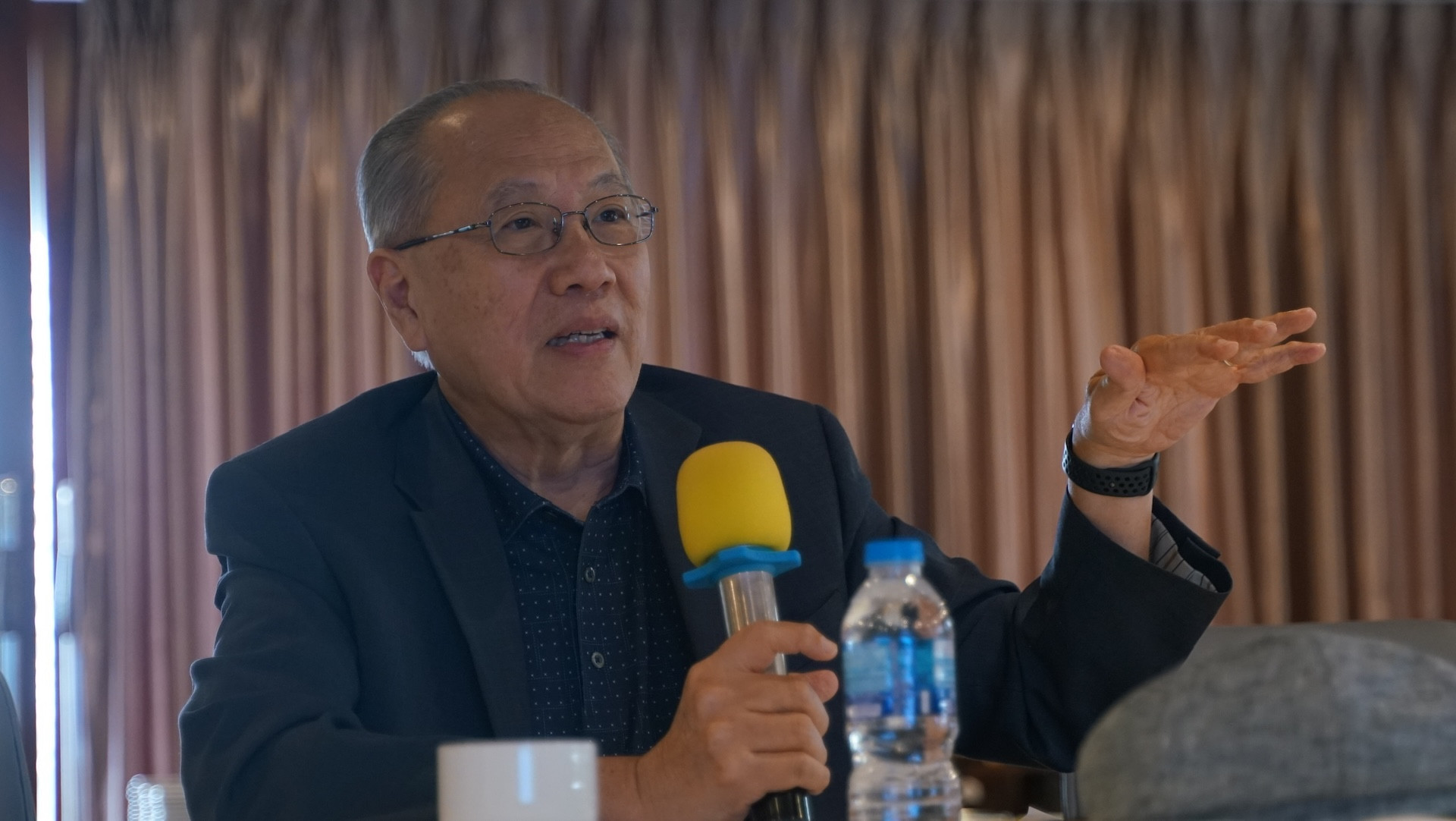
International economic and financial expert Tran Quoc Hung made the assessment at a recent discussion on “Global geoeconomic competition, supply-chain restructuring and opportunities for Vietnamese businesses,” organized by the Leading Business Club (LBC).
The workforce and productivity challenge
According to Hung, Vietnam has benefited for years from shifts in global manufacturing. Multinational corporations have sought to diversify production through China Plus One or Plus Two strategies, reducing the risks of concentrating too many operations in a single country.
Vietnam has served as a “connector economy” between China, the US and third-country markets, attracting an average of $35 billion to $38 billion in registered foreign direct investment each year. But this connecting role does not necessarily mean the country captures high-value activities within supply chains. Although foreign-invested businesses account for around 80% of total export earnings, Hung said the sector still operates as an “isolated enclave.”
One example is a major technology corporation, identified as S., which has invested heavily in Vietnam. Domestic businesses, however, supply only low-value packaging materials and services, while all core components and high-tech intermediate goods are imported.
As a result, Vietnam’s domestic value added (DVA) stands at only around 39%, well below the 40-60% range in emerging economies. Downstream linkages are also considered weak. As global supply chains continue to restructure, Hung said, the opportunity lies not simply in being chosen as a manufacturing base, but in developing the capacity to become an integral part of the value chain.
The workforce is one of the keys to achieving this.
A business representative warned that Vietnam risks “growing old before growing rich.” By 2036, an estimated 14-15% of the population will be over 65. If this trend continues, labor shortages will become more pronounced. Robots and AI would then become more than tools for cutting business costs: they would form part of the solution to sustaining the economy’s production capacity.
Pham Thi My Le, chairwoman of L&A, said AI could raise productivity to 1.5-2 times existing levels, depending on the stage of production. Workforce training must therefore go hand in hand with technology adoption.
Hung agreed, noting that only around 21% of Vietnamese workers currently hold formal qualifications or certificates, against a target of 35-40%. In the AI era, however, workers need the ability to retrain and adapt continuously, rather than relying solely on their credentials.
With population growth now slowing to around 0.6% a year, Hung said, a growth model based on expanding the supply of low-cost labor will run out of room. To meet the target of 8.5% GDP growth in 2030, or move toward double-digit growth, labor productivity must rise by 8.5-9% annually, compared with a contribution of only around 5.6% during 2016-2023.
“In other words, each worker must produce more output, each unit of capital must generate more value, and each factory must produce more, faster and at lower cost. The answer may lie within each production line, each management process and each decision to invest in technology,” Hung said.
Businesses therefore need to accelerate automation and AI adoption, raising labor productivity by building on existing technology, purchasing and acquiring new technology, adapting it and putting it into production more quickly. Meanwhile, the government needs policies to encourage families to have more children and should examine extending working lives.
Alongside workforce and productivity challenges, a representative of Duy Tan Plastics highlighted intense price competition from major manufacturing countries such as China, creating another obstacle for domestic businesses seeking to grow alongside large foreign-invested companies.
Opportunities depend on Vietnamese firms’ ability to change

Another prominent topic at the discussion was how Vietnam should manage FDI inflows. Hung said a foreign-invested business can bring capital, technology, market access and management practices to Vietnam. But if its supply chain remains largely outside the country, the benefits for domestic businesses will be limited.
Links between foreign-invested and Vietnamese businesses are therefore an important measure of success. To enter these supply chains, Vietnamese firms must also prepare by strengthening their own capabilities in management, quality, standards, delivery, technology and traceability.
Hung put forward several proposals for managing FDI inflows and strengthening domestic links.
First, Vietnam should shift its investment-attraction policy from an emphasis on scale to substantive benefits. Beyond offering incentives to attract capital, the government should require binding commitments. These could include a roadmap for foreign-invested businesses to train Vietnamese personnel to replace foreign workers within five years, alongside requirements to form joint ventures and partnerships that allow Vietnamese businesses to supply intermediate goods within the value chain.
Second, Vietnam should encourage innovation among startups. International experience shows that established businesses often have considerable inertia and are reluctant to dismantle existing production lines.
The impetus for higher overall productivity must therefore come from newly established businesses willing to invest from the outset in new technology, software, automation and AI. The government needs institutional reforms that make it faster for businesses to enter the market and easier to complete bankruptcy procedures or exit, allowing capital and labor to move more freely.
Third, Vietnam should mobilize idle domestic capital. Hung noted that local businesses depend on bank credit and accumulated family savings, while households channel idle money into stores of value such as gold and real estate.
He recommended developing Vietnam’s capital markets comprehensively, including equity and corporate bond markets and professionally managed investment vehicles such as mutual funds and pension funds. When household savings are directed into production through transparent financial institutions, Vietnamese businesses will have the resources to gradually establish their place in global value chains.
Thu Ha
.svg)
