 Vietnamnet.vn

 Podcast



On January 15, Hanoi's Immigration Management Division launched a citywide inspection campaign to monitor foreign nationals’ compliance with immigration laws. The crackdown focused on residential complexes and lodging facilities across the capital.
In total, four separate violations were recorded, involving 17 foreign nationals, including three Nigerians, five Pakistanis, seven South Koreans, and two Chinese citizens. Most had overstayed temporary residence permits in violation of Vietnamese law.
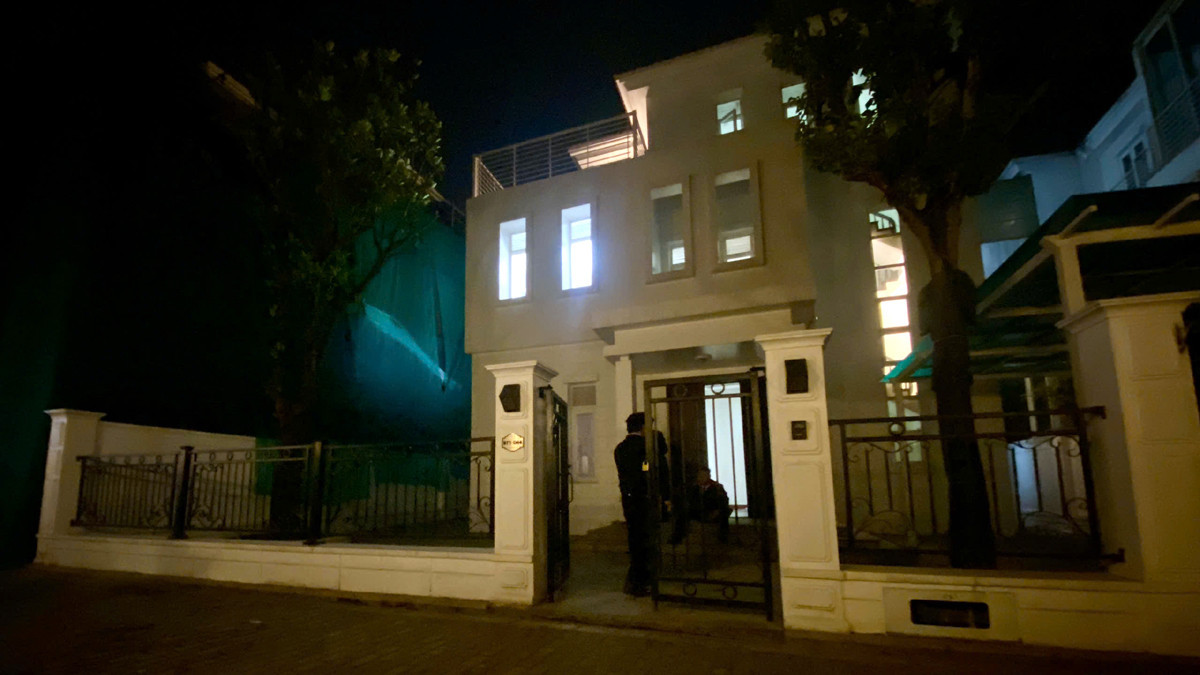
At two adjacent properties - BT1-D64 and BT1-D25 in the Splendora residential complex in Son Dong commune - authorities found nine individuals unable to produce passports, including seven South Koreans and two Chinese nationals.
Upon interrogation, the seven South Koreans admitted they had entered Vietnam to operate an online fraud scheme under the direction of two Chinese organizers. The group's primary targets were South Korean citizens, lured through high-tech scams.
Police seized a large cache of electronic equipment suspected to have been used in the operation: 17 laptops, 14 tablets, and 25 mobile phones.
At BT1-D64, five foreigners - four South Koreans and one Chinese - were found without identification. Officers confiscated the bulk of the electronics here, which showed signs of involvement in illicit tech-based activities.
Meanwhile, at BT1-D25, four others - three South Koreans and one Chinese - were also found without valid documents. Additional evidence collected included three desktop monitors and five personal mobile phones.
The suspects claimed to be temporarily residing in a different urban area in Tay Mo ward, Hanoi. When police followed up on this lead, they uncovered seven passports matching the suspects' identities.
One Chinese national even attempted to destroy all seven passports to obstruct the investigation and delay identification procedures.
Simultaneously, four other inspection teams combed various areas in Hanoi, including Kim Lien ward, Hong Ha ward, and the rural communes of My Duc and Quang Bi. They discovered eight more foreign nationals - three Nigerians and five Pakistanis - who had overstayed temporary residency permits by over a year.
Notably, the five Pakistanis had initially entered Vietnam on e-visas, residing primarily in Dong Nai before traveling to Hanoi. Their stated goal was to seek consular assistance from the Pakistani Embassy to return home.
The investigation remains ongoing, as police work to clarify the full extent of the scam operation and any potential connections to broader international networks.
Tien Dung
.svg)
