 Vietnamnet.vn

 Podcast


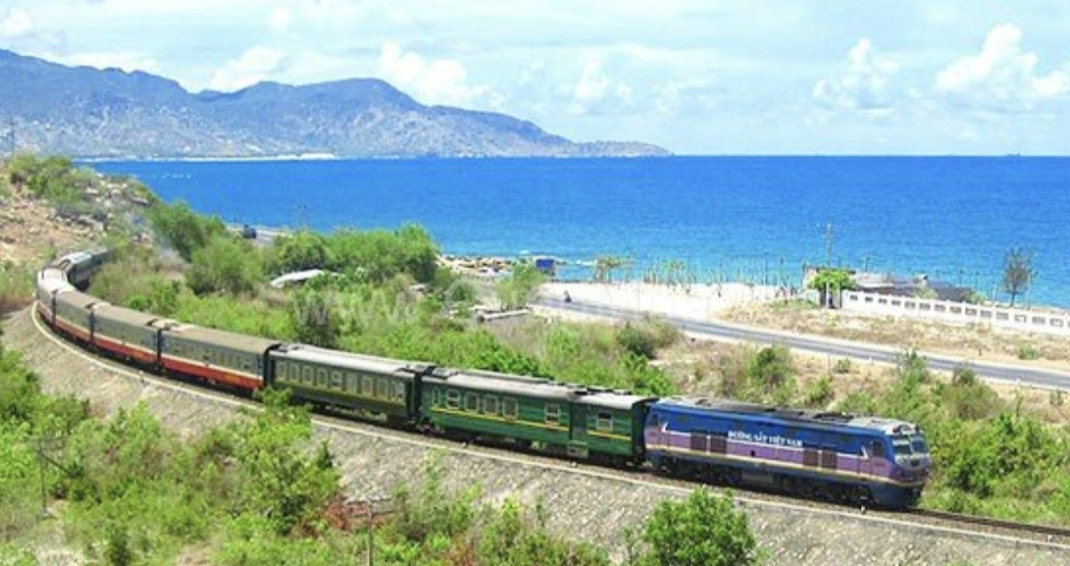
A passenger train travels along a scenic coastal section of Vietnam's railway network.
Choosing the right sleeper berth was the most frequently raised issue among international travellers discussing Vietnam's rail services online, according to Vexere Rail Traveller Insights 2026, an analysis conducted by Vexere, an authorised online ticketing agent of Vietnam Railways.
Questions about reliable booking channels and payment methods followed closely behind.
To prepare the report, Vexere examined 485 publicly available posts, reviews, videos and web pages published over the 18 months leading up to October 2026.
The sources included Reddit, Tripadvisor, Google Maps, Facebook travel groups, app stores, Naver blogs and YouTube.
The material yielded 1,169 individual discussion points from 628 contributors, including both international visitors and Vietnamese passengers.
Questions about sleeper cabins and berths were raised by 180 travellers, representing nearly 30% of contributors in the sample.
Their concerns ranged from choosing between four-berth and six-berth compartments to securing lower bunks and ensuring that members of the same group could travel together.
Another 108 travellers discussed booking channels and payment methods, while 54 wanted to know which side of the train offered sea views along the scenic Hue-Da Nang route.
Meanwhile, 47 contributors reported encounters with touts or fake drivers at railway stations, 33 struggled to distinguish between sold-out services and tickets that had not yet been released, and 25 mentioned unexpected station charges.
Vexere emphasized that the findings reflect the online discussions included in its analysis rather than a representative survey of railway passengers across Vietnam.
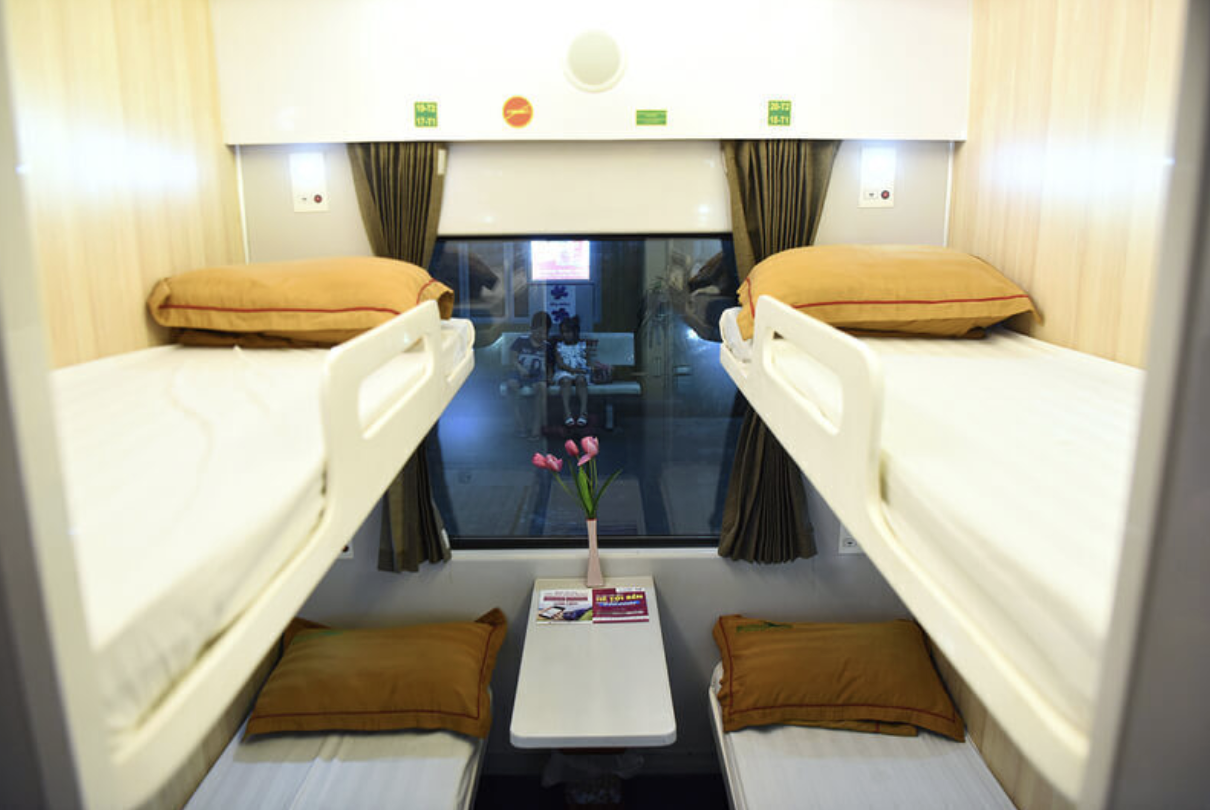
A four-berth sleeper compartment features two levels of bunks on either side.
Four-berth or six-berth cabins: the first booking dilemma
Most questions about sleeper compartments came from travellers preparing for overnight journeys.
On Vietnam Railways' SE services, four-berth compartments have two levels of bunks on each side, while six-berth compartments have three.
Lower berths generally cost more than upper berths within the same compartment.
Vexere recommends choosing a lower berth in a four-berth cabin for passengers who prefer to avoid climbing.
Several travellers included in the analysis also suggested booking all four berths in a compartment to prevent unfamiliar passengers from occupying otherwise empty beds during the journey.
Vexere's online booking platform displays carriage seat maps showing berth levels and compartment locations before payment.
This allows groups to verify that their selected berths are located within the same cabin.
Finding reliable booking channels and paying with foreign cards
The analysis identified 108 travellers discussing how to choose trustworthy ticketing channels and complete payments.
Using foreign-issued bank cards emerged as one of the most practical difficulties.
Some travellers shared alternative methods for completing transactions through Vietnam Railways' official website.
Others turned to third-party ticket sellers and accepted additional fees to complete payments successfully.
A small number reported paying several times the official station price after using websites that appeared to imitate the railway operator's official platform.
To avoid such problems, Vexere advises passengers to verify that they are booking through Vietnam Railways or an authorised agent.
Travellers should also compare the final price for the same train, departure date and berth category before confirming payment.
According to Vexere, international customers using its platform can book tickets with foreign telephone numbers and pay through Visa, Mastercard or Apple Pay without additional payment surcharges.
The platform displays the total price before payment and sends electronic tickets by email immediately after a successful transaction.
Sold out or not yet available?
Another recurring source of confusion involved ticket availability.
In Vexere's sample, 33 travellers interpreted empty search results as evidence that trains were fully booked.
Vietnam Railways generally opens ticket sales 60 days before departure, meaning journeys scheduled beyond that booking window may simply not be available for purchase yet.
Tickets for Tet, Vietnam's Lunar New Year holiday, follow a separate sales schedule.
However, the opposite problem also emerged.
Some travellers reported that four-berth sleeper compartments on popular weekend services, including the Lao Cai-Hanoi route, sold out within days of tickets becoming available.
Vexere therefore recommends booking as soon as sales open, particularly for passengers seeking specific berth types or travelling during busy periods.
Unexpected costs and station transport problems
Problems did not necessarily end once passengers had secured their tickets.
The analysis found 47 accounts involving touts, inflated taxi fares or individuals falsely claiming to be prearranged drivers.
These incidents were most frequently associated with Lao Cai railway station, a major gateway to the mountain resort town of Sa Pa, and Hue station in central Vietnam.
Another 25 travellers described unexpected charges for luggage storage, porter services or station waiting rooms.
To reduce the risk of such problems, Vexere recommends that passengers arranging station pickups obtain their driver's name and vehicle registration number in advance.
Travellers should also confirm the full cost of any station service before agreeing to use it.
"Most of the questions we found can be settled before travellers leave home: which berth they are getting, when tickets go on sale and what they will pay in total," a Vexere representative said.
As an authorised online ticketing agent of Vietnam Railways, Vexere provides English-language train schedules, fares and seat maps for railway routes across the country.

