 Vietnamnet.vn

 Podcast



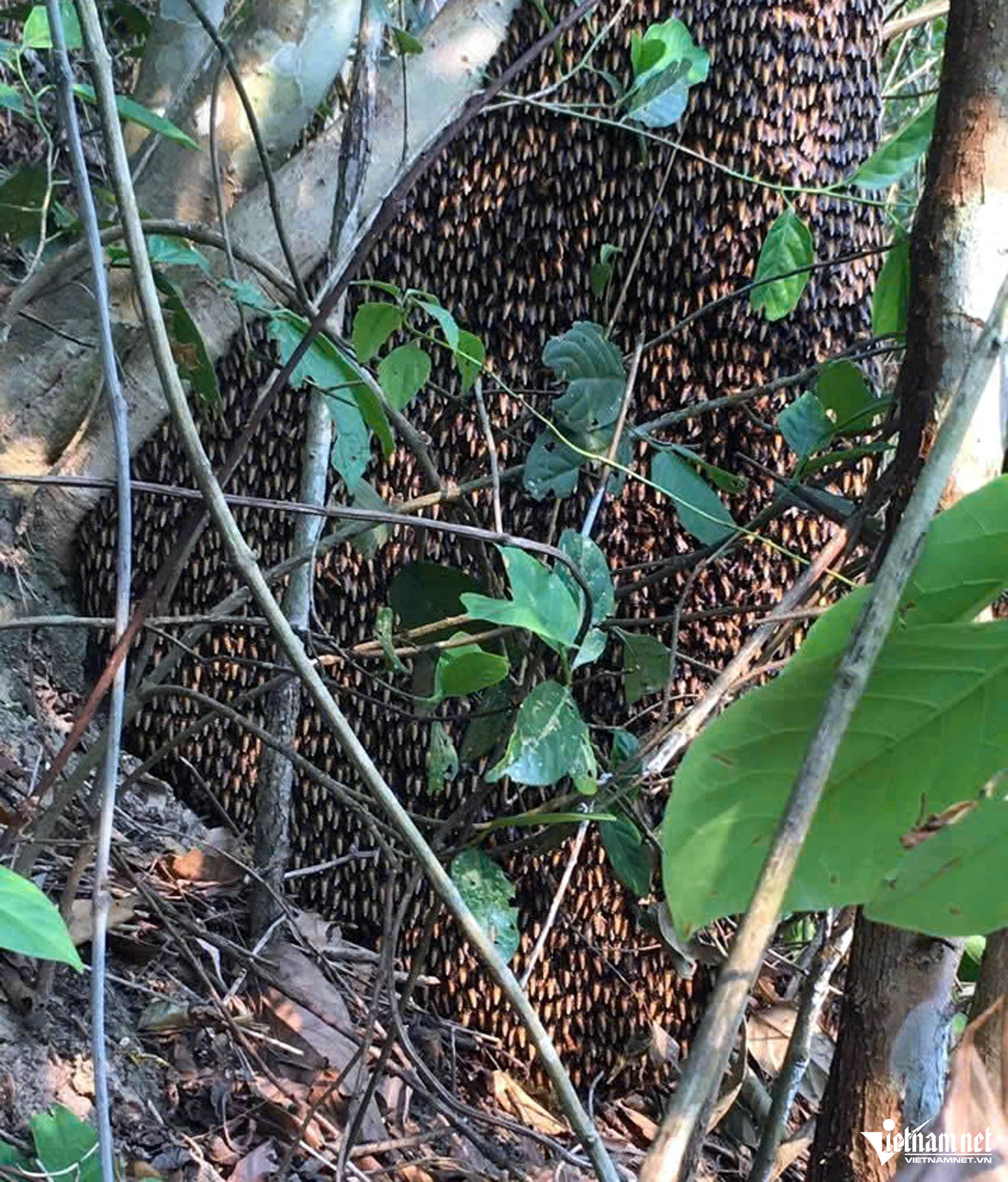
In February, flowers bloom across the vast northwest, the ideal season for forest workers to prepare for journeys to harvest wild honey deep in the jungle.
Lo Van Panh from Na Hy commune in Nam Po district in Dien Bien province was seen recently putting tools and supplies into his backpack, joining a group of 5-7 villagers to head for a forest in the border area with Laos to hunt for honey.
With 10 years of experience, Panh often experiences excitement, joy, and heart-stopping moments facing danger. Though wild honey hunting “rakes in money,” it’s fraught with dangers, hardship, and even life-threatening risks, he said.
“From early February to April each year is the perfect time to search for wild beehives to harvest honey. This is the dry season in the Northwest, when flowers produce abundant, high-quality nectar."
Thus, honey made during this period is highly aromatic and thick. In Dien Bien this month, there’s a kind of flower with bitter stamens, so the honey from it has a bittersweet taste that many customers love, according to Panh.
Due to the dangers of forest trips, Panh and his co-workers go to the forest in groups of five to seven. They bring rice, knives, fire-making tools and rope used as a safety line when descending cliffs or climbing tall trees.
Panh said the outcomes of forest trips are unpredictable. The amount of honey harvested depends on luck. Some trips yield many large hives, allowing a quick return, while others require a week in the forest for just a few small hives.
“On average, it takes 4-5 days per trip to harvest 20 kilograms of nectar. With the current prices of VND300,000-400,000 per kilogram, each trip can bring VND6-7 million. That money helps cover family expenses and funds my kids’ study,” he said.
To survive in the “sacred forests and toxic waters", Panh and his co-workers choose spots near streams to rest, cook, and hang hammocks to avoid snakes, centipedes and wild animals.
When cooking rice, forest workers put rice in bamboo tubes and roast it like sticky rice. Food is mostly fish caught from streams, grilled and dipped in salt.
Lurking dangers
Panh revealed that large beehives are often in hard-to-reach spots, atop tall trees or perched precariously on rocky cliffs. To harvest much nectar, forest workers must brave danger, approaching treacherous locations where risks abound.
Asked about incidents, Panh said: “In recent years, fewer people venture into the forest because of the constant dangers. A friend of mine died while hunting honey.”
“Others have broken arms or legs or have been attacked by wild animals,” he added.
Panh said honey forest workers have to "leave everything to chance".
“For me, anyone stepping into the forest to make a living needs courage and grit. Being stung by fierce bees or bitten by insects can happen quite often.
“I’ve been stung so many times my face swelled up. Lately, I’ve been attacked so much that even when stung, I no longer feel the pain,” Panh added.
He recalled finding a large hive in 2019. It was February. After trekking 15 kilometers into the forest, his group spotted a hive atop a tall tree. He took on the task of climbing to harvest it.
Once within reach, Panh used a tool to create smoke, driving the bees away to collect the honey into a container.
He explained that wild bees, once disturbed by humans, will abandon their hives for a new spot. Thus, forest workers usually take the entire hives and use smoke to drive the bees away rather than exterminate them.
As market demand for bee honey is always high, many Dien Bien locals venture into the forest to make a living. Villagers have passed down techniques to each other to create stable income and support families. However, due to the hardship and danger, fewer people in Dien Bien hunt honey in the forest.
Chang A De, chairman of the Na Bung Commune People’s Committee in Nam Po District, said that for a long time many locals earned a living by hunting and collecting honey in the forest. During this season, about 3-4 teams have ventured into the forest for honey.
De said the commune frequently advises residents to protect the forest and take measures to prevent forest fires.
Nguyen Duong
.svg)
