 Vietnamnet.vn

 Podcast



Renewable energy as an inevitable direction
Experts note that energy demand tends to rise faster than economic growth. For every 1% increase in GDP, energy consumption can grow by approximately 1.5%, equivalent to an annual increase of 12–14% when GDP expands at around 7%.
While fossil fuels remain relatively low-cost, they carry significant risks related to supply security and stability, particularly in the context of ongoing geopolitical tensions. As a result, the development of renewable energy is not just a trend but an inevitable pathway to reduce vulnerability to supply disruptions.
Speaking at a recent forum, Associate Professor Nguyen Dinh Tho, Deputy Director of the Institute of Strategy and Policy on Natural Resources and Environment, highlighted the rise of green trade barriers as a new global standard.
These measures, he said, are not only aimed at environmental protection but also serve as tools of trade protection, requiring exporting countries to adapt or risk being excluded from global value chains.
At the same time, consumers are placing increasing importance on environmental responsibility, viewing the choice of eco-friendly and biodiversity-conscious products as an ethical standard.
Green transition creates new economic opportunities
Despite the challenges, the shift toward greener development also generates new drivers for economic efficiency.
Reducing emissions intensity and energy consumption per unit of GDP is not only an international commitment but also a direct cost-saving solution for households and businesses. The adoption of green building standards, for example, can significantly reduce operational costs related to electricity, water and materials, thereby improving profit margins and long-term competitiveness.
The circular economy also opens new development space by transforming waste into resources. However, realizing this model requires comprehensive reforms in standards, regulations and legal frameworks.
In practice, many types of industrial waste, such as ash and slag, can be reused as construction materials but remain constrained by regulatory barriers.
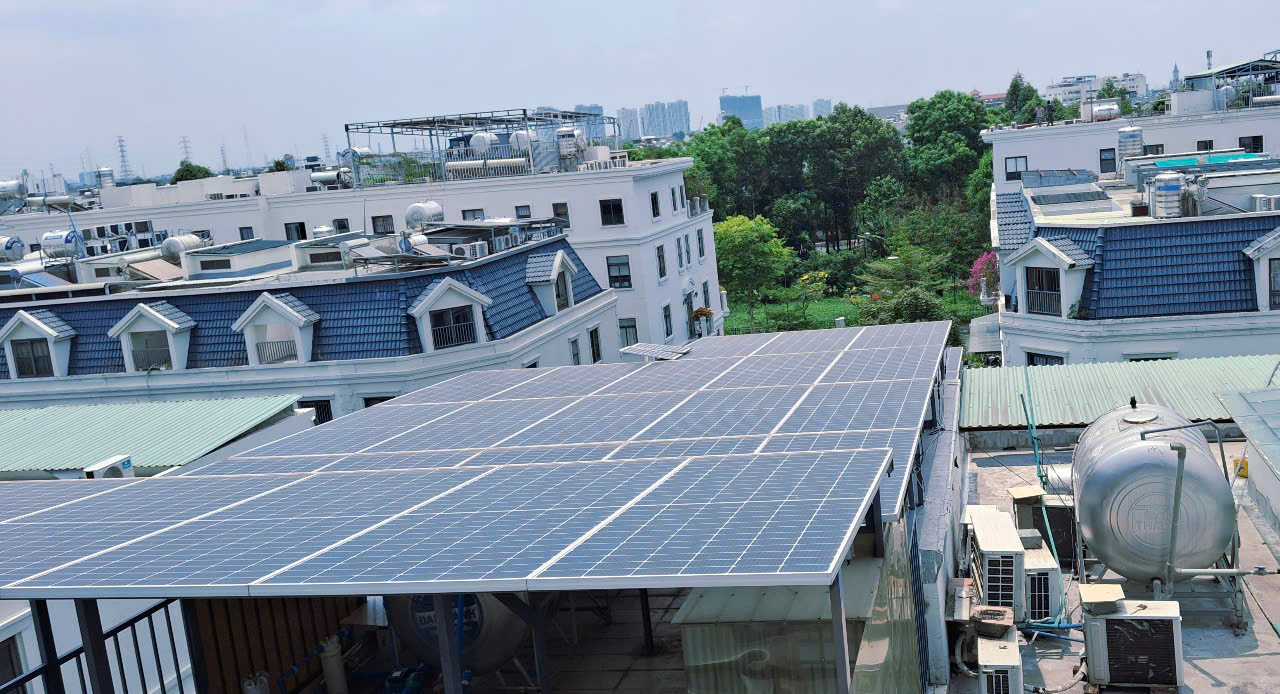
Emerging models such as direct power purchase agreements, rooftop solar systems and the integration of energy storage with electric vehicle infrastructure are seen as promising avenues for creating new economic value while optimizing existing resources.
Green transition becomes imperative for businesses
According to energy expert Pham Phan Dung from the Ministry of Industry and Trade, recent increases in energy prices have placed businesses under dual pressure: rising input costs and increasingly stringent green standards from export markets.
As a result, the green transition is no longer optional but has become a prerequisite for maintaining competitiveness.
Energy efficiency measures deliver benefits across three key dimensions: reducing operating costs, improving productivity and product quality, and lowering emissions. More importantly, they help businesses maintain access to international markets, particularly those with strict environmental requirements such as the EU.
From a practical perspective, the transition involves not only changing energy sources but also upgrading technologies, optimizing processes and recovering energy within production systems.
Simple solutions - such as switching from incandescent bulbs to LED lighting, using inverter air conditioners, or recovering waste heat in industrial processes - demonstrate that meaningful change can begin with small steps, while generating significant long-term gains.
Ultimately, the push for energy transition reflects not just environmental or market demands, but a broader objective: enhancing the resilience of the economy in an increasingly volatile global landscape.
Tuan Nguyen
.svg)
