 Vietnamnet.vn

 Podcast



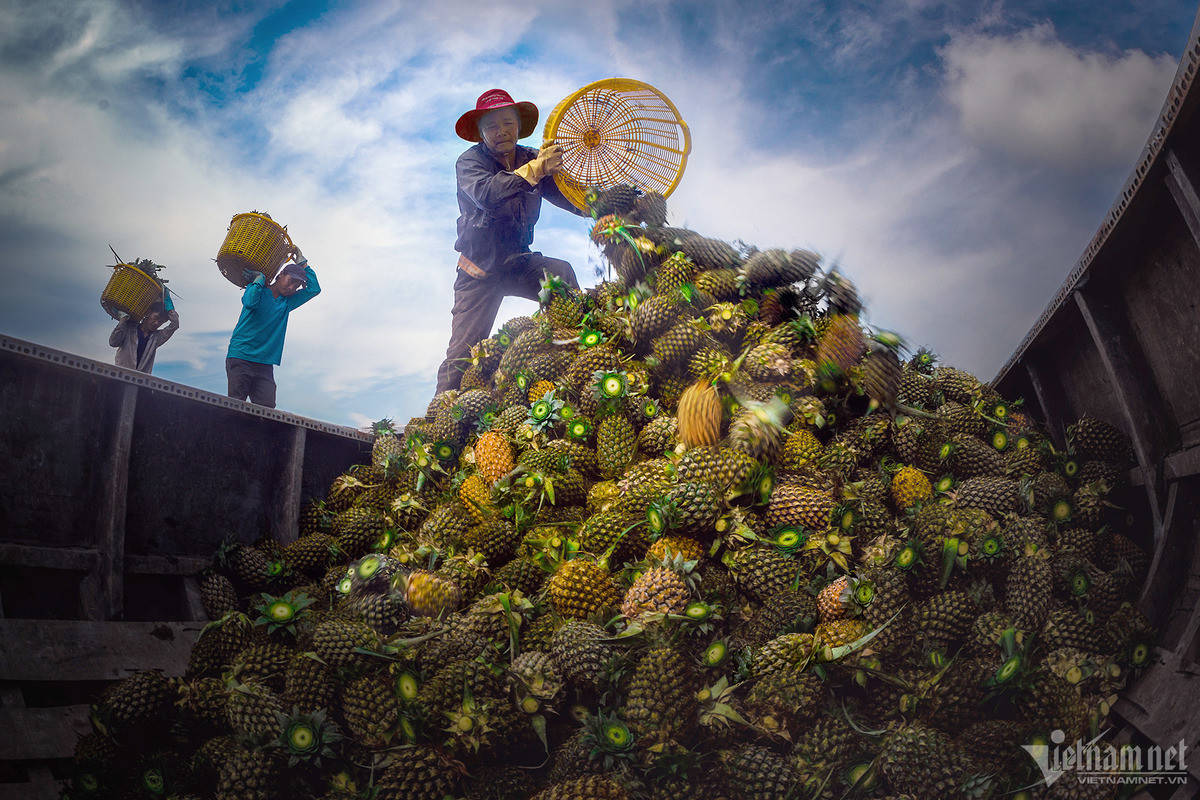
At the forum “Solutions to Enhance Competitiveness and Promote Exports of Advantaged Fruit Products: Passion Fruit, Bananas, Pineapples, Coconuts” on July 18, Dang Phuc Nguyen, General Secretary of the Vietnam Fruit and Vegetable Association, noted that the global pineapple market had reached $29 billion in 2024 and continues to grow at a compound rate of 6.3 percent annually.
Europe and North America account for 50 percent of consumption demand. Vietnamese pineapples in particular are highly competitive, with products like DOVECO’s concentrated pineapple juice exported to over 50 countries.
Pham Quoc Liem, Chair of Unifarm, noted that in 2024, banana exports earned Vietnam $378 million. However, the average income was only about $2,400 per hectare, far below its potential.
Vietnamese bananas could reach $4 billion in export value soon. This would require production value to hit at least $20,000 per hectare, nearly 10 times the current level.
This goal is challenging but, according to Liem, entirely feasible if the industry shifts to large-scale production, adopts high-tech methods, and maintains consistent quality.
Nguyen Manh Hung, Chair of Nafoods, said from zero a decade ago, the passion fruit industry has created significant economic value. Concentrates and puree now can bring $300 million, which, plus fresh fruit exports, could exceed $500 million this year.
He believes that passion fruit could hit $1 billion if Vietnam can well plan the growing area and enter the Chinese market.
Passion fruit is a short-cycle industrial crop, taking only six months from planting to harvesting, with an 18-month economic lifespan. Vietnam’s passion fruit yields are exceptional, at 40-60 tons per hectare, double that of South America.
This provides a competitive cost advantage, with production costs around VND20,000 per kg and export prices of VND60,000-70,000 per kg. Nafoods’ sweet passion fruit can fetch VND80,000-100,000 per kg at the farm and up to VND230,000 per kg in supermarkets.
This demonstrates immense economic potential, with each hectare of passion fruit generating about VND1 billion in revenue for farmers.
Vietnam’s coconut exports surpassed $1 billion in 2024, driven by market expansion and official exports to China
Local newspapers cited reports as showing that fresh coconut exports reached $390 million, up 61 percent from 2023.
With over 600 enterprises in production and processing, Vietnam’s coconut industry holds a competitive edge globally. Vietnam ranks fourth in coconut exports in the Asia-Pacific and fifth worldwide.
China is the primary export market, accounting for 25 percent of Vietnam’s coconut export value. The official import protocol signed in August 2024 has opened significant opportunities for this fruit. Vietnam is now the third-largest coconut supplier to China, holding over 20 percent market share. Besides China, thanks to competitive pricing and sweet flavor, Vietnamese coconuts are favored in markets like the EU, US, Canada, and South Korea.
Great potential
Deputy Minister of Agriculture and the Environment Tran Thanh Nam noted that passion fruit, pineapples, coconuts, and bananas are products in which Vietnam has great advantages, including production capacity and competitive advantages.
The demand for these fruits is growing rapidly in the globe. However, he said that for years, Vietnam has struggled to fully tap this potential and maximize production capacity.
“Currently, only coconuts can bring export turnover of $1.1 (2024). Bananas and passion fruit earned $380 million and over $222 million, respectively, while pineapples $50 million only,” Nam said.
This shows much work remains to elevate these products to billion-dollar status, possibly by 2026-2027.
Nam believes that there should be a “technological revolution” for these four key fruits. He stressed the importance of improving seed quality, as “raw material zones are critical for traceability and accessing demanding markets.”
He also urged enterprises to collaborate with cooperatives to build tight-knit models from input to output. Providing seeds, fertilizers, and guaranteed purchase agreements not only ensures a stable raw material supply but also enhances the competitiveness of Vietnamese agricultural products globally.
Tran Minh Hai, Vice Rector of the School of Public Policy and Rural Development, said that cooperatives are a critical foundation. “Enterprises must link with cooperatives to manage planting area codes, organize raw material zones, and control output. Cooperatives are not just technical hubs but also strategic partners in logistics and product quality.”
Tam An
.svg)
