 Vietnamnet.vn

 Podcast



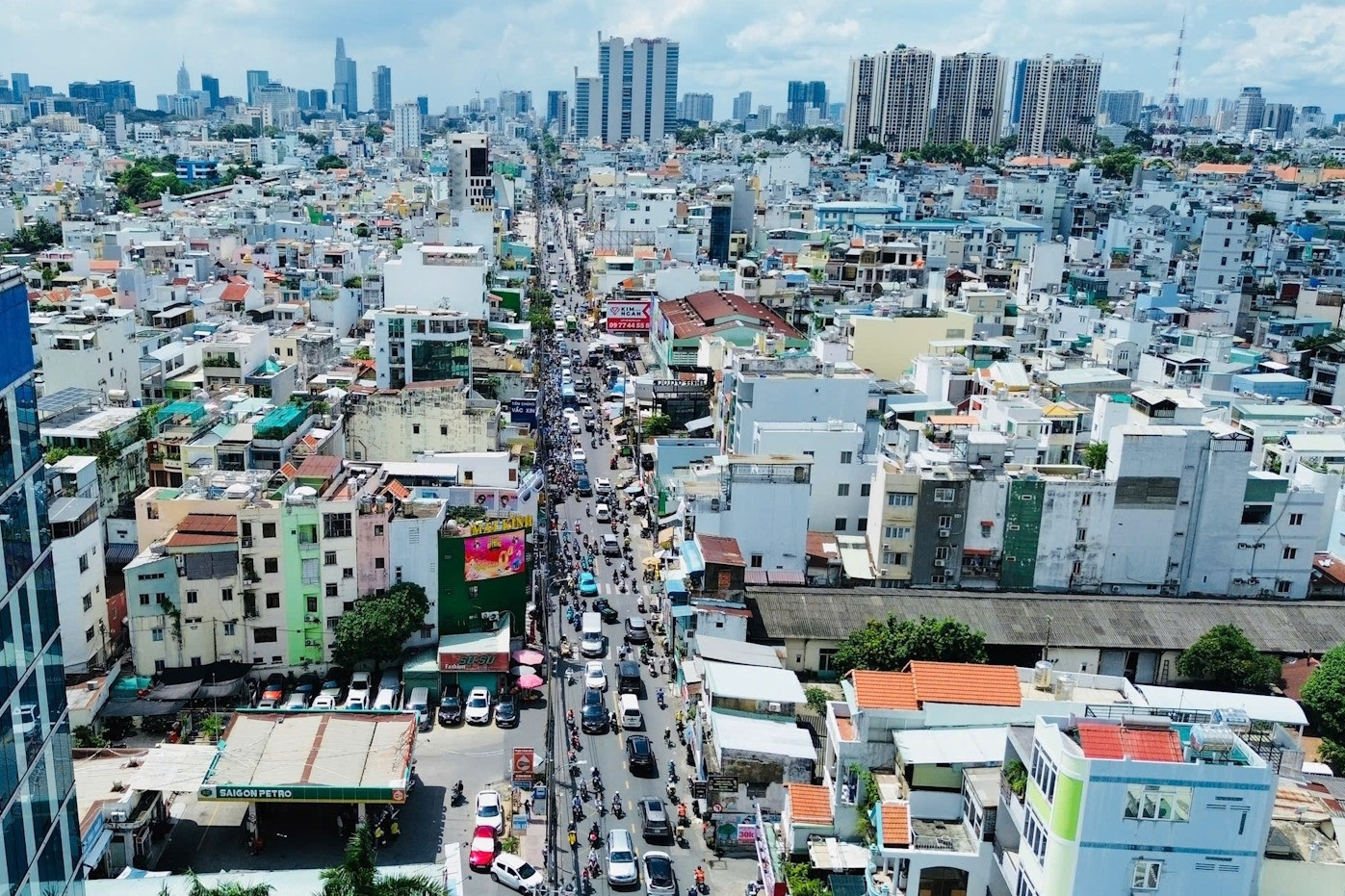
Starting mid-January, Ho Chi Minh City will simultaneously launch four strategic infrastructure projects: Metro Line 2, Can Gio Bridge, Phu My 2 Bridge, and the Rach Chiec National Sports Complex. These projects, with a total investment of nearly $9.8 billion, are expected to transform the city’s urban and transport landscape.
According to the plan, the groundbreaking ceremonies on January 15 will celebrate these large-scale projects as part of the lead-up to the 14th National Party Congress.
Implemented under special policies and mechanisms granted by Resolution 188, these projects are expected to create significant momentum and redefine the city’s development trajectory.
Metro Line 2: A fully automated “spine” of urban mobility
The Ben Thanh–Tham Luong metro line, Ho Chi Minh City’s second urban railway project, was first approved in 2010 with funding from ODA loans. However, due to delays involving financing, procedures, and land clearance, the project has faced repeated setbacks and has now been shifted to public investment using the city’s own budget.
The project has completed site clearance and is now relocating technical infrastructure while finalizing procedures for its official groundbreaking on January 15. It is the first project to apply the special mechanisms under Resolution 188, with a target completion date of 2030.
Metro Line 2 will stretch 11.269 km, with over 9.2 km underground and about 1 km elevated. It will include 10 underground stations, one elevated station, and a depot. The total investment is estimated at $2.3 billion, fully funded by Ho Chi Minh City’s budget.
According to the city’s Urban Railway Management Board (MAUR), which oversees the project, Metro Line 2 will operate at GoA4 - the highest level of automation. Trains will be driverless and unstaffed, meeting European standards.
Once operational, the line will significantly ease traffic pressure at the city’s northwest gateway and connect seamlessly with Metro Line 1 and future lines, helping to form a modern, integrated urban rail network for Ho Chi Minh City.
Rach Chiec Sports Complex: A $5.9 billion cultural and athletic hub
The Rach Chiec National Sports Complex will be the main site for the January 15 groundbreaking ceremony. Located in An Khanh Ward, the site spans over 186 hectares.
As the largest of the four projects, the complex carries a projected investment of more than $5.9 billion and will be developed under a build–transfer (BT) contract.
The complex will include multiple functional zones, with a central focus on sports and culture. Key features include a stadium with a capacity of 65,000–75,000 seats, an indoor arena for about 18,000 spectators, and centers for aquatics, tennis, and multipurpose sports.
Beyond sports, the complex will house service and public facilities for athletes and coaches, a central plaza, a sports hospital, and a conference–exhibition center. The site will also feature green spaces, water landscapes, public open areas, and integrated internal transport and infrastructure systems.
The construction timeline is expected to span eight years from the signing of the investment contract.
Ho Chi Minh City envisions the project not only as a venue for international sporting events but also as a regional center for services, conferences, and exhibitions - enhancing the quality of life in the city’s eastern area.
Can Gio Bridge: Breaking the “island” barrier, opening the coastal gateway
After years of anticipation, the Can Gio Bridge project will officially break ground, replacing the current Binh Khanh ferry and creating a direct connection between the city center and Can Gio District.
The bridge will span the Soai Rap River, linking the former Nha Be area to Can Gio. It will include a main bridge nearly 3 km long, 3.3 km of approach roads, and several smaller bridges crossing the Cha River, Tac Song Cha, and Muong Ngang Canal.
Designed with six lanes, the bridge will support speeds of up to 80 km/h. With a vertical clearance of 55 meters, it will accommodate large vessels.
The project carries an estimated investment of $540 million. The city’s budget will cover land compensation and clearance, while construction will be carried out under a BT contract.
The city aims to complete the bridge and open it for use by 2029. Once operational, it will provide a direct transport axis between Can Gio and the city center, unlocking new potential for coastal economic growth and eco-tourism in the southern region.
Phu My 2 Bridge: A new gateway toward Long Thanh Airport
Alongside Can Gio Bridge, the Phu My 2 Bridge project is another vital link in the regional connectivity network between Ho Chi Minh City and Dong Nai Province.
The 6.3 km bridge will start from Nguyen Huu Tho Street in Ho Chi Minh City and end at Lien Cang Road in Dong Nai. It will be designed with eight traffic lanes.
Some sections will feature double-deck elevated roads to maximize traffic flow and minimize land clearance.
The project has an estimated investment of $950 million, funded through a combination of a BT contract and public investment.
The city targets completion and operation by 2029. Once in service, Phu My 2 will become a critical traffic corridor for southern Ho Chi Minh City, relieving pressure on the existing Phu My Bridge and forming a key connection route to Long Thanh International Airport.
Tuan Kiet
.svg)
