 Vietnamnet.vn

 Podcast



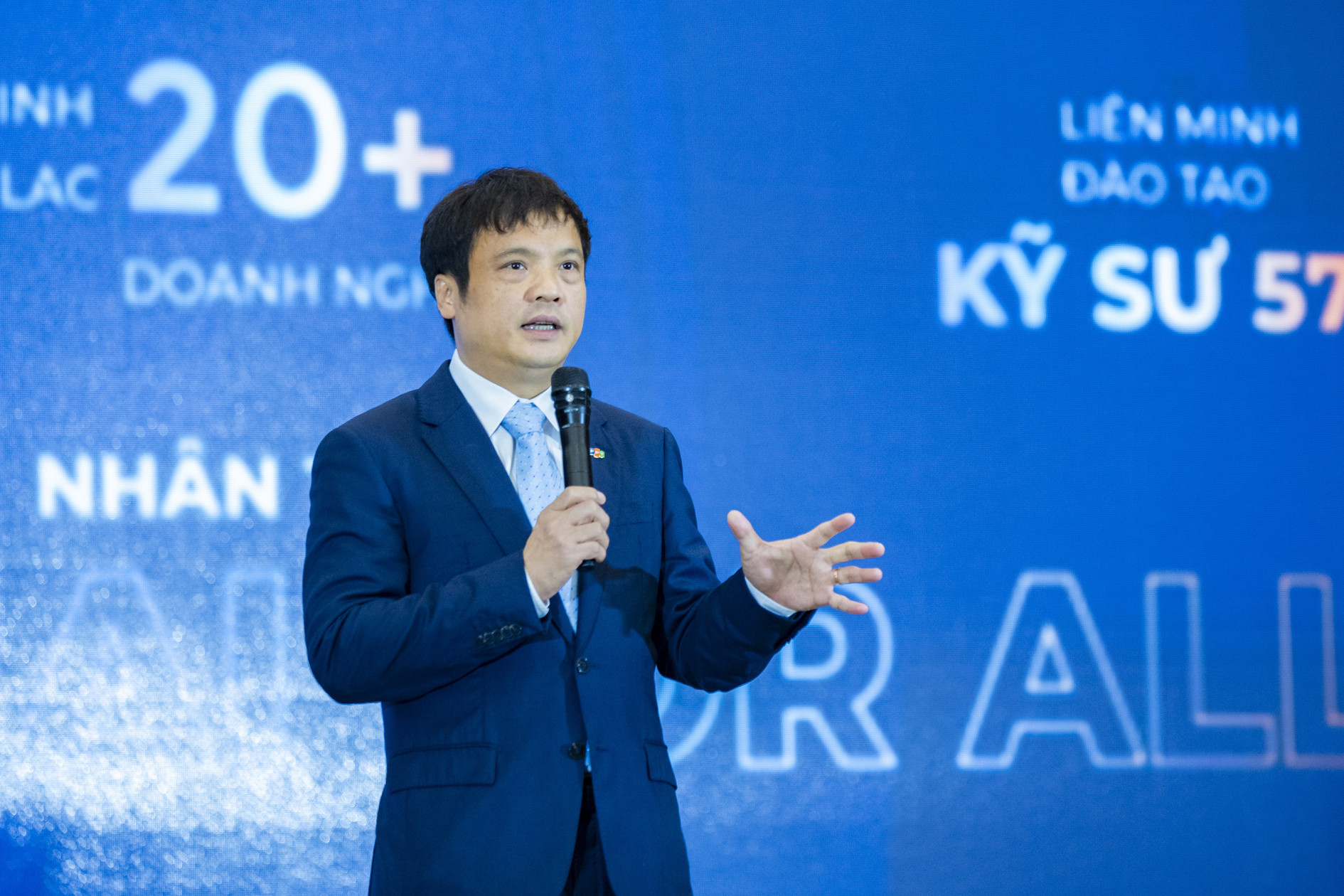
On October 1, Innovate Viet Nam 2025, the top science, technology, and innovation event of the year, was co-hosted by the Ministry of Finance and the Ministry of Science and Technology, in collaboration with the National Innovation Center (NIC). The event discussed how to implement the Politburo’s directive on breakthroughs in science, technology, innovation, and national digital transformation.
Speaking at the event, FPT’s CEO Nguyen Van Khoa said: “Innovation does not reside in regulations and is not bound by regulations or financial statutes; it is the soul of development and the most valuable intangible asset of any organization.”
Khoa said that throughout FPT’s 37 years of development, innovation has been established as a core value, beginning with the smallest tasks. In 2025, over 3,000 initiatives from FPT’s 84,000 employees across 30 countries helped the corporation save VND865 billion in operational, product design, and sales costs.
From a strategic perspective, Khoa emphasized that innovation is the “consistent undercurrent” running through four major resolutions of the Central Committee.
They are Resolution No57-NQ/TW on breakthroughs in science, technology, innovation, and national digital transformation; Resolution No59-NQ/TW on international integration in the new context; Resolution No68-NQ/TW on private sector economic development; and Resolution No66-NQ/TW on reforming legislative development and enforcement.
To turn innovation into a practical force, rather than a slogan, the CEO outlined his key recommendations: speed up the development of legal frameworks for new sectors such as high-tech, logistics, and AI; integrate innovation into policies; build a “technological strategy map” tailored for each locality; and foster strategic linkages between large and small enterprises.
Additionally, improve enterprises’ capacity to absorb technology and shift from “low-cost outsourcing” to “technology transfer alliances”.
Khoa noted that Vietnam has an opportunity to reposition itself in the global innovation chain. With a young workforce, an open market, and increasing technology absorption capacity, with determination, supportive mechanisms, and relentless innovation, it can become a hub for technological innovation in Asia.
FPT has committed to supporting the government and business community in developing a national innovation ecosystem by training young talent, sharing expertise with small and medium-sized enterprises, investing in R&D centers, and leading strategic tech initiatives.
At the national innovation day 2025, FPT showcased platforms, solutions, products, and services within its “Made by FPT” ecosystem, widely applied across key areas such as cloud computing, artificial intelligence, cultural preservation, semiconductors, and high-tech talent training.
The ecosystem reflects FPT’s innovation capabilities, technological self-reliance, and its ambition to contribute to the nation’s sustainable development.
As part of the event, FPT, Konica Minolta (a leading Japanese manufacturer of office and medical imaging equipment), and NIC signed a cooperation agreement to jointly promote digital transformation in Vietnam’s healthcare sector.
Under this partnership, FPT will focus on developing AI models for medical image analysis and building data collection and management systems to support research. Konica Minolta proposed a joint research topic on kinematic X-ray analysis in AI-powered medical diagnostics. NIC will coordinate with regulatory bodies and local healthcare facilities to ensure legal frameworks and an appropriate research environment.
The collaboration between Japan’s advanced technology and Vietnam’s implementation capabilities is expected to lay a solid foundation for healthcare innovation, improve the quality of medical services, and accelerate smart healthcare in the near future.
In 2024, the Prime Minister designated October 1 as National Innovation Day. With the theme “Nationwide Innovation - The Driving Force for National Development,” the 2025 event underscores the Party and State’s commitment to promoting innovation as a central strategy for socio-economic development, enhancing productivity, competitiveness, and sustainable growth.
In 2025, Vietnam maintained its position at 44th of 139 economies in the Global Innovation Index (GII), ranking second among all lower-middle-income economies, and third in ASEAN, with its innovation input sub-index rising three places.
Party Chief To Lam affirmed that the nations leading in science, technology, and innovation will hold a strategic competitive advantage and advance further and faster.
“Vietnam has no other choice but to prioritize science, technology, innovation, and digital transformation as the foremost breakthrough, the main driver for transforming the development model and achieving the two centennial goals,” he emphasized.
Thai Khang
.svg)
