 Vietnamnet.vn

 Podcast



French Ambassador to Vietnam Olivier Brochet said France hopes to continue accompanying and becoming more deeply involved in Vietnam’s railway infrastructure development as the country enters what he described as “a new era of railway connectivity”.
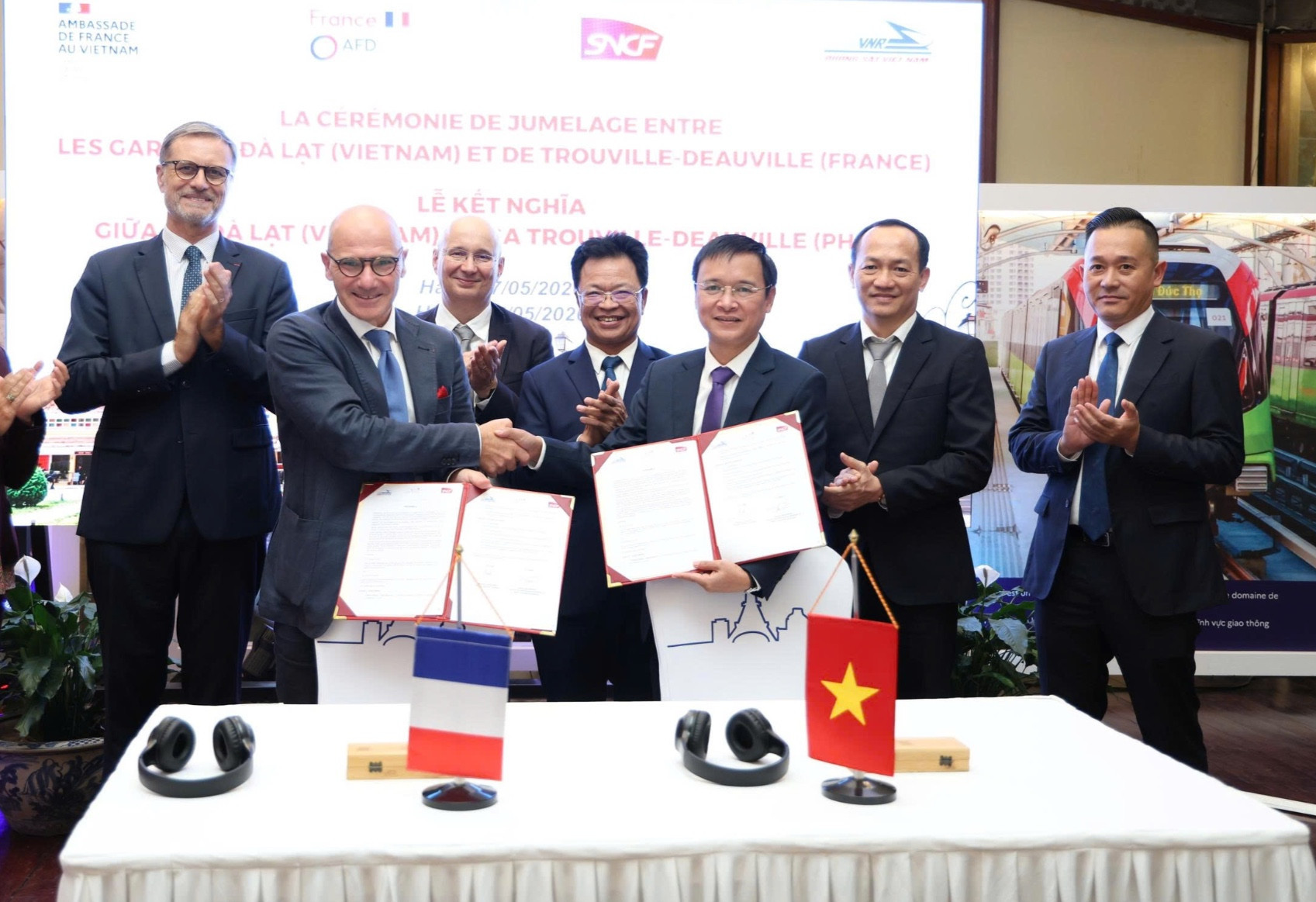
Speaking at a twinning ceremony between Da Lat Station and Deauville-Trouville Station held in Hanoi on May 7, Ambassador Olivier Brochet said Vietnam is entering a new phase of railway development with major projects including modernization of the existing network, expansion of urban transport systems, and prospects for the North-South high-speed railway.
He stressed that these projects carry not only technical significance, but also play a central role in Vietnam’s sustainable development strategy, strengthening connectivity and promoting inclusive growth.
According to Ambassador Olivier Brochet, railway cooperation between the two countries has been implemented in practical ways through various programs with Vietnam Railways Corporation, alongside the participation of AFD, SNCF, SYSTRA and AREP.
Commenting on Vietnam’s North-South high-speed railway project, Diego Diaz, Director of International Affairs at France’s national railway group SNCF, said the project is not only a major transport initiative but could also become a new engine for Vietnam’s socio-economic development for decades to come.
According to Diego Diaz, the high-speed railway linking Hanoi and Ho Chi Minh City is expected to span approximately 1,540km, with a designed operating speed of 350kph, carrying strategic significance for the future of Vietnam’s transport infrastructure.
SNCF believes that once completed, the railway will shorten travel time between Hanoi and Ho Chi Minh City to under six hours. The project is also expected to include 23 modern passenger stations and five strategic logistics hubs, creating fresh momentum for multiple economic regions.
“If operational by 2035 as planned, Vietnam will become one of Southeast Asia’s most advanced countries in railway transportation,” Diego Diaz said.
He added that the North-South high-speed railway would not only help connect regions and narrow development gaps, but also provide a greener, safer and more environmentally friendly mode of transport as climate change becomes increasingly visible.
An SNCF representative said the group is ready to share expertise, technical knowledge and accompany Vietnam in its most ambitious projects.
Nguyen Chinh Nam, Deputy General Director of Vietnam Railways Corporation, said French cooperation has already left its mark on many major railway projects in Vietnam.
He cited projects including the restoration of railway tunnels in the Hai Van Pass area, modernization of signaling and communications systems on the Hanoi-Vinh route, and upgrades to the Yen Vien-Lao Cai railway line, all of which involved French support.
Vu Diep
.svg)
