 Vietnamnet.vn

 Podcast



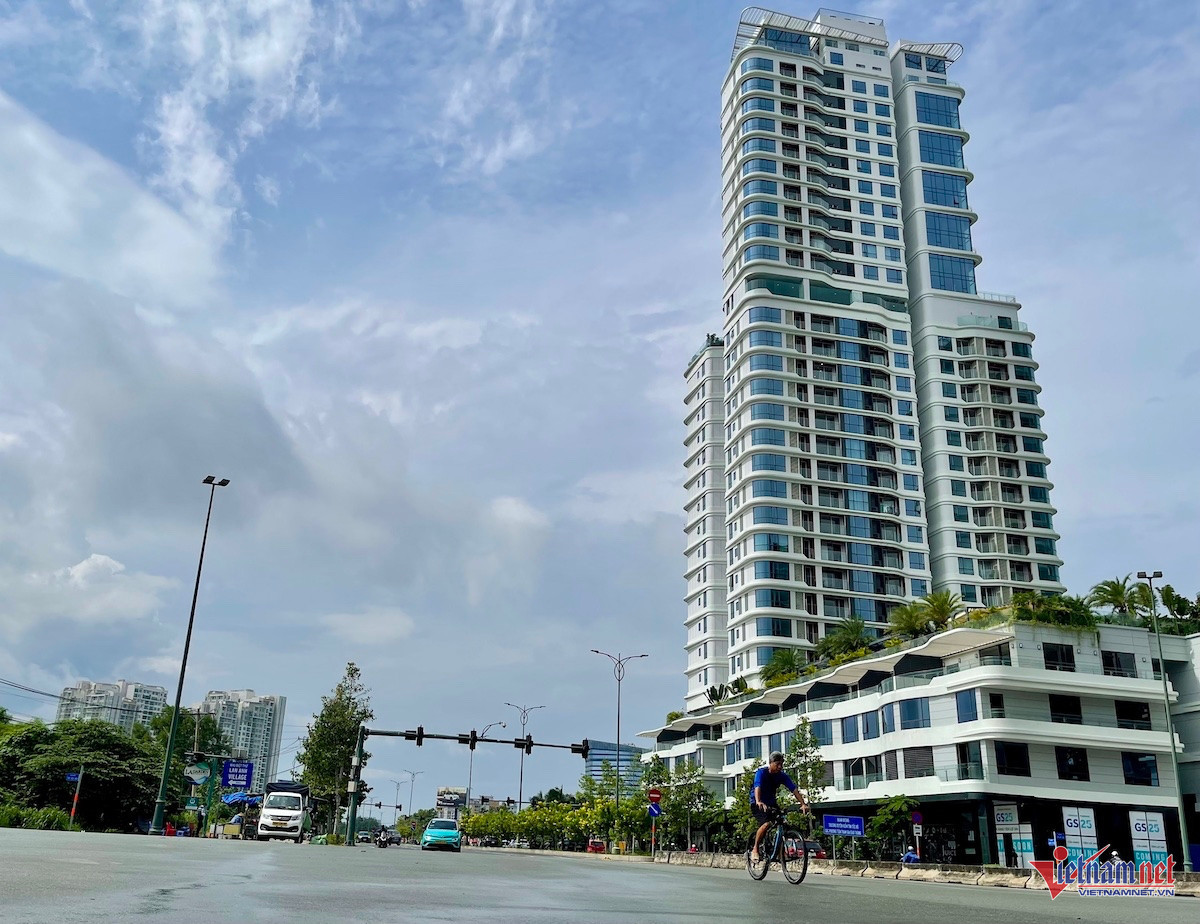
According to experts, the establishment of the IFC, with its own operating rules, carries special significance.
The IFC is located within the Saigon – Ben Thanh – Thu Thiem area, covering a total area of 898 hectares. The initial phase prioritizes a 9.2-hectare “core zone” in Thu Thiem, the home to financial regulatory, supervisory, and jurisdiction bodies, with total estimated investment of about VND172 trillion.
From the outside, this appears to be a large-scale infrastructure project; from the inside, the IFC resembles an “institutional laboratory,” where Vietnam experiments with development driven by reforming the rules of the game before talking about incentives or urban architecture.
The National Assembly passed the Law on Specialized Courts at the IFC, creating a dedicated jurisdictional foundation for international financial disputes, along with a preferential corporate income tax rate of 10 percent for 30 years for priority sectors.
These are institutional tools designed according to global competition logic, where rules of the game and jurisdictional mechanisms come first, rather than incentives or infrastructure being treated as the core factors.
A broad institutional stress test
The two ‘stories’, one being the avenue on the Red River, the other being the financial center in Thu Thiem, are part of the deep-reaching reform movements initiated from the Central level.
In particular, Resolution 66 and Resolution 68 must be highlighted as two documents reshaping thinking on institutions and the role of enterprises in the economy.
Resolution 66 defines lawmaking and law enforcement as the “breakthrough of breakthroughs” in completing development institutions.
Clear timelines are set: by 2025, basically remove “bottlenecks” caused by legal regulations; by 2027, complete the legal foundation for the three-tier government model; and by 2028, finalize the legal framework for investment and business, helping place Vietnam’s investment environment among the ASEAN top three.
Speaking at the national conference on implementing Resolutions 66 and 68 on May 18, 2025, Party General Secretary To Lam emphasized that institutional regime us the driving force and foundation for national development.
He said a transparent legal system would create a stable environment for production and business, promote innovation, enhance international integration capacity, and eliminate barriers caused by overlapping and conflicting laws.
The reform spirit is clearly established: fundamentally renew lawmaking thinking, shift from “management” to “service,” from passivity to proactivity, fostering development.
Laws must go one step ahead, be highly predictive, aligned with reality and the pace of economic change; law enforcement must be strict, fair, and substantive; digital transformation must be tied to openness, transparency, and maximum convenience for citizens and businesses; decentralization and delegation must be clear and linked to accountability, eliminating the “ask and grant” mechanism.
The Party Chief called Resolution 66 "a call for a deep institutional reform," aimed at building a modern, substantive legal system that serves the people and creates sustainable motivation for national development in the 21st century.
Breakthrough
At the same national conference on May 18, 2025, National Assembly Chair Tran Thanh Man stated: “We must identify lawmaking and law enforcement as the ‘breakthrough of breakthroughs’ in completing development institutions; fundamentally, comprehensively, and synchronously renew lawmaking and enforcement work…”
To carry out the streamlining of the political system and implement the two-tier local government model, it is necessary to amend and supplement certain provisions of the 2013 Constitution and 115 laws, nine National Assembly resolutions, along with nearly 20,000 sub-law documents.
At the closing session of the 10th session, he added that in this sitting alone, the National Assembly reviewed, debated, and passed 51 laws and 39 resolutions, including eight normative legal resolutions. This represents a massive legislative workload, accounting for nearly 30 percent of all laws and normative resolutions issued during the entire term. These laws and resolutions both met urgent practical needs and established a legal framework for a new phase.
During the entire term, National Assembly passed 150 laws and 49 normative legal resolutions, while organizing 19 sessions, the highest numbers among National Assembly terms. The working frequency increased not only because of workload requirements but also because of the choice to prioritize policy response capability to issues arising from socio-economic life.
The greatest value of those two projects is that they force the system to step out of its comfort zone, force institutions to go along with life, and force reforms to be done for real, so that "institutional breakthrough" is not just a slogan but becomes the country's competitive advantage in the global race.
Tu Giang
.svg)
