 Vietnamnet.vn

 Podcast



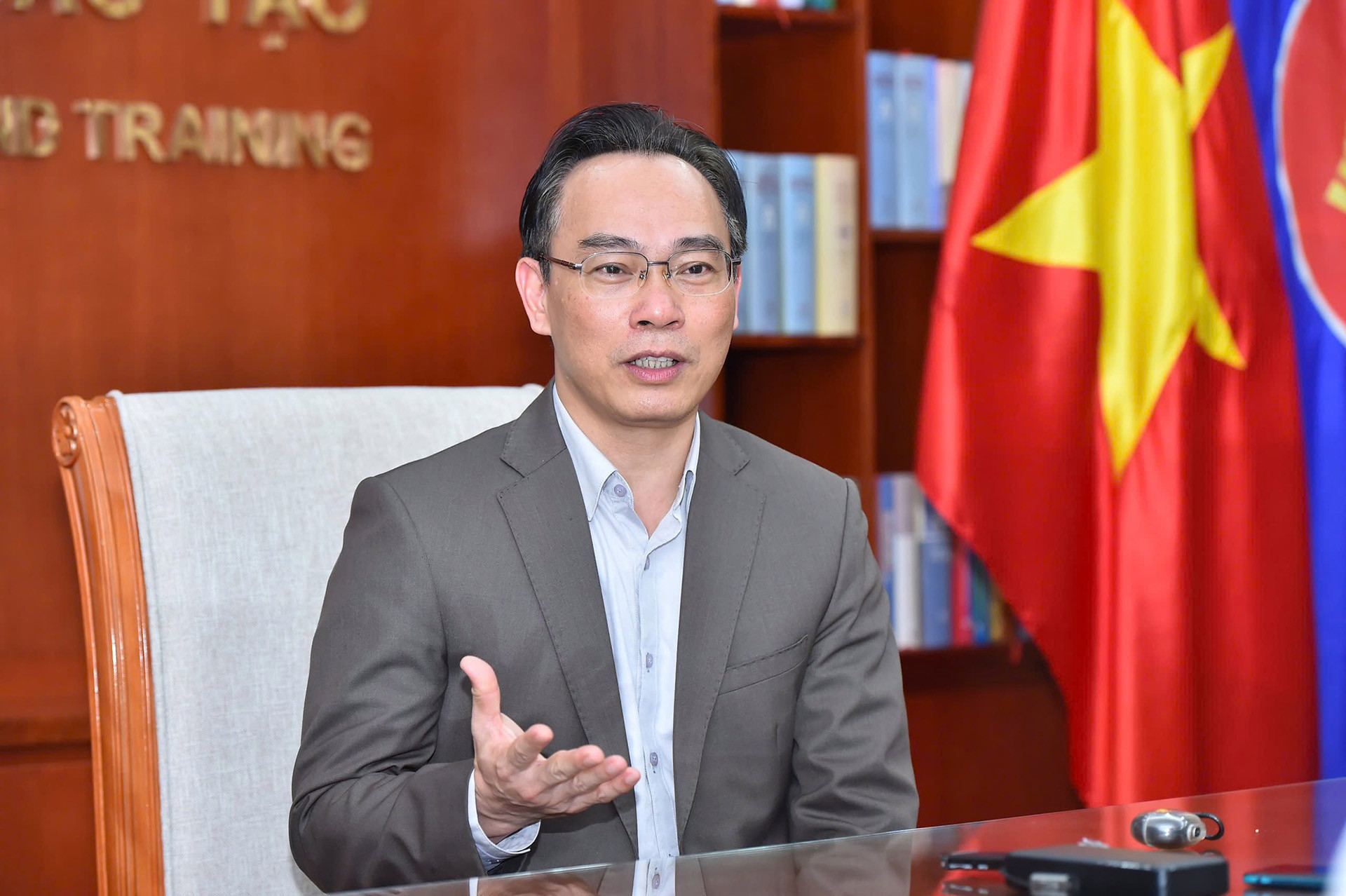
Education experts recently have expressed their concern about the urgent need for updating teaching and learning approaches.
Prof Truong Nguyen Thanh (University of Utah, USA), , for example, who has been back in Vietnam for seven to eight years, said he is preparing a course titled "Living in the AI Era" on tge impact of AI on education, labor, and society. He said the key is not just understanding AI, but recognizing how it redefines human value.
Thanh expressed his expectations for innovative thinking, especially in the context of the clear directions set by General Secretary and President To Lam. The issue lies not in the policy but in implementation, he noted.
“Our education is still facing old inertia while society has changed at an almost miraculous speed. Technology is reshaping the labor market, but teaching and learning methods have not kept up,” Thanh said.
Schools still spend a lot of time to provide knowledge that AI can do better, such as memorizing facts, numbers, and timelines.
“Are questions like which year a battle took place, or who did what, still worth students spending too much time memorizing? That time should be used to develop more important capacities,” he said.
This is a strategic choice for education: Continue training in the old way, where students get high scores thanks to memorization, or switch to developing capacities that are difficult for AI to replace, such as critical thinking, creativity, and problem-solving?
Although noting that policy changes are always slower than reality, Thanh believed that "small initial shifts" are needed for the system to gradually move.
“Sitting still makes change very difficult, but once it starts shifting, even just a little, everything will be much easier,” he said.
Returning to ‘substantive’ values
Hoang Ngoc Vinh, former Director of the Department of Professional Education (Ministry of Education and Training), argued that education needs to return to substantive values: Real learning, real testing, real research, and real doing.
Social expectations are high, but resources are limited, while the requirements for fast and effective renovation are immense.
“The desire for low cost but high quality, or even doing it this year and seeing results next year, is a huge pressure on the education sector,” he said.
Vinh emphasized the role of testing and assessment. He proposed the early formation of an independent testing system, which could be initially sponsored by the State but operated on objective and professional principles.
“This system would not only organize exams but also provide a standardized exam question bank. When assessment is substantive, naturally, teaching and learning will have to change accordingly,” he said.
He also noted that if testing and assessment are unreliable, it will lead to consequences such as ‘achievement disease’, subjective grading, and even distortion of educational goals.
Each educational level needs its specific goals: general education builds foundations, vocational education links to employment, and universities aim for creativity and research. The destination is to train people with real capacity.
However, Vinh said that educational reform faces difficulties when social expectations are diverse, even conflicting among groups (managers, teachers, students, parents, among others).
Each object has different perspectives and expectations. Therefore, it is necessary to both set expectations and share the challenges of the sector, especially during the transition period; at the same time, correctly identify bottlenecks to handle first, following a step-by-step roadmap.
“Resolving the right institutional bottlenecks not only fixes immediate problems but also creates movement across the entire education system. Management can then shift from administrative control to results-based approaches; implementation capacity will improve, and informal practices like ‘achievement disease’ or excessive tutoring will gradually recede,” he said.
“Only when rules, institutions, resources, and behaviors move together can education achieve breakthroughs,” he added.
Meanwhile, Pham Thai Son from the HCMC University of Industry and Trade, said that what must be done first is reduce the general education curriculum. Without removing unnecessary content, teachers will continue to rush through lessons while students learn passively.
“You cannot modernize while trying to retain everything old,” he said.
Thanh Hung
.svg)
