 Vietnamnet.vn

 Podcast



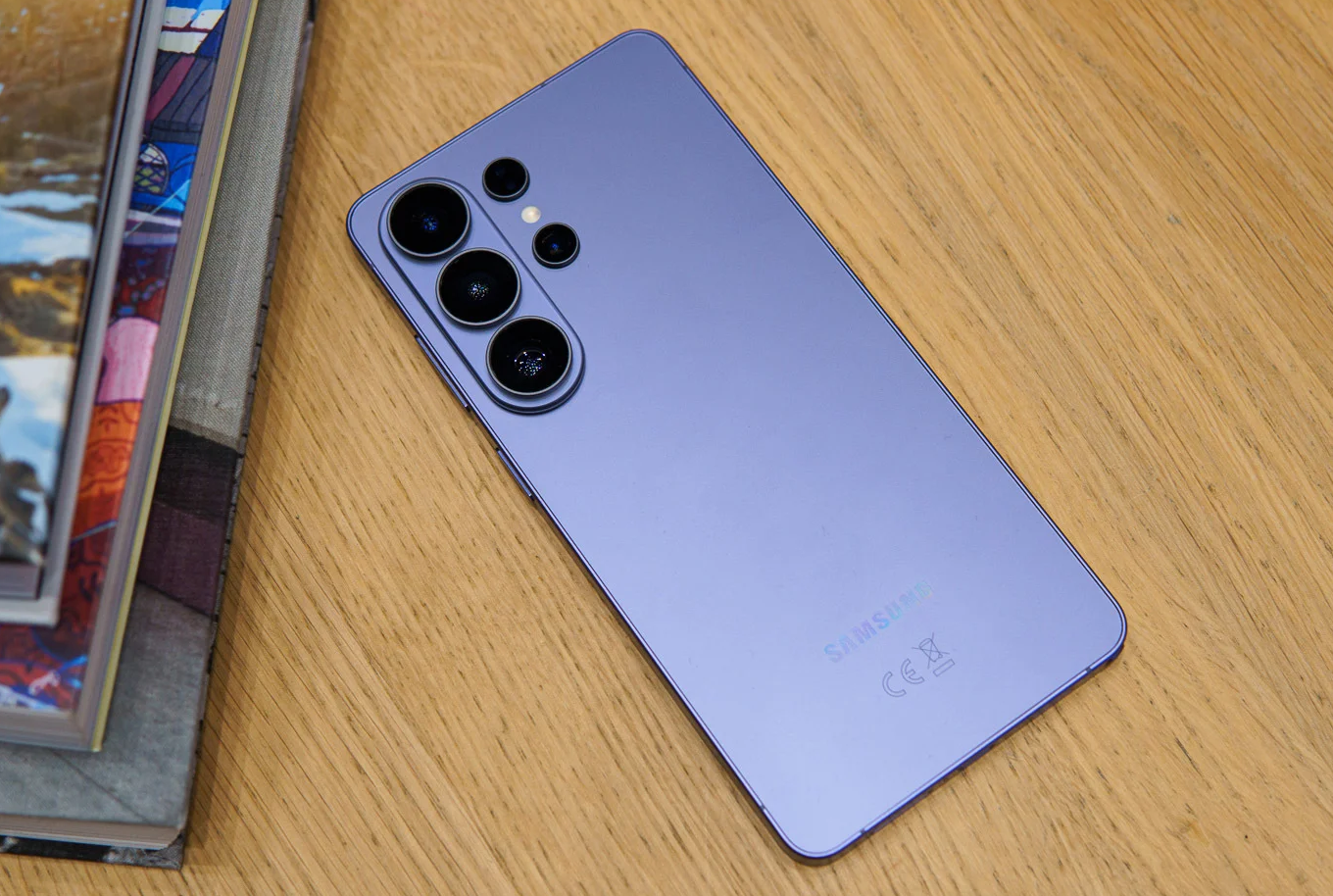
Galaxy S26 Ultra was the highlight of Galaxy Unpacked 2026. Photo: PhoneArena
When Samsung officially unveiled the Galaxy S26 series at Galaxy Unpacked 2026, attention quickly centered on the Galaxy S26 Ultra.
Compared with its predecessor, the Galaxy S25 Ultra, the new model introduces several notable upgrades: a more powerful processor, significantly faster charging, an integrated Privacy Display feature and optical refinements to the camera system.
That said, the S25 Ultra remains one of the most well-rounded Android flagships on the market. Equipped with Snapdragon 8 Elite, a top-tier display, reliable battery life and an excellent camera system, the real-world gap between the two generations is not as wide as many might expect. The question is whether the S26 Ultra truly earns its place as successor.
Design: Thinner, lighter and a new camera layout
Last year, Samsung impressed users by significantly reducing the thickness and weight of the S25 Ultra. Few expected the company to push that even further.
Yet the S26 Ultra measures just 7.9mm thick, down from 8.2mm on the S25 Ultra and 8.6mm on the S24 Ultra. Its weight drops to 214g, 4g lighter than the previous generation.
On paper, those numbers may seem minor. However, the slim and lightweight design was a key selling point of the S25 Ultra in 2025. Samsung’s continued refinement signals how seriously it takes in-hand comfort.
The most visible change appears on the rear. The camera modules no longer sit within a raised island but are integrated more directly into the back surface, creating a cleaner look distinct from the protruding style of the S25 Ultra. The S Pen remains, the squared frame with subtly rounded corners is retained and IP68 water and dust resistance is unchanged.
Display: Same brightness, new hardware privacy layer
Samsung does not chase headline brightness figures this year. The S26 Ultra maintains a peak brightness similar to its predecessor instead of promoting numbers such as 3,000 nits. Instead, it introduces an entirely new feature called Privacy Display.
When activated, Privacy Display narrows the horizontal viewing angle, making it difficult for people on either side to read the screen while keeping content clear for the person directly in front. Samsung positions this as a hardware-level display enhancement rather than a simple software trick. Users can adjust its intensity and set it to activate automatically when entering a PIN or opening sensitive apps.
Other specifications remain familiar: 1440 x 3120 pixel resolution, adaptive 1-120Hz refresh rate and the Ultra line’s signature anti-reflective coating.
Performance and software: A stronger AI emphasis
The S26 Ultra runs Snapdragon 8 Elite Gen 5 for Galaxy globally, with no regional Exynos variant for the Ultra model. According to Samsung, CPU performance improves by 19 percent, GPU by 24 percent and notably the NPU, responsible for AI processing, by 39 percent compared with the S25 Ultra. Clearly, artificial intelligence sits at the heart of this generation.
A redesigned vapor chamber helps sustain peak performance longer during gaming and heavy workloads.
In terms of configurations, the 256GB and 512GB versions come with 12GB of RAM, while the 1TB model offers 16GB. Storage is likely still UFS 4.0. The device ships with Android 16 and One UI 8.5, alongside a seven-year commitment to OS and security updates.
Importantly, no exclusive AI features are reserved for the S26 Ultra. Experiences such as Now Brief, Now Bar and integrations with Gemini and Perplexity are also available on the S25 Ultra.
Camera: Same sensors, refined optics
On paper, the camera specifications appear familiar: a 200MP main sensor, 50MP ultra-wide, 10MP 3x telephoto and 50MP 5x telephoto. However, Samsung has upgraded the lens system for both the main camera and the 5x telephoto to improve light intake.
With more light reaching the sensor, image quality, particularly in low-light conditions, is expected to see noticeable gains. The improvement should be most evident on the 5x telephoto.
For video, the S26 Ultra supports 8K at 30 fps and adds 4K at 120 fps in Pro Video mode. It also introduces APV, short for Advanced Professional Video, a format that captures more detail, dynamic range and color information for greater flexibility in post-production. This positions the S26 Ultra as a more serious content creation tool than its predecessor.
Battery and charging: A meaningful leap in speed
Battery capacity remains at 5,000 mAh. Any improvement in endurance will likely stem from the more efficient chipset.
The major difference lies in charging speed. The S26 Ultra supports Super Fast Charging 3.0 at 60W, capable of reaching around 75 percent in approximately 30 minutes under optimal conditions. Wireless charging also rises significantly to 25W, up from 15W. Wireless PowerShare is retained.
There is still no integrated magnetic alignment system. Android users seeking a MagSafe-like experience must rely on compatible cases or consider alternatives such as Pixel devices.
Galaxy S26 Ultra delivers tangible improvements: faster charging, a stronger chip, a deeper AI focus, the distinctive Privacy Display feature and optical camera refinements. These are clear steps forward.
However, for those already using the S25 Ultra, upgrading immediately is not essential. We are no longer in an era where each new generation creates a dramatic gap. The S26 Ultra does not strongly trigger a sense of fear of missing out.
Even so, for anyone considering entering the Ultra lineup, the Galaxy S26 Ultra stands as Samsung’s most refined and up-to-date flagship for 2026. Perhaps most reassuringly, the starting price remains at US$1,299, arguably the most comforting detail of this launch.
Hai Phong
.svg)
